
Rocky Mountain Chocolate Factory's Strategic Turnaround: A Closer Look at Q2 2025 Performance and Operational Efficiency Gains
Rocky Mountain Chocolate Factory (RMCF) has taken significant steps toward reversing its financial trajectory in Q2 2025, despite a modest revenue decline. The company reported $6.4 million in revenue for the quarter, down 2.71% year-over-year from $6.6 million, according to the company's press release. However, this dip was offset by a notable improvement in gross margins, which rose to 11.5% from 7.7% in Q2 2024, per the Q2 2025 earnings call. This shift underscores RMCF's strategic focus on pricing adjustments and operational efficiency, which are critical to its long-term profitability.
Strategic Initiatives: Rebranding, Expansion, and Liquidity Strengthening
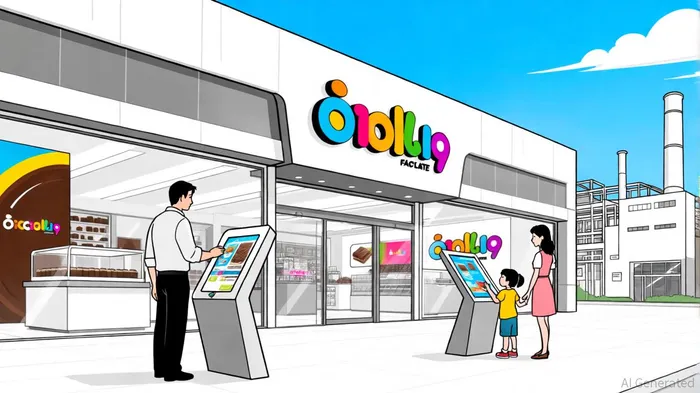
RMCF's turnaround strategy hinges on three pillars: rebranding, franchise expansion, and liquidity management. The company has launched a rebranding initiative, including a new store design aimed at enhancing the customer and franchisee experience, as summarized in the RMCF earnings summary. This effort aligns with broader plans to modernize its brand and attract a younger demographic.
Franchise expansion remains a cornerstone of RMCF's growth strategy. The company opened a new store in Edmond, Oklahoma, and secured agreements for three additional locations, with plans to expand into eight strategic markets in the U.S. by 2026, per the expansion agreements. To fund these initiatives, RMCFRMCF-- secured a $6 million credit facility, replacing its previous $4 million facility and providing capital for equipment, inventory, and strategic investments through the new $6 million facility. This move strengthens liquidity, a key concern for a company that has faced cash flow challenges in recent quarters.
Operational Efficiency: Technology and Cost Controls
Operational improvements have been central to RMCF's margin expansion. The company implemented a new ERP system in January 2025, integrating production, procurement, inventory, and finance functions. This system enables real-time data visibility, dynamic pricing adjustments, and tighter cost controls, addressing inefficiencies that had previously eroded margins, as noted in a path to profitability analysis. Additionally, RMCF in-housed its consumer packaging operations, projected to save $1.5 million annually, according to the packaging and credit coverage report.
The impact of these measures is evident in Q2 2025 results: total costs and expenses fell to $7.3 million from $7.6 million year-over-year, as the press release noted. While the net loss narrowed to $0.7 million ($0.11 per share) from $1.0 million ($0.16 per share) in Q2 2024, per the Q2 net loss report, the company's management remains optimistic about translating these efficiencies into profitability.
Expert Insights and Future Outlook
Industry analysts highlight RMCF's strategic discipline as a differentiator. The operational-discipline analysis referenced above describes the ERP system as a "foundational component of RMCF's transformation," enabling dynamic pricing and mitigating margin pressures from raw material costs. Similarly, an Insider Monkey analysis notes that the company's focus on SKU rationalization and production efficiencies positions it to achieve sustainable growth in fiscal 2026.
However, challenges persist. RMCF's cash balances remain under pressure, and the net loss, though improved, still reflects the costs of restructuring and expansion. Management has emphasized the need to rebuild its executive team and strengthen liquidity further, as stated in the fiscal third-quarter release, with a Chicago flagship store slated for a holiday 2025 launch per the first-quarter release.
Conclusion
RMCF's Q2 2025 performance demonstrates early progress in its strategic turnaround, driven by operational efficiency gains and a reinvigorated focus on growth. While revenue dipped slightly, margin improvements and cost controls signal a path to profitability. The success of its rebranding, franchise expansion, and technological investments will be critical in determining whether RMCF can sustain this momentum. For investors, the company's ability to execute its three-year plan-particularly in strengthening liquidity and scaling its franchise network-will be key indicators of long-term value creation.
Historical data on RMCF's stock performance around earnings releases reveals a pattern of post-earnings weakness. Over 28 earnings events since 2022, the cumulative average return (CAR) for RMCF was -27.2% over a 30-day window, significantly underperforming the benchmark's -3.6%, according to an earnings backtest. The win rate for the stock declined from 36% on day 1 to 0% by day 30, with statistically negative returns persisting from day 3 onward in the post-earnings drift study. This suggests that, despite operational improvements, the market has historically responded poorly to RMCF's earnings reports, potentially due to unmet expectations or weak guidance. Investors should consider these historical trends when evaluating long-term exposure, as the stock has shown a tendency to experience drawdowns following earnings announcements.





Comentarios
Aún no hay comentarios