
ROCKWOOL's Strategic Reinvention: Capitalizing on Resilience in a Post-Crisis Construction Landscape
The global construction industry is undergoing a profound transformation, driven by the escalating urgency of climate resilience and the aftermath of compounding crises-from wildfires to urbanization pressures. In this evolving landscape, companies that align their strategies with systemic risks and opportunities are poised to outperform. ROCKWOOL, a Danish leader in stone wool insulation, exemplifies this trend through its deliberate reinvention as a resilience-focused brand. By leveraging its technical expertise, sustainability commitments, and market foresight, the company is not only addressing immediate vulnerabilities but also positioning itself to capitalize on long-term structural shifts in construction.
Strategic Alignment with Resilience-Driven Demand
ROCKWOOL's 2023–2025 strategy centers on enhancing structural resilience against extreme events, particularly in wildfire-prone regions. This focus is underscored by the 2023 Canadian wildfire season, which burned over 37 million acres-six times the historical average-highlighting the urgent need for fire-resistant materials. The company has responded with targeted technical resources, such as its Building with ROCKWOOL Stone Wool Insulation in Wildfire-Prone Areas bulletin, which provides actionable guidance for architects and builders. By addressing a critical pain point in disaster-prone markets, ROCKWOOL is differentiating itself as a solutions provider rather than a mere supplier.
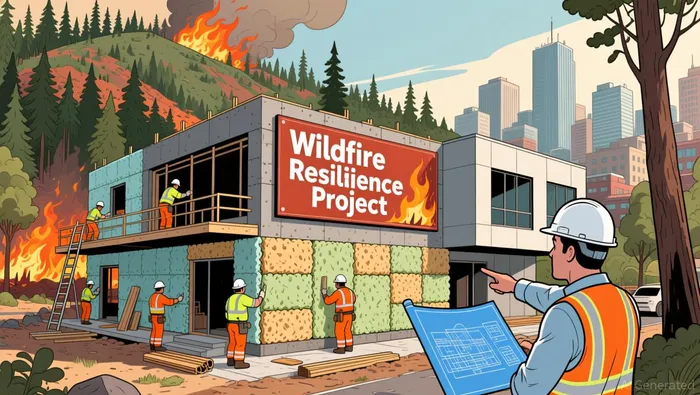 This strategic pivot is not isolated to wildfires. The broader construction sector is increasingly prioritizing materials that meet stringent fire safety regulations and energy efficiency standards. The global market for rock wool insulation is projected to surpass USD 20 billion by 2025, driven by these dual imperatives. As urbanization accelerates-adding over 1.5 million people to cities weekly-the demand for resilient, energy-efficient infrastructure will only intensify. ROCKWOOL's emphasis on noncombustible stone wool insulation aligns seamlessly with this trajectory, offering both regulatory compliance and long-term cost savings for developers.
Sustainability as a Competitive Advantage
Beyond resilience, ROCKWOOL's reinvention is deeply rooted in sustainability-a cornerstone of its brand strategy. The company has committed to decarbonization goals, including achieving net-zero emissions across its operations by 2040. Its Rockcycle© recycling program, which repurposes stone wool insulation, further reinforces its circular economy ethos. These initiatives resonate with a growing cohort of investors and clients prioritizing environmental, social, and governance (ESG) criteria.
ROCKWOOL's sustainability efforts are not merely symbolic; they are operationalized through innovation and digitalization. For instance, the company has integrated digital tools to optimize production efficiency and reduce waste, while also enhancing customer engagement through data-driven insights. This dual focus on sustainability and operational excellence strengthens its value proposition in an industry increasingly scrutinized for its environmental impact.
Market Positioning and Long-Term Growth
ROCKWOOL's strategic reinvention is underpinned by a clear-eyed understanding of macroeconomic trends. As governments and private entities pour resources into climate adaptation and green infrastructure, the company is well-positioned to benefit from policy tailwinds. For example, stringent fire safety regulations in wildfire-prone regions and incentives for energy-efficient buildings are creating a regulatory environment that favors ROCKWOOL's offerings.
Moreover, the company's emphasis on customer value-through technical support, product innovation, and lifecycle cost analysis-builds loyalty in a sector where trust and reliability are paramount. This approach is particularly valuable in post-crisis markets, where stakeholders prioritize partners that can deliver both immediate safety and long-term sustainability.
Investment Implications
For investors, ROCKWOOL's strategic reinvention represents a compelling case study in aligning corporate strategy with systemic risks. The company's focus on resilience-driven construction, sustainability, and digital transformation addresses three of the most pressing challenges facing the industry today. With a market projected to grow to USD 20 billion by 2025, and a business model that balances innovation with operational rigor, ROCKWOOL is not merely adapting to change-it is shaping the future of construction.
However, risks remain. Geopolitical instability, supply chain disruptions, and regulatory shifts could impact growth. Yet, given its proactive stance on decarbonization and circular economy principles, ROCKWOOL is better positioned than many peers to navigate these uncertainties.
Conclusion
In a post-crisis world defined by volatility and vulnerability, resilience is no longer a luxury-it is a necessity. ROCKWOOL's strategic reinvention reflects a deep understanding of this reality, transforming challenges into opportunities. By marrying technical expertise with sustainability and market foresight, the company is not only securing its own future but also redefining the standards for the construction industry. For investors seeking exposure to a sector in flux, ROCKWOOL offers a blueprint for how to build resilience-both in infrastructure and in business.







Comentarios
Aún no hay comentarios