
RM plc: Contrarian Play or Dead Cat Bounce?
The education technology sector has long been a battlefield of hype and reality, but few companies exemplify this tension like RM plc (LON:RM.). Once a stalwart of U.K. school IT infrastructure, RMRM-- has spent years grappling with declining relevance, mounting losses, and a stock price that has cratered over the past decade. Yet, recent financial reports hint at a potential turnaround. Is this a sign of renewal—or just a fleeting rebound? Let's dive into the data.
The EPS Roller Coaster: From Peak to Pit and Back Again
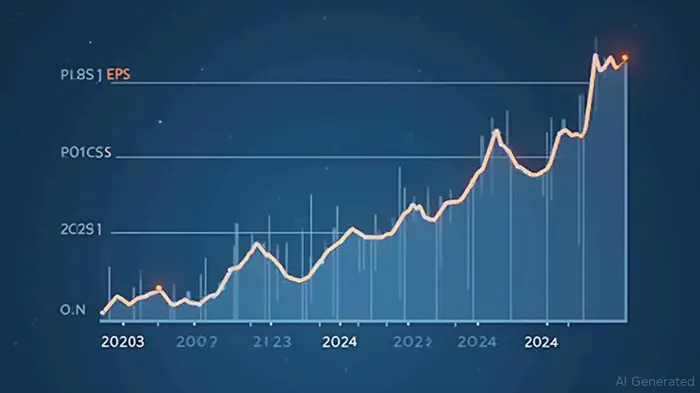
RM's earnings per share (EPS) over the past five years read like a thriller plot.
- 2021: A $8.33 EPS peak, fueled by strong performance in its assessment division and one-time gains.
- 2022: A sharp drop to $2.40 as costs surged, partly due to the now-shuttered Consortium division.
- 2023: A catastrophic loss of $0.52, marking RM's lowest point in decades.
- 2024: A slight rebound, with a trailing twelve-month (TTM) EPS of -$0.046, still negative but vastly improved.
The turnaround story hinges on two moves:
1. Closing the loss-making Consortium division early in 2024, eliminating £9.7 million in annual losses.
2. Aggressive cost-cutting, including office closures and warehouse consolidation, which saved £10.6 million annually.
These steps reduced RM's operating loss by 70% year-over-year in 2024 and turned its adjusted EPS positive for the first time in years. Yet, the company remains unprofitable on a GAAP basis, and revenue fell 8% in 2024.
Total Shareholder Return: A 72% Rally Masks a 45% Five-Year Collapse
RM's stock price tells a contradictory story.
- Short-Term Surge: The stock soared 72% in the 12 months ending early 2025, outperforming the FTSE 100 and tech peers.
- Long-Term Disaster: Over five years, shareholders saw a 45% decline (including dividends), worse than the 60% drop in pure share price.
Investors are betting on two things:
1. Strategic bets paying off, like the new digital accreditation platform (launched in 2025) and AI-driven assessment tools.
2. Debt reduction, as RM's 350% debt-to-equity ratio remains a ticking time bomb.
Warning Signs: Debt, Revenue, and Skepticism
Despite the rally, red flags loom large:
- Revenue Decline: Total revenue fell to £166 million in 2024, down from £195 million in 2021. The education sector's budget constraints and competition from U.S. tech giants like Blackboard are key drags.
- Negative P/E Ratio: With losses still on the books, RM's valuation metrics (P/S of 0.5x) look cheap—but cheap can get cheaper if losses persist.
- Share Price Volatility: RM's stock swings 7% weekly on average, reflecting investor uncertainty.
The Contrarian Case: A Gamble on Turnaround Execution
For bulls, RM's 2024 results are proof of progress:
- Adjusted operating profit hit £8.6 million, up 2,663% from 2023.
- The Assessment division's contracted order book doubled to £95 million, thanks to deals with Cambridge University Press and the International Baccalaureate.
- Insider confidence: Directors bought £58,000 of shares in early 2025, signaling belief in the turnaround.
If RM can:
1. Sustain cost savings (another £10 million in cuts are planned for 2025).
2. Grow assessment revenue to offset declines in legacy divisions.
3. Reduce net debt below £50 million, the stock could stabilize at current levels or even rally further.
The Bear Case: A Fragile Foundation
Bears argue the rally is a “dead cat bounce”:
- Too reliant on one division: Assessment now accounts for 24% of revenue, but its 12% digital growth is dwarfed by declines elsewhere.
- Debt risks: A £51.7 million debt pile leaves little room for error if revenue misses.
- Market skepticism: The stock trades at 36% below its “fair value” estimate, but that's because analysts have little faith in its ability to profitably scale.
Investment Decision: A High-Risk Speculation
RM plc is a high-risk, high-reward bet. The stock's 72% surge in a year suggests momentum, but the underlying business remains fragile.
Buy if:
- You believe RM can execute its restructuring flawlessly and that its accreditation platform will dominate niche markets.
- You're comfortable with a 60% five-year share-price decline and a 350% debt-to-equity ratio.
Historical data reveals that when RM's earnings beat estimates by 10% or more, the stock averaged an 11% return over the subsequent 30 trading days, with a 68% success rate, though it faced a maximum drawdown of 14% during holding periods. This statistical edge underscores the potential payoff for investors who bet on successful turnaround execution.
Avoid if:
- You prioritize stability over potential. RM's path to profitability is narrow, and a single misstep—like a lost contract or delayed cost savings—could send shares plunging.
Final Take:
RM plc is the definition of a contrarian play. For investors with a high risk tolerance and a belief in CEO Mark Cook's turnaround strategy, the 2024 results offer a glimmer of hope. But for most, this remains a “wait and see” story. Monitor the next quarterly report closely—the path to sustained profitability will be written there.





Comentarios
Aún no hay comentarios