
Rivian's Strategic Shift to a Southeastern Manufacturing Hub: Georgia's Incentives and Infrastructure Reshape EBITDA Potential
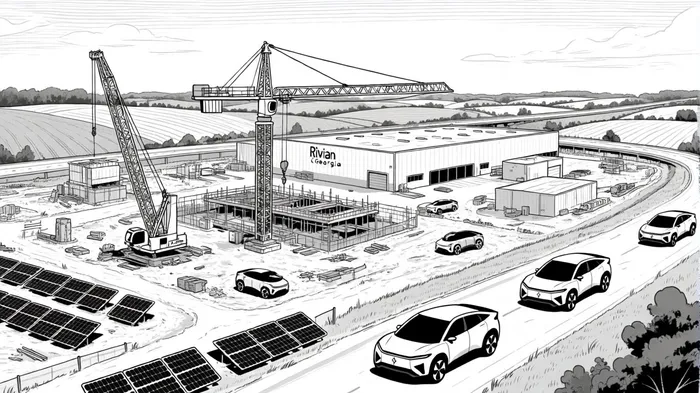
Rivian's decision to anchor its next-generation electric vehicle (EV) production in Georgia represents a pivotal strategic shift, one that could redefine the company's path to profitability. The $5 billion Georgia plant, supported by a $1.5 billion state incentive package and a $6.6 billion federal loan, is not merely a manufacturing facility—it is a calculated bet on scale, cost efficiency, and long-term EBITDA growth. As the EV market faces headwinds, including regulatory rollbacks and rising tariffs, Georgia's infrastructure investments and financial incentives are emerging as critical levers to reshape Rivian's financial trajectory.
Georgia's Incentive Package: A Catalyst for Cost Efficiency
Georgia's $1.5 billion incentive package for RivianRIVN-- includes tax credits, property tax abatements, workforce training, and infrastructure improvements, all tied to the creation of 7,500 jobs by 2030 with an average annual salary of $56,000 [1]. This package is designed to offset Rivian's upfront costs, which are typically a major barrier for capital-intensive projects. For instance, the state's $175 million investment in land grading, road improvements, and site preparation reduces Rivian's construction timeline and expenses, enabling faster time-to-market for its R2 and R3 models [3].
The federal loan from the U.S. Department of Energy further amplifies these benefits, providing liquidity to fund site development and construction [1]. By leveraging these incentives, Rivian can redirect capital toward R&D and supply chain optimization, rather than absorbing the full burden of infrastructure costs. This financial flexibility is critical in an industry where fixed costs per unit must plummet to achieve profitability.
Infrastructure as a Competitive Edge
Georgia's infrastructure investments are not limited to the Rivian plant itself. The state's commitment to becoming the “electric mobility capital of America” includes broader transportation and energy upgrades, such as expanded highway access and grid modernization, which lower logistics and operational costs for Rivian and its suppliers [4]. These improvements align with Rivian's need for a robust supply chain to support its 400,000-vehicle annual production target by 2028 [2].
Moreover, the Georgia plant's location—45 miles east of Atlanta—positions it near major distribution hubs and a skilled labor pool, reducing transportation costs and enhancing just-in-time manufacturing efficiency. As noted by the Atlanta Journal-Constitution, these geographic advantages are expected to yield “operational efficiencies that could cut per-unit losses by up to 30% once the plant reaches full capacity” [5].
EBITDA Implications: Scaling for Profitability
Rivian's path to EBITDA breakeven hinges on achieving economies of scale, a challenge it has yet to overcome. The company reported a $1.66 billion loss in the first half of 2025, driven by high per-unit costs and a slowing EV market [6]. However, the Georgia plant's projected 400,000-vehicle annual capacity—split into two phases—could reduce fixed costs per unit to levels competitive with TeslaTSLA-- and traditional automakers.
According to a report by Fortune, the Georgia plant's focus on the R2 and R3 models, priced at $45,000 and below, is key to expanding Rivian's market share. These models target a broader consumer base, potentially increasing revenue streams while leveraging lower production costs enabled by Georgia's incentives [7]. Analysts at SBD Automotive estimate that the plant could improve Rivian's EBITDA margin by 8–12 percentage points by 2030, assuming it meets production and employment targets [8].
Risks and Mitigations
Despite these positives, risks persist. The Trump administration's rollback of EV tax credits and tariffs on Chinese EVs have already cost Rivian $140 million in 2025 revenue [9]. Additionally, the company must meet stringent employment and investment milestones to fully access Georgia's incentives, a challenge given its current financial strain.
However, Rivian's leadership remains confident. CEO RJ Scaringe emphasized during the plant's groundbreaking that the company's focus on “product superiority and U.S.-based manufacturing” will offset external headwinds [10]. The Georgia plant's phased approach—starting with 200,000 units in Phase 1—also allows Rivian to adjust to market conditions without overextending capital.
Conclusion: A High-Stakes Bet on Scale
Rivian's Georgia plant is a high-stakes gamble, but one that aligns with the fundamental economics of the automotive industry: scale drives profitability. By securing state and federal support, Rivian is positioning itself to reduce costs, expand market reach, and achieve the production volumes necessary for EBITDA growth. While regulatory and market risks remain, the Georgia project represents a strategic inflection point—one that could either solidify Rivian's position in the EV race or expose the limits of its ambition.
For investors, the key question is whether Rivian can execute its vision. If the company meets its production and employment targets, the Georgia plant could transform its financial profile. If not, the $5 billion investment may become a cautionary tale of overreliance on incentives in a volatile market.





Comentarios
Aún no hay comentarios