
Is Rivian Stock a Compelling Buy in 2026?
The electric vehicle (EV) market is maturing, and Rivian AutomotiveRIVN-- (RIVN) stands at a pivotal crossroads. After years of burning through cash and struggling to scale, the company has shown signs of progress in 2025, including narrowing losses and a first-ever quarterly gross profit. However, the question remains: Is RivianRIVN-- stock a compelling buy in 2026, given its ambitious R2 launch, cost-cutting efforts, and the broader challenges facing the EV sector?
Financial Performance and Cost Efficiency: A Foundation for Recovery
Rivian's financial trajectory in 2025 offers a glimmer of hope. In Q4 2024, the company reported a historic $170 million gross profit, a stark contrast to its $1.52 billion net loss in the same period in 2023. For the first nine months of 2025, its net loss narrowed to $2.8 billion, down from $4 billion in the prior year. This improvement is partly attributed to a $31,000 reduction in automotive cost of goods sold per vehicle delivered in Q4 2024 compared to Q4 2023. Such progress suggests Rivian is making strides in operational efficiency, a critical step toward long-term profitability.
However, the path forward is not without hurdles. Analysts project a 27.5% year-over-year revenue decline for Q4 2025, with revenue expected to fall to $1.26 billion. This dip reflects the company's strategic decision to idle its Normal, Illinois plant in late 2025 for retooling to accommodate the R2 model. While short-term disruptions are inevitable, the long-term payoff could be significant.
The R2 Launch: A Catalyst for Growth
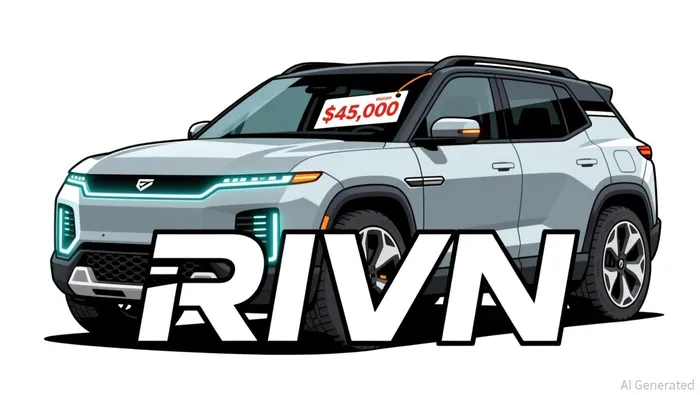
Rivian's R2 midsize SUV, priced near $45,000, is poised to be a game-changer. Analysts project that the R2's launch in early 2026 could drive $6.9 billion in sales for the year, a leap from the $1.6 billion in revenue reported in Q3 2025. The R2's cost structure is expected to reduce the bill of materials by nearly 50% compared to the R1 model, a critical factor in improving gross margins.
This strategic shift toward a more affordable, mass-market vehicle aligns with broader industry trends. As stated by Baird analysts, the R2's launch is a "key driver of demand" that could expand Rivian's customer base beyond its current niche of premium EV buyers. Moreover, the R2's production is expected to boost vehicle deliveries in 2026, with analysts forecasting a significant increase from the 46,000–51,000 units projected for 2025.
Strategic Advancements: AI and Software as Differentiators
Beyond hardware, Rivian is investing heavily in software and artificial intelligence. The company recently unveiled custom AI chips and a vertically integrated software strategy, aiming to capture high-margin revenue from software subscriptions and autonomous driving features. This move mirrors the strategies of industry leaders like Tesla and underscores Rivian's ambition to compete in the high-margin software segment of the EV market.
 Needham analysts have upgraded Rivian's stock, citing these advancements as a "key driver of long-term competitiveness." By leveraging AI and autonomy, Rivian could differentiate itself in a crowded market and create recurring revenue streams that offset hardware losses.
Risks and Valuation Concerns
Despite these positives, Rivian's stock remains a high-risk proposition. The company's median price target of $15 per share-far below its current price-suggests skepticism about its ability to achieve profitability. Analysts from 247WallSt note that Rivian's ongoing cash burn and unprofitable status raise concerns about its valuation.
External factors also loom large. Tariff pressures and the phasing out of EV tax credits could delay Rivian's path to profitability. Additionally, the company's 2025 capital expenditures-projected at $1.6–1.7 billion-highlight the heavy investment required to scale production for the R2. While these expenditures are necessary for long-term growth, they also strain liquidity in the short term.
Conclusion: A Calculated Bet for 2026
Rivian's 2026 prospects hinge on the success of the R2 launch and its ability to execute on cost-cutting initiatives. The R2's potential to boost sales, reduce costs, and expand market share makes it a compelling catalyst for value recovery. However, the company's ongoing losses, valuation concerns, and macroeconomic headwinds cannot be ignored.
For investors with a long-term horizon, Rivian could represent an attractive opportunity if the R2 delivers on its promise. The stock's current price, while volatile, may reflect optimism about the R2's potential and Rivian's strategic advancements in AI and software. That said, patience and a tolerance for risk are essential. As the EV market matures, Rivian's ability to adapt and execute will determine whether it becomes a winner or a cautionary tale.







Comentarios
Aún no hay comentarios