
Rivian's 2026 Inflection: Assessing the R2 Scalability and Software Flywheel
The investment case for RivianRIVN-- is now defined by a dramatic valuation compression and a market in transition. The stock trades around $19.68, with a market capitalization of roughly $24 billion. This represents a steep decline from its peak, with shares down nearly 80% from the IPO price. The valuation has reset to a forward sales multiple of about 3.52x, a level that, while still above the industry average, signals a market pricing in a much more challenging near-term path.
This reset is occurring against a backdrop of structural headwinds. The expiration of the $7,500 U.S. EV tax credit at the end of September has been a direct catalyst for weakness, contributing to a more than 41% drop in overall U.S. EV sales in November. For Rivian, a premium-priced automaker, this has intensified pressure on demand as it grapples with slowing EV adoption. The company is responding with aggressive incentives, but the fundamental shift in consumer economics is clear.
The market's view is sharply divided. On one side, Morgan Stanley maintains a cautious stance, with an Underweight rating and a $12 price target. The analyst warns that demand could weaken through most of 2026, citing the tax credit expiration and a potential "demand air-pocket" as customers wait for new tech like LiDAR. On the other side, the post-Autonomy+ AI Day consensus has been more optimistic, with fresh price targets averaging $22.25. This $22.25 average implies upside from recent levels, driven by expectations for new software revenue streams like Autonomy+ and the eventual launch of the R2 SUV.
The bottom line is a stock caught between a broken near-term cycle and a speculative long-term bet. The valuation compression reflects a sobering reality: the easy growth fueled by subsidies is over. The path to recovery now hinges entirely on Rivian's ability to execute its 2026 plan, where the R2 launch and software monetization must overcome a weaker demand environment. The wide gap between analyst targets captures the high-stakes uncertainty of that bet.
The R2 Scalability Thesis: TAM and Production Capacity
Rivian's R2 represents a pivotal bet on scaling its business into the mass market. The vehicle's starting price of about $45,000 is a critical strategic move, offering a $30,000 reduction from the R1S. This price point is designed to capture a vastly larger total addressable market, positioning the R2 squarely against established mid-size electric SUVs. The engineering goal is to make this affordable model profitable, with CEO RJ Scaringe stating that production costs for the R2 will be less than half of the R1. This dramatic cost target is the core of the scalability thesis, aiming to transform Rivian from a premium niche player into a volume manufacturer.
The operational feasibility of this plan hinges on a clear production ramp. Rivian expects to begin saleable builds and initial deliveries of the R2 in the first half of 2026, with volumes ramping through the second half of the year and into 2027. The company's primary manufacturing asset, the Normal, Illinois plant, is being retooled to support this expansion. The facility's total expected annual capacity following R2 launch is about 215,000 units, with up to 155,000 of those dedicated to the R2 platform. This represents a significant increase in throughput, but it also requires a complex shift in production mix, as the plant will need to balance R2 output with existing R1 and commercial van production.
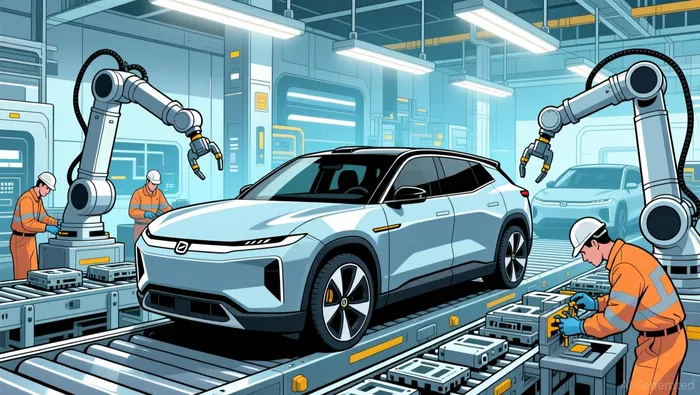
The bottom line is a high-stakes execution challenge. The R2's affordability and cost target are necessary to unlock the mass-market TAM, but they are also a direct response to a softening EV demand environment and the expiration of key tax credits. The company's ability to hit its 2025 delivery guidance of between 40,000 to 46,000 vehicles while navigating these headwinds demonstrates its current operational discipline. Scaling to 155,000 R2 units annually will test that discipline at a much larger scale. Success would validate Rivian's engineering and manufacturing learnings, potentially leading to the positive free cash flow the company projects. Failure would leave it with a costly, underutilized capacity and a stalled growth narrative. The R2 is not just a new model; it is the ultimate stress test for Rivian's entire business model.
The Software and Services Flywheel
Rivian's path to profitability is increasingly being defined by its non-automotive revenue streams, which are demonstrating explosive growth and a higher-margin profile. In the third quarter, software and services revenue surged 324% year-over-year, driven largely by a joint venture with Volkswagen Group. This segment now contributes a substantial $416 million to total revenue, dwarfing the growth of the core automotive business. The partnership is a strategic lever, allowing Rivian to monetize its proprietary electrical architecture and software expertise beyond its own vehicle production.
The company is now building on this momentum with a new, recurring revenue model. Rivian plans to launch its Autonomy+ service in early 2026, offering a $49.99 per month subscription for advanced hands-free driving features. This move is critical for the business model. It shifts revenue from one-time sales to a predictable, higher-margin stream that improves the company's long-term cash flow profile. The service is a direct monetization of its autonomous driving technology stack, which it is investing heavily in.
Perhaps the most significant structural opportunity lies in the scalability of its technology. Through the Volkswagen collaboration, Rivian's proprietary electrical architecture and software are now compatible with Volkswagen vehicles. This compatibility opens a potential licensing channel that could extend the company's revenue beyond its own production. CEO RJ Scaringe has explicitly stated there are opportunities above and beyond the relationship with Volkswagen Group for further licensing of our software and technology. If successful, this could transform Rivian from a vehicle manufacturer into a technology platform provider, vastly expanding its addressable market.
The bottom line is a clear pivot toward a software-defined future. The 324% growth in Q3 shows the initial traction, while the Autonomy+ launch and the Volkswagen partnership lay the foundation for a recurring, high-margin revenue stream. The compatibility with a global automaker like Volkswagen is the key to unlocking a licensing model that could decouple Rivian's growth from the volatile cycle of vehicle production. For investors, this flywheel represents the most promising path to the company's long-term profitability.
Financial Trajectory and Key Catalysts
The financial story for Rivian is now a binary one, pivoting entirely on the successful launch and scaling of its R2 SUV. The company's path to profitability and a re-rating is mapped out in a series of specific, high-stakes events. The analyst consensus sees a dramatic inflection point in 2027, with revenue projected to surge 65% to $11.37 billion. This optimistic outlook, however, is a direct function of the R2's performance. It assumes the company can scale production, stabilize its existing R1 lineup, and ramp up deliveries of its Amazon electric delivery vans-all while navigating a challenging demand environment.
The immediate catalyst is the Q4 2025 earnings report scheduled for February 12, 2026. This event will be the first concrete look at the company's 2026 guidance and, more critically, the initial details on the R2 ramp. Management has already signaled the R2 is on track for deliveries slated to begin in the first half of 2026, but the market needs to see a credible plan for volume and cost control. The report will set the tone for the year, with any guidance that falls short of expectations likely to trigger another leg down in the stock.
Investors must watch three key watchpoints in the coming quarters. First is the initial R2 delivery volumes in H1 2026. The vehicle's $45,000 price tag is designed to unlock mass-market demand, but early volumes will test manufacturing execution and supply chain resilience. Second is the resolution of the EV tax credit impact. The expiration of the federal $7,500 credit in September created a demand air-pocket, forcing Rivian to offer significant incentives. The company's ability to sustain demand without these subsidies will be a key indicator of product appeal. Third is the progress on the Autonomy+ software service, which is set to launch in early 2026. This higher-margin, recurring revenue stream is a critical part of Rivian's long-term margin expansion, but its adoption and rollout timing remain unproven risks.
The bottom line is a company at a make-or-break inflection. The financial trajectory from here is defined by a single, high-stakes product launch. Success on the R2 will validate the growth thesis and justify the current optimism. Failure, or even a significant delay, would likely shatter the 2027 revenue surge projection and leave the stock vulnerable to further declines. The February earnings report is the first major checkpoint on this narrow path.





Comentarios
Aún no hay comentarios