
The Risks of Sector Concentration in the Schwab U.S. Dividend Equity ETF (SCHD)
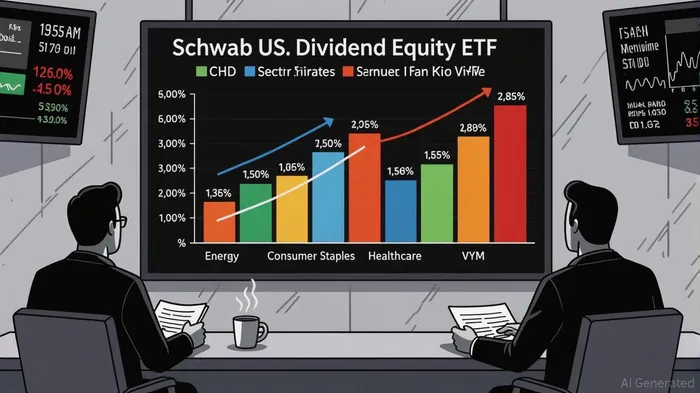
The Schwab U.S. Dividend Equity ETF (SCHD) has long been a favorite among passive income investors for its focus on high-quality, dividend-paying stocks. However, its portfolio structure—concentrated in just three sectors (Energy, Consumer Staples, . While this concentration has historically delivered resilience during market downturns, it also exposes investors to sector-specific vulnerabilities that could undermine long-term stability.
The Case for Concentration: Historical Resilience
, , . During the 2008–2010 , these sectors outperformed the S&P 500, with energy giants like ChevronCVX-- and industrials stalwarts like 3MMMM-- cushioning the fund's losses. Similarly, in 2020, healthcare and industrials provided defensive qualities amid . .
The Hidden Risks of Overconcentration
Despite its historical strengths, SCHD's sector concentration introduces significant risks. Energy stocks, for instance, are highly sensitive to and geopolitical events. A prolonged or regulatory shifts could erode the value of holdings like ConocoPhillipsCOP-- or EOG ResourcesEOG--. Consumer Staples, while traditionally defensive, faces margin pressures from inflation and shifting consumer preferences. Meanwhile, Healthcare's exposure to regulatory changes—such as —could impact companies like AbbVieABBV-- and MerckMRK--.
, further amplifying concentration risk. For example, a single sector downturn (e.g., a collapse in ) could disproportionately impact the fund's performance. This was evident in 2020, .
Alternatives for Diversification
To mitigate these risks, investors should consider alternatives with more balanced sector allocations. The Vanguard Dividend Appreciation ETF (VIG), for instance, . The WisdomTreeWT-- U.S. , technology, and consumer defensive stocks. Both funds reduce exposure to cyclical sectors like energy and healthcare.
For those seeking low-volatility income, the Franklin U.S. Low Volatility High Dividend ETF (LVHD) focuses on utilities and consumer defensive sectors, . Similarly, the Schwab International Dividend Equity ETF (SCHY) provides , .
Strategic Recommendations
- Blend SCHD with Diversified ETFs: Pair SCHD with funds like VIG or DLNDLN-- to balance sector exposure while maintaining a high yield.
- Monitor Sector-Specific Risks: Regularly assess the impact of regulatory changes (e.g., ) or commodity price swings on SCHD's top holdings.
- Consider Defensive Sectors: Allocate a portion of the portfolio to utilities or consumer staples ETFs (e.g., LVHD) to hedge against volatility in energy and industrials.
- Rebalance Periodically: Adjust sector allocations based on macroeconomic trends, such as increasing energy exposure during inflationary periods or reducing it during .
Conclusion
While SCHD's concentrated approach has historically delivered strong income and resilience, its sector-specific risks cannot be ignored. Passive income investors must weigh the benefits of high yields against the potential for uneven performance during downturns. By diversifying across sectors and incorporating low-volatility strategies, investors can build more resilient dividend portfolios that align with long-term stability goals. In an era of rising interest rates and shifting market dynamics, diversification remains the cornerstone of effective risk management.





Comentarios
Aún no hay comentarios