
Risks and Red Flags in Commodity and Equity Trading Schemes
The Evolution of Insider Trading: From Traditional to Shadow Schemes
Traditional insider trading remains a persistent threat. For instance, Ryan Squillante, a former equity trading head, leveraged material nonpublic information (MNPI) to short stocks of at least 10 companies, generating illicit profits of $217,000 before being sentenced to 60 days in prison and a $331,000 fine. Similarly, George Demos, a pharmaceutical executive, avoided $1.3 million in losses by selling shares ahead of an adverse FDA decision. These cases underscore the enduring allure of exploiting confidential information, even as regulatory scrutiny tightens.
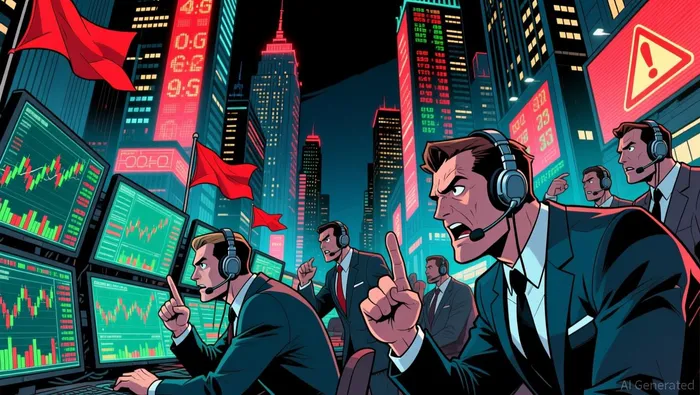
However, the most alarming developments involve shadow trading-a practice where individuals trade on MNPI not for their own employer but for a related entity. The landmark case of Matthew Panuwat, who traded in Incyte Corporation's securities after learning of Pfizer's acquisition of Medivation, marked a legal milestone. A federal jury found Panuwat liable, extending the misappropriation theory to cross-company transactions. This ruling highlights how interconnected industries create new vulnerabilities, as MNPI about one firm can directly impact peers.
Commodity Market Manipulation: Spoofing and Wash Sales
Commodity markets have also seen a surge in manipulative tactics. The CFTC's 2024 enforcement results revealed over $17.1 billion in monetary relief, with spoofing and wash sales dominating the agenda. For example, a Colorado trader and an Illinois company were sanctioned for spoofing E-mini S&P 500 and Nasdaq-100 futures, destabilizing market liquidity. Similarly, Shinhan Securities Co. Ltd. faced a $212,500 penalty for wash sales, a practice where trades are fabricated to distort price signals. These cases illustrate how algorithmic trading and fragmented market structures create fertile ground for manipulation.
Technological Countermeasures: The Rise of AI-Driven Surveillance
As schemes grow more complex, regulators are turning to advanced technologies to detect anomalies. A recent study introduced the Adaptive Market Graph Intelligence Network (AMGIN), a graph-based deep learning framework that models financial markets as spatio-temporal graphs. By integrating industry relationships and dynamic market behaviors, AMGIN identifies subtle patterns indicative of shadow trading-something traditional statistical methods often miss. This innovation reflects a broader shift toward data-driven surveillance, where machine learning tools augment human oversight.
Red Flags for Investors and Institutions
For market participants, vigilance is paramount. Key red flags include:
1. Unusual Trading Volumes: Sudden spikes in activity in thinly traded securities may signal spoofing or pump-and-dump schemes.
2. Cross-Market Correlations: Unexplained price movements in related assets (e.g., biotech peers during M&A rumors) could indicate shadow trading.
3. Algorithmic Anomalies: High-frequency trading patterns that deviate from historical norms may point to manipulative strategies.
4. Regulatory Scrutiny: Increased enforcement actions in specific sectors (e.g., micro-cap stocks) often precede systemic risks.
The Path Forward: Strengthening Resilience
The White House's emphasis on systemic cybersecurity investments underscores the need for a multi-layered defense against manipulation. Regulators must continue refining tools like AMGIN while fostering cross-border collaboration to address globalized schemes. For investors, diversifying risk exposure and leveraging real-time analytics can mitigate vulnerabilities.
In conclusion, the 2025 enforcement landscape reveals a stark reality: market manipulation is no longer confined to isolated actors but is increasingly sophisticated, cross-market, and technology-driven. By staying informed and adopting proactive strategies, stakeholders can safeguard their portfolios and uphold the integrity of global financial systems.





Comentarios
Aún no hay comentarios