
The Risks and Realities of High-Yield DeFi Projects: Lessons from the Kinto Collapse
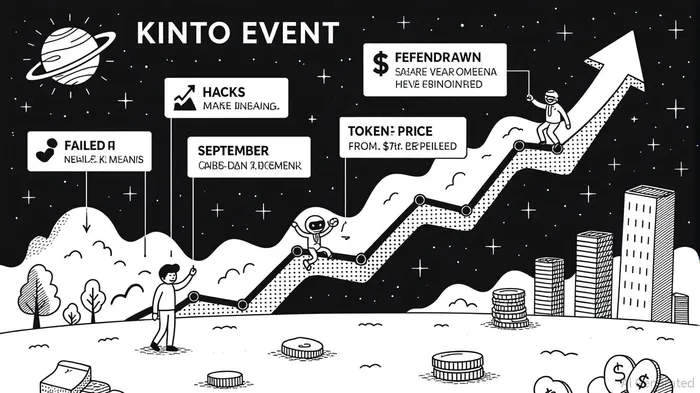
The DeFi ecosystem has long been a double-edged sword for investors: a realm of innovation and astronomical returns, but also one riddled with systemic risks. The collapse of Kinto DeFi in 2025 serves as a stark reminder of the dangers inherent in protocols that prioritize aggressive yield incentives over security and sustainability. By dissecting Kinto’s downfall, we uncover critical lessons for investors navigating the volatile DeFi landscape.
The Allure and Peril of High-Yield Promises
Kinto’s collapse was not an isolated incident but a symptom of a broader trend. The protocol offered APYs as high as 130% on stablecoins, a figure that defied economic logic in a market where even traditional finance struggles to generate double-digit returns. Such incentives attracted liquidity providers, but they also created a fragile ecosystem dependent on continuous inflows to service obligations. When the July 2025 hack drained $1.6 million in liquidity, the protocol’s inability to secure additional funding exposed the fragility of its model [1].
High-yield DeFi projects often operate on a Ponzi-like structure, where new deposits are used to pay existing yields. This model is inherently unsustainable during market downturns or liquidity crunches. Kinto’s failure to secure $1 million in debt to stabilize operations—despite its CEO’s public appeals—highlighted the market’s loss of confidence, a common precursor to collapse [1].
Technical Vulnerabilities: A Silent Killer
While financial mismanagement played a role, the technical exploit that triggered Kinto’s collapse was the immediate catalyst. The attack leveraged a known vulnerability in the ERC-1967 Proxy standard, a widely used OpenZeppelin codebase. By exploiting a gap in proxy contract initialization, attackers minted 110,000 unauthorized K tokens and drained $1.55 million from UniswapUNI-- and Morpho pools [2].
This incident underscores a critical flaw in DeFi: the overreliance on third-party code. Despite the vulnerability being identified in thousands of contracts, Kinto failed to implement safeguards or receive prior warnings [2]. The attack’s stealth—bypassing standard monitoring systems by directly manipulating storage slots—reveals how even audited protocols can harbor undetected risks [3].
Leadership and Recurring Patterns
Kinto’s CEO, Ramon Recuero, has a history of leading projects through crises. His previous venture, Babylon Finance, faced a major collapse in 2022, raising questions about whether the Kinto incident was a technical error or a pattern of mismanagement [3]. While Recuero proposed a recovery plan involving a token snapshot and liquidity restoration, the community’s skepticism was justified. The lack of transparency in his leadership and the repeated failures of his projects highlight the importance of due diligence on team credibility [2].
Broader Implications for DeFi Security
The Kinto collapse is part of a larger trend of DeFi vulnerabilities. In April 2025 alone, the industry lost $92.5 million to exploits, with proxy contract flaws accounting for a significant portion [2]. These incidents emphasize the need for:
1. Rigorous Security Audits: Protocols must go beyond standard audits to include dynamic testing and third-party code reviews.
2. Transparency in Code Deployment: Open-sourcing implementation details and using verifiable initialization processes can mitigate hidden vulnerabilities.
3. Regulatory Safeguards: While DeFi thrives on decentralization, mechanisms like insurance funds or multi-signature wallets for critical operations can reduce systemic risk.
Lessons for Investors
For investors, the Kinto case offers three key takeaways:
1. Skepticism of Unrealistic Yields: APYs exceeding 100% are rarely sustainable. Investors should scrutinize the economic model behind such offers.
2. Due Diligence on Security: Protocols using third-party code must demonstrate proactive risk management. Tools like CertiK or OpenZeppelin’s audits should be non-negotiable.
3. Diversification and Hedging: High-yield DeFi projects should constitute a small portion of a diversified portfolio. Hedging strategies, such as insurance tokens or multi-chain exposure, can mitigate losses.
Conclusion
The Kinto collapse is a cautionary tale for both investors and protocol developers. It illustrates how the pursuit of aggressive yields can blind stakeholders to technical and financial risks. As DeFi evolves, the industry must prioritize security, transparency, and sustainable economic models. For investors, the lesson is clear: high returns come with high risks, and due diligence is the only shield against the next Kinto.
Source:[1] Kinto Shuts Down After Hack as Token Plunges 81% [https://thecurrencyanalytics.com/altcoins/kinto-shuts-down-after-hack-as-token-plunges-81-195758][2] Kinto Crisis Revelation: How Should Investors Hedge ..., [https://www.bitget.com/news/detail/12560604860164][3] Just Bad Luck? - Rekt News, [https://rekt.news/just-bad-luck]






Comentarios
Aún no hay comentarios