
The Risks of Overhyped Mergers and the Implications for Retail Investors: A Behavioral Finance Perspective on the LimeWire-Fyre Festival Acquisition
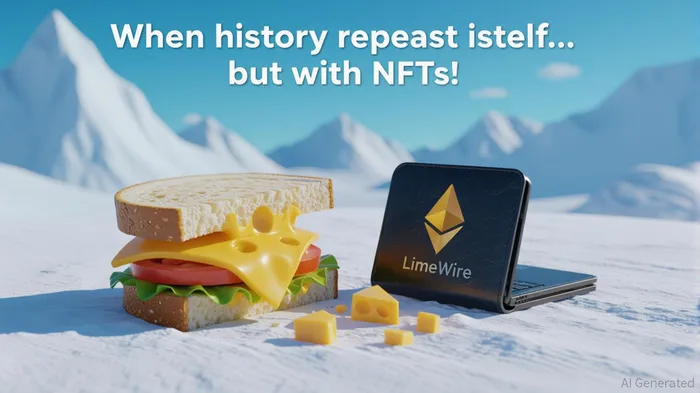
In July 2025, LimeWire—a once-infamous file-sharing platform turned crypto-based NFT company—acquired the Fyre Festival brand for $245,000 via an eBayEBAY-- auction, sparking a wave of speculation and skepticism. The move, humorously titled “What Could Possibly Go Wrong?” by the company, references the 2017 Fyre Festival's catastrophic failure, which left attendees stranded in the Bahamas with no food, shelter, or performances and led to a six-year prison sentence for its organizer, Billy McFarland [1]. While LimeWire CEO Julian Zehetmayr emphasized that the acquisition aimed to rebrand the Fyre name for “real-world experiences” and avoid past mistakes, the transaction became a case study in how behavioral finance principles like overconfidence, herd behavior, and narrative fallacy influence retail investor decisions during overhyped corporate events [2].
Overconfidence and the Illusion of Control
Retail investors often fall prey to overconfidence bias, overestimating their ability to predict outcomes or assess risks. In the case of LimeWire's acquisition, some investors may have interpreted the purchase as a signal of legitimacy or growth potential, despite the brand's troubled history. A 2024 study on the Pakistan Stock Exchange found that overconfidence significantly impacts individual investors' decision-making, with those exhibiting the “illusion of control” more likely to take speculative risks [3]. This bias was evident in the initial frenzy around the merger rumors, where social media speculation—despite being debunked—led to inflated expectations. For example, Ryan Reynolds' quip about bringing his own “palette of water” to LimeWire's event highlighted the absurdity of reviving a brand synonymous with failure, yet some investors may have dismissed such skepticism, believing they could “spot the opportunity” others missed [4].
Herd Behavior and Social Media Amplification
Herd behavior, or the tendency to follow the crowd, further exacerbates risks during overhyped mergers. The original Fyre Festival's 2017 collapse was fueled by influencer-driven marketing that created a fear-of-missing-out (FOMO) mentality among attendees [5]. Similarly, the 2025 acquisition reignited social media chatter, with platforms like Twitter and RedditRDDT-- amplifying narratives about LimeWire's “bold” rebranding. A 2023 study on herding behavior in financial markets noted that retail investors are particularly susceptible to collective action during high-attention events, often prioritizing social validation over due diligence [6]. This dynamic can lead to speculative bubbles, as seen in the GameStopGME-- short squeeze, where retail investors, influenced by online communities, drove abnormal market movements. In the case of LimeWire and Fyre, the lack of concrete details about the rebranded brand's vision left investors relying on peer sentiment rather than fundamentals—a recipe for volatility.
Narrative Fallacy and the Power of Storytelling
Narrative fallacy—the tendency to construct simplistic, emotionally compelling stories to explain complex events—plays a critical role in shaping investor perceptions. LimeWire's press release, which framed the acquisition as a “reimagined vision” of transparency and humor, exemplifies how companies leverage storytelling to rebrand risk-laden assets [7]. Behavioral finance research from 2025 highlights that investors often prioritize narratives over data, particularly during uncertain times [8]. For instance, some may have interpreted the $245,000 price tag as a “bargain,” ignoring the fact that McFarland sold the brand to settle $26 million in restitution [9]. This cognitive bias is further compounded by the media's role in amplifying success stories while downplaying risks, creating a feedback loop that distorts rational decision-making.
Market Implications and Retail Investor Risks
The interplay of these biases has tangible consequences. During the 2025 merger rumors, unverified speculation about a crypto-driven collaboration between LimeWire and Fyre Festival led to short-term stock price volatility for related entities, despite no credible evidence supporting the claims [10]. A 2024 empirical study found that rumors—especially those involving speculative ventures—can increase stock price synchronicity and crash risk, particularly for companies with low transparency [11]. For retail investors, this means overhyped mergers often result in overvaluation, followed by sharp corrections when reality fails to meet expectations. The Fyre Festival's history of fraud and logistical failures serves as a cautionary tale: investors who ignored due diligence in 2017 faced losses of over $26 million, and similar risks persist in 2025 [12].
Conclusion: Lessons for Retail Investors
The LimeWire-Fyre Festival acquisition underscores the importance of recognizing behavioral biases in investment decisions. Retail investors must resist the allure of overhyped narratives, conduct thorough due diligence, and avoid herd mentality. As behavioral finance research emphasizes, financial literacy and risk composure—maintaining disciplined decisions during market turbulence—are critical to mitigating losses [13]. In an era where social media and meme culture drive speculation, the line between opportunity and folly grows increasingly thin. For investors, the lesson is clear: history may rhyme, but it rarely repeats itself without consequence.





Comentarios
Aún no hay comentarios