
The Risks and Opportunities in Stablecoin Infrastructure Amid Geopolitical Volatility
Venezuela's economic collapse has turned its citizens into pioneers of stablecoin adoption. With hyperinflation eroding the bolívar and U.S. sanctions tightening around the Maduro regime, stablecoins like USDTUSDT-- have become a lifeline for millions. They are used for everything from paying rent to settling cross-border oil deals according to analysis. Yet this rapid adoption masks a fragile infrastructure riddled with vulnerabilities. For investors, the situation in Venezuela offers a stark lesson: stablecoin platforms in high-risk markets are both a test of resilience and a goldmine for compliance-focused fintech solutions.
Venezuela's Stablecoin Ecosystem: A Double-Edged Sword
The bolívar's collapse has forced Venezuelans to rely on stablecoins as a de facto currency. By 2025, stablecoins facilitated 10% of grocery payments and 9% of remittances. Platforms like Binance and Airtm now handle payroll and small business transactions, while peer-to-peer (P2P) exchanges thrive via messaging apps and local brokers according to reports. This shift is not just economic-it's existential. For many, stablecoins are the only way to preserve value in a country where savings lose half their worth overnight according to analysis.
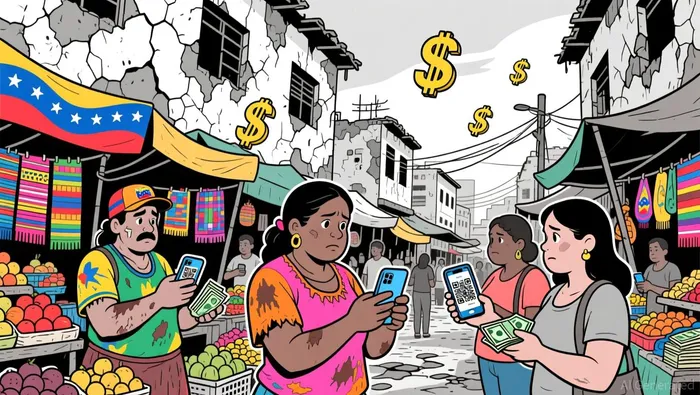
However, the ecosystem is a patchwork of informal systems and weak regulation. The government's crypto regulator, SUNACRIP, has been paralyzed by corruption since 2023, leaving enforcement to the whims of state actors and private players. This vacuum has created fertile ground for sanctions evasion. State-owned oil company PDVSA, for instance, increasingly demands stablecoins to bypass U.S. sanctions, while narcotics traffickers exploit P2P markets to move illicit funds according to reports. The result is a dual reality: stablecoins empower ordinary Venezuelans but also enable geopolitical risks.
Systemic Risks: From Flawed BaaS Models to Sanctions Enforcement
The vulnerabilities in Venezuela's stablecoin infrastructure are not unique but amplified by its geopolitical position. Consider the failed Petro, a state-backed cryptocurrency launched in 2018 to circumvent sanctions. It collapsed by 2024 due to lack of trust and international support according to analysis. Meanwhile, private BaaS models face their own pitfalls. In late 2025, JPMorgan Chase froze accounts for fintechs BlindPay and Kontigo, citing compliance concerns over chargebacks and operational risks. Though the banks denied targeting stablecoin activity directly, the incident exposed the fragility of operating in high-risk jurisdictions.
These cases highlight a broader issue: stablecoin platforms in volatile markets often lack the compliance infrastructure to withstand scrutiny. For example, Venezuela's fragmented regulatory environment-coupled with lax KYC controls- makes it easier for bad actors to exploit the system. The U.S. has responded aggressively, seizing a sanctioned oil tanker in December 2025 to disrupt illicit funding streams. Such actions underscore the tension between humanitarian crypto use and its weaponization for sanctions evasion.
Opportunities in Compliance-Focused Fintech
The risks, however, are not insurmountable. They point to a growing demand for compliance-focused fintech and blockchain security solutions. In Venezuela, companies must now adhere to Ruling No. 044-2021, which mandates digital security. Yet enforcement remains inconsistent, creating a gap for innovative tools.
Global trends in 2025 emphasize blockchain's role in automating compliance. Smart contracts and immutable ledgers can streamline AML/KYC processes, as seen in SWIFT's integration of blockchain for real-time transaction validation. For Venezuela, this means platforms like Cybrid and Transak-compliant on/off-ramp providers-are gaining traction by offering secure, auditable solutions according to analysis. These companies are not just mitigating risks; they're building infrastructure where traditional banks have failed.
Investors should also note the regulatory tailwinds. The U.S. GENIUS Act and EU's MiCA regulation have set global standards for stablecoin transparency, pushing even high-risk markets to adopt baseline compliance measures. In Venezuela, this could force fintechs to prioritize security to access international markets-a win for both investors and regulators.
Investment Implications: Balancing Risk and Reward
For investors, the key is to separate the signal from the noise. Stablecoin infrastructure in high-risk markets like Venezuela is inherently volatile, but the opportunities lie in the solutions addressing its flaws. Compliance-focused fintechs and blockchain security providers are better positioned to capitalize on this dynamic than pure-play stablecoin issuers.
Consider the measurable outcomes: in 2025, global stablecoin transaction volumes surpassed $700 billion, with 75% of fintech partner banks reporting compliance-related losses exceeding $100,000 according to data. These figures highlight the scale of the problem-and the market for solutions. Startups that integrate blockchain-based compliance tools, like immutable ledgers and real-time monitoring, are likely to outperform in this environment according to analysis.
Yet caution is warranted. The collapse of SynapseSYN-- Financial Technologies in 2024-exposing $265 million in unreconciled funds- shows how even well-intentioned models can fail without robust oversight. Investors must prioritize companies with proven compliance frameworks and diversified revenue streams.
Conclusion
Venezuela's stablecoin ecosystem is a microcosm of the broader challenges facing digital finance in geopolitically volatile regions. While the risks of sanctions evasion and flawed infrastructure are real, they also create a unique opportunity for compliance-focused fintechs. For investors, the lesson is clear: the future of stablecoin infrastructure lies not in the tokens themselves, but in the systems that ensure they're used responsibly.






Comentarios
Aún no hay comentarios