
The Risks of Celebrity-Backed Crypto Projects: Lessons from Justin Sun's WLFI Loss
In recent months, the collapse of World Liberty FinancialWLFI-- (WLFI), a crypto project backed by high-profile figures including Justin Sun and Donald Trump, has sparked intense debate about the risks associated with celebrity-endorsed blockchain initiatives. The incident, which saw Sun's wallet blacklisted after transferring $9 million in WLFIWLFI-- tokens, exposed critical governance flaws and asset volatility that could serve as cautionary tales for investors. This article delves into the structural weaknesses of WLFI, illustrating how centralized control mechanisms and liquidity risks can undermine even the most politically connected projects.
Governance Risks: Centralization in a "Decentralized" Ecosystem
The governance structure of WLFI has come under scrutiny following the blacklisting of Justin Sun's wallet. According to a report by CCN, after Sun transferred approximately $9 million in WLFI tokens to exchanges, the project's smart contract activated a blacklist function, freezing 595 million unlocked tokens worth about $100 million. This action highlighted the centralized control embedded in WLFI's architecture, allowing administrators to freeze wallets under the guise of risk mitigation. Independent analysis by Kryll X-Ray revealed that WLFI's governance model employs proxy contracts and administrative overrides, enabling the development team to modify token logic, alter fees, and enforce rules selectively without deploying new contracts. Such mechanisms contradict the project's decentralized branding and raise concerns about unequal treatment of stakeholders.
Compounding these governance issues is the concentration of token ownership among top holders. Data indicates that the top 10 addresses control 74% of WLFI's total supply, creating significant risks of market manipulation and liquidity volatility. This concentration not only undermines the principles of decentralization but also exposes the project to potential sell-offs or price manipulation by a small group of actors.
A 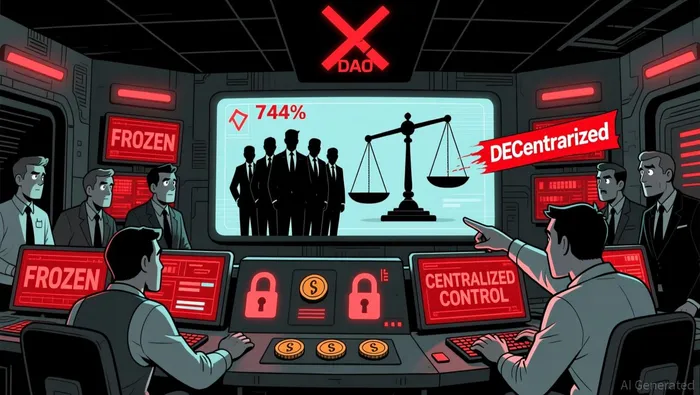 would visually represent the key governance issues at play in the WLFI project.
Asset Volatility: Security Breaches and Regulatory Scrutiny
The asset volatility of WLFI was further exacerbated by a security breach in November 2025. In response, the project burned 166.67 million tokens valued at $22 million and reallocated them to a secure recovery wallet after identifying phishing attacks and exposed seed phrases. While these measures aimed to mitigate losses, they also introduced centralization concerns, as the team unilaterally altered supply dynamics. The burn and reallocation, coupled with regulatory scrutiny from U.S. Senators Elizabeth Warren and Jack Reed, led to a sharp decline in WLFI's price, dropping over 40% since its launch.
Regulatory pressures intensified as Warren and Reed requested an investigation into potential sales of WLFI tokens to sanctioned entities, including those linked to North Korea and Russia. These allegations, though contested by WLFI, added to market uncertainty and further eroded investor confidence.
Lessons for Investors
The WLFI incident underscores the inherent risks of investing in celebrity-backed crypto projects. Governance structures that prioritize centralized control over decentralization, combined with liquidity risks and regulatory vulnerabilities, can lead to catastrophic outcomes. Investors must conduct rigorous due diligence, scrutinizing not only the technology but also the distribution of token ownership and the transparency of governance mechanisms. As the DeFi ecosystem evolves, the lessons from WLFI serve as a stark reminder that not all that glitters in the crypto space is gold.







Comentarios
Aún no hay comentarios