
Risk Management in Real Estate: Navigating Insurable Threats and Regulatory Shifts Post-Los Angeles Wildfires
Risk Management in Real Estate: Navigating Insurable Threats and Regulatory Shifts Post-Los Angeles Wildfires
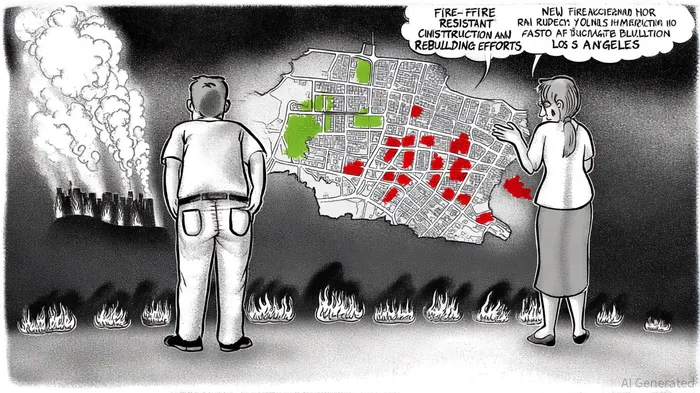
The 2025 Los Angeles wildfires, which destroyed over 18,000 structures and caused insured losses exceeding $44.5 billion, according to a US News analysis, have become a pivotal case study in real estate risk management. As the housing market grapples with a severe inventory shortage and insurers recalibrate risk models, the interplay between insurable threats, regulatory interventions, and market resilience is reshaping investment strategies. This analysis explores how the confluence of wildfire-driven disruptions and policy responses is redefining risk mitigation in real estate.
The Real Estate Market: A Perfect Storm of Scarcity and Demand
The wildfires exacerbated an already strained housing market. With 16,251 homes and commercial properties lost, rental prices in the Los Angeles metro area surged by 20% in the three months post-disaster, with some neighborhoods witnessing over 200% rent hikes, according to a CBS News report. Median home prices in fire-affected areas like Palisades and Altadena rose by 15% to 24% year-over-year, driven by a combination of reduced supply and heightened demand from displaced residents, as outlined in a PropertyShark report.
Rebuilding efforts, however, face significant headwinds. Construction costs have spiked due to material shortages and labor constraints, while regulatory hurdles for fire-resistant rebuilding add complexity. Analysts project home prices could rise by up to 5% over the next 18 months as inventory remains depressed, a projection also noted in the US News analysis. This dynamic underscores the vulnerability of real estate markets to climate-driven disasters and the need for adaptive investment strategies.
Insurance Industry: From Crisis to Innovation
The wildfires exposed critical flaws in traditional insurance models. Insurers are now deploying advanced tools, including climate-driven simulations and satellite data, to refine risk assessments, according to a LosAngeles365 analysis. These innovations aim to address the growing unpredictability of wildfires, which are intensifying due to climate change and urban sprawl into high-risk zones.
However, the financial toll is being passed on to consumers. California's FAIR Plan, the state's insurer of last resort, has proposed a 35.8% rate hike to offset wildfire-related losses, according to a Los Angeles Times report. This follows broader industry trends: insurers are increasingly using forward-looking catastrophe models to set premiums, incorporating variables like mitigation efforts and climate projections, as noted by the LosAngeles365 analysis. For investors, this signals a shift toward risk-based pricing, where properties in high-risk areas face escalating costs unless retrofitted with fire-resistant features.
Regulatory Responses: Balancing Risk and Resilience
California's regulatory framework has evolved rapidly in response to the crisis. In July 2025, the state mandated wildfire risk disclosures for pre-2010 homes in high-risk zones, requiring sellers to detail fire vulnerabilities and completed mitigation measures, such as ember-resistant vents, as reported by the Los Angeles Times. These disclosures aim to enhance transparency while incentivizing low-cost retrofits.
Parallel efforts include reinsurance support programs to stabilize the insurance market and mandates for fire-resistant construction. For instance, insurers must now offer coverage in wildfire-prone areas, with a minimum of 85% market share by 2025, increasing by 5% every two years, according to the CBS News report. Such policies seek to prevent market withdrawal by insurers while ensuring continued access to coverage for residents.
Investment Implications and Future Outlook
For real estate investors, the post-fire landscape demands a recalibration of risk assessments. Properties in high-risk zones without fire-resistant features may see declining value or liquidity challenges, while those with mitigation measures could command premiums. The California Department of Insurance's requirement for forward-looking catastrophe models, highlighted by the LosAngeles365 analysis, suggests that risk-adjusted returns will become a central metric in real estate valuation.
Moreover, regulatory shifts like mandatory disclosures and reinsurance programs create both challenges and opportunities. Developers who prioritize fire-hardening and compliance with new standards may gain a competitive edge, while investors in reinsurance or mitigation technology firms could benefit from growing demand.
Conclusion
The Los Angeles wildfires of 2025 have accelerated a paradigm shift in real estate risk management. As insurers adopt advanced risk models, regulators enforce transparency, and investors navigate a landscape of scarcity and innovation, the sector is being reshaped by the dual imperatives of resilience and adaptability. For stakeholders, the lesson is clear: in an era of escalating climate risks, proactive risk management is no longer optional-it is a prerequisite for sustainable investment.







Comentarios
Aún no hay comentarios