
The Risk-Free Myth: How U.S. Debt's New Reality is Redefining Markets and Portfolios
The U.S. Treasury market, once the bedrock of global financial stability, is undergoing a seismic shift. Rising yields, fiscal deficits, and geopolitical tensions are forcing investors to confront a stark reality: the “risk-free” status of U.S. debt is fading. Let's dissect how Moody'sMCO-- downgrade, fiscal mismanagement, and crumbling foreign demand are reshaping markets—and what this means for your portfolio.
The Moody's Downgrade: A Symbolic Shift in Perception
On May 16, 2025, Moody's downgraded U.S. debt to Aa1, stripping it of its AAA rating and aligning it with peers like Canada and Germany. This wasn't just a technicality; it marked a historic loss of confidence.
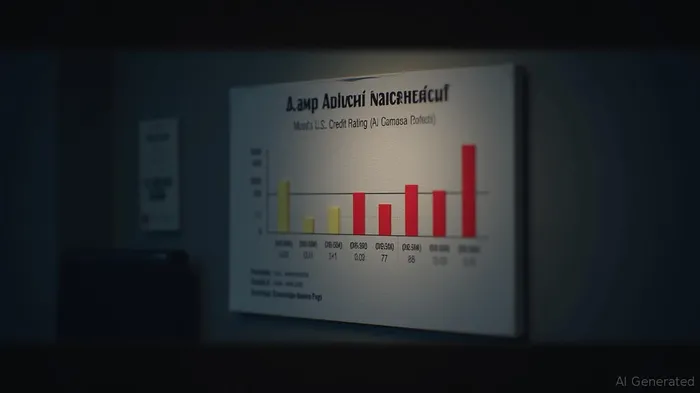
The downgrade stemmed from $1.9 trillion deficits (6.2% of GDP in 2025) and projected $4 trillion in debt growth by 2035. The fallout was immediate: mortgage rates jumped to 6.92%, credit card rates hit 20.12%, and the 10-year Treasury yield spiked to 4.5%. While yields stabilized, the message was clear: investors now demand higher returns to hold U.S. debt.
The Tax Cut Hangover: Fiscal Math vs. Political Reality
The 2017 Tax Cuts and Jobs Act (TCJA), championed by the Trump administration, promised growth but delivered a $2.3 trillion deficit by 2025. With Congress reluctant to roll back the cuts, the CBO now forecasts debt-to-GDP hitting 118% by 2035—surpassing post-WWII levels.
This fiscal recklessness is a triple threat:
1. Higher interest costs: Rising debt means more dollars diverted to interest payments, crowding out spending on infrastructure or defense.
2. Crowding-out effect: Federal borrowing competes with private investment, raising corporate borrowing costs.
3. Rating agency pressure: S&P and Fitch have already downgraded U.S. debt; further slips could trigger panic.
Foreign Buyers Flee: The End of the Dollar's Exorbitant Privilege?
Foreign demand for Treasuries is collapsing. China's holdings dropped to $757 billion (a 2009 low), while Eurozone buyers shifted funds to AAA-rated bonds in Luxembourg. Geopolitical tensions—tariffs, debt ceiling standoffs—have eroded trust.
The implications are stark:
- Supply/demand imbalance: U.S. debt issuance is soaring, but buyers are shrinking.
- Higher yields to attract buyers: The 30-year Treasury yield hit 5% in late 2024, pricing in this scarcity.
Spillover Effects: From Mortgages to Equity Valuations
The ripple effects of rising yields are everywhere:
1. Mortgage Rates at 6.92%
Homeownership is becoming a luxury. Higher mortgage rates could trigger a housing correction, with spillover risks to consumer spending.
2. Equity Valuations Under Pressure
Equities and bonds are now correlated—rising yields mean higher discount rates for future cash flows.
This synchronization suggests markets are pricing in broader economic stress.
3. The Dollar's Dilemma
While the dollar remains dominant, its status is eroding. A weaker dollar could boost U.S. exports but fuel import inflation—a vicious cycle for the Fed.
Navigating the New Landscape: Investment Strategies for Yield Seekers
The old playbook—buy-and-hold Treasuries—is obsolete. Here's how to adapt:
1. Shorten Bond Durations
Long-dated Treasuries are vulnerable to rising rates. Focus on 2-5 year maturities, which offer yield without excessive duration risk.
2. Shift to High-Quality Corporates
AAA-rated corporate bonds now offer comparable yields to Treasuries but with credit risk premiums. Think utilities, consumer staples, or tech giants.
3. Embrace TIPS
Inflation-protected securities (TIPS) hedge against rising prices. Their real yields (~2.15%) are historically high, making them a safer bet than nominal bonds.
4. Diversify Globally
Consider Canadian or German bonds (rated AAA) or emerging market debt with growth tailwinds.
5. Underweight Long Treasuries
Avoid 10+ year maturities unless yields hit 5%+—a risk/reward mismatch at current levels.
Conclusion: The New Risk-Adjusted Reality
The U.S. Treasury market is no longer a safe haven—it's a risk asset. Investors must account for fiscal deficits, geopolitical risks, and shifting demand. By shortening durations, diversifying globally, and favoring quality over yield, portfolios can navigate this new era without sacrificing returns.
The writing is on the wall: the “risk-free rate” is dead. It's time to adapt.







Comentarios
Aún no hay comentarios