
Rising Wealth Inequality and Economic Resilience: Strategic Investment Opportunities in a Fractured Market
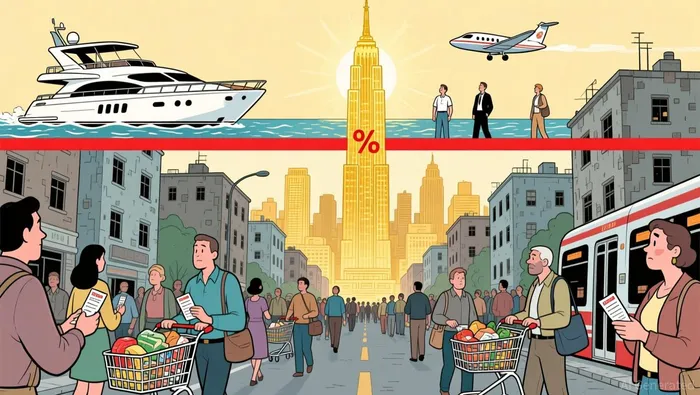
The global economy in 2025 is defined by a stark duality: unprecedented wealth concentration among the elite and a fragile middle-class base struggling to adapt to inflationary pressures and shifting consumer behaviors. According to UBS' Global Wealth Report, the top 1% of the global population now owns nearly half of all assets, while the bottom 40.7% holds less than 1%. This structural imbalance, exacerbated by Trump-era policies and perpetuated by crony capitalism, has created a market ripe for strategic investments in sectors that either cater to elite wealth dynamics or bolster middle-class resilience.
Wealth Inequality and Economic Resilience
Wealth concentration has become a defining feature of economic resilience-or its absence. By 2025, the top 10% of the global population controls 75% of private wealth, while the bottom 50% holds just 2% according to QazInform. In the U.S., the top 1% owns 40.5% of national wealth, with fewer than 60,000 individuals (0.001% of the population) holding three times the wealth of the entire bottom half according to a Guardian report. This disparity is not merely a distributional issue but a systemic one, as capital accumulation at the top outpaces economic growth, with billionaire wealth increasing at 8% annually since the 1990s. Such trends reinforce inequality, as growth increasingly benefits asset holders rather than wage earners.
 Governor Gavin Newsom has been a vocal critic of Trump-era policies, which he argues have worsened these imbalances. Newsom attributes California's $12 billion budget deficit to Trump's tariffs, which he claims destabilized tax revenues and disproportionately harmed middle-class families. He also highlights how Trump's tax cuts for the wealthy exacerbated inequality, contrasting them with his own focus on innovation and fiscal restraint. While Newsom opposes wealth taxes, his 2025-26 budget emphasizes investments in AI, robotics, and fusion energy-sectors poised to benefit from elite capital.
Structural Shifts in Consumer Spending
Consumer behavior in 2025 reflects a bifurcated market. High-income households, shielded from inflationary pressures, drive 75% of spending in luxury goods, travel, and experiential services. Meanwhile, 75% of lower-income consumers have traded down in at least one category, favoring discount retailers, private-label products, and secondhand goods. Gen Z, in particular, exemplifies this duality: despite cutting overall spending by 13%, they splurge on beauty, fashion, and dining, prioritizing affordability and identity-driven purchases.
These shifts create clear investment opportunities. For instance, the rise of "value-driven" consumption-exemplified by the growth of discount chains and upcycled goods-suggests strong potential in retail and e-commerce platforms catering to budget-conscious buyers. Conversely, the elite's continued spending on luxury and innovation underscores the appeal of high-margin sectors like private aviation, AI-driven services, and exclusive real estate.
Investment Strategies: Elite Wealth and Middle-Class Resilience
1. Capitalizing on Elite Wealth Dynamics
The ultra-wealthy's disproportionate share of global assets (6.5% held by the top 0.003%) according to Inequality.org fuels demand for niche, high-value assets. Sectors to consider include:
- Luxury goods and services: Brands offering exclusive, identity-driven products (e.g., high-end fashion, bespoke travel) will benefit from the top 1%'s spending habits.
- AI and innovation: Newsom's California Jobs First Blueprint prioritizes AI, robotics, and fusion energy, aligning with elite capital flows.
- Private equity and real estate: Wealthy investors increasingly channel funds into private markets, where returns outpace public equities.
2. Strengthening Middle-Class Resilience
For investors seeking to address systemic inequality, opportunities lie in sectors that empower middle-class consumers:
- Discount retail and private-label goods: With 46% of shoppers switching to cheaper alternatives according to TraxRetail, companies like Walmart and Dollar General remain resilient.
- Essential services and infrastructure: Newsom's budget includes $322.2 billion in spending, with a focus on education and housing, signaling long-term demand for affordable housing and public transit.
- Renewable energy and sustainability: As wealth concentration drives climate policy debates according to QazInform, investments in green energy and circular economy models align with both regulatory trends and consumer demand.
Newsom's Policies and Regional Opportunities
California's fiscal strategies offer a microcosm of broader trends. While Newsom's budget cuts 6,500 government jobs and prioritizes fiscal restraint, it also allocates funds to AI integration and a chip design center according to a CalBudgetCenter report. Investors should monitor state-level policies in innovation and infrastructure, as California's $4-trillion GDP serves as a bellwether for national and global markets.
Conclusion
The 2025 economy is defined by a tension between elite wealth concentration and middle-class fragility. For investors, this duality presents two clear pathways: capitalizing on the spending power of the top 1% or supporting sectors that enhance middle-class resilience. As Newsom's critique of Trump-era policies and California's fiscal strategies illustrate, the future of economic resilience lies in balancing innovation-driven growth with inclusive, value-oriented investments.





Comentarios
Aún no hay comentarios