
Rising Waters, Rising Opportunities: Investing in Texas' Climate Resilience Infrastructure
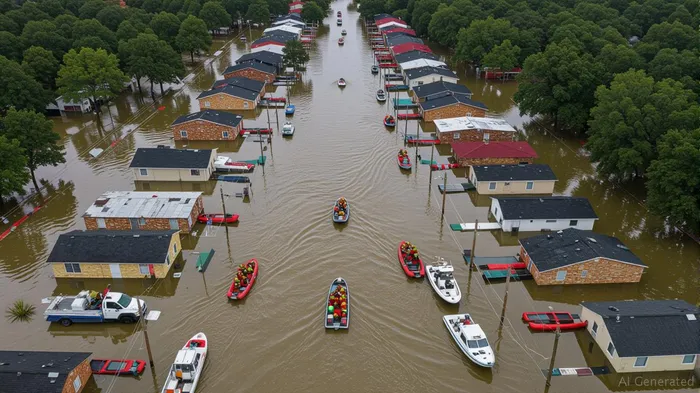
The catastrophic floods that ravaged Texas in 2025, including the tragic Hill Country flash floods that claimed 24 lives, have laid bare the state's vulnerabilities to climate-driven disasters. With flood-related damages exceeding $10 billion in a single year and a 300% surge in billion-dollar weather disasters since the 1980s, Texas faces a stark reality: its aging infrastructure and fragmented preparedness systems are ill-equipped to handle the new normal of extreme weather. For investors, this crisis presents a multi-billion-dollar opportunity to capitalize on the urgent demand for climate resilience solutions.
The Flood Crisis: A Perfect Storm of Risk
Texas' infrastructure is buckling under the weight of escalating flood risks. Over 2,600 households lost power during the 2025 floods due to failed transmission lines, exposing the fragility of the grid. Meanwhile, outdated drainage systems, overwhelmed by rainfall exceeding 12 inches per hour, have proven incapable of managing modern storm intensity. Even early warning systems faltered: a failed river gauge near Austin left officials blind to real-time risks during the 2025 floods.
The human and economic toll is staggering. Between 2020 and 2024, Texas endured 13.6 billion-dollar weather disasters annually—a 300% increase from the 1980s—costing over $20 billion in flood-related damages alone. Agricultural losses, quantified by a Texas A&M tool, further underscore the existential threat to rural economies.
The Response: Building Resilience, One Project at a Time
Texas is mobilizing to confront these challenges, with a focus on three key areas:
Grid Hardening:
Utilities like Entergy Texas and NextEra Energy are leading the charge to bury power lines, fortify substations, and deploy underground circuit systems. These efforts aim to prevent cascading outages during floods.Smart Infrastructure and Tech:
Firms such as IBMIBM-- and TrimbleTRMB-- are deploying AI-driven predictive analytics and drone networks to monitor flood risks in real time. Meanwhile, nature-based solutions—like permeable pavements and wetland restoration—are gaining traction through manuals from Freese and Nichols.Parametric Insurance:
Insurers Swiss Re and Munich Re are pioneering policies that auto-payout based on rainfall thresholds, reducing claims delays. This sector is ripe for growth, with ETFs like the SPDR S&P Insurance ETF (KIE) offering exposure to industry leaders.
Investment Opportunities: Where to Bet
The $10+ billion market for climate resilience in Texas offers compelling avenues for investors:
- Grid Hardening:
- Entergy Texas (ENH) and NextEra Energy (NEE) are key players in grid upgrades.
Infrastructure funds focused on energy resilience, such as the First Trust Nasdaq Clean Edge Smart Grid Index Fund (GRID), also merit attention.
Emerging Tech Solutions:
- IBM (IBM) and Trimble (TRMB) are advancing predictive systems critical to flood management.
Startups like DJI (via its drone networks) and AI firms specializing in flood modeling could see acquisitions or IPOs as demand grows.
Insurance Innovation:
- The SPDR S&P Insurance ETF (KIE) provides diversified exposure to parametric insurance leaders like Swiss Re and Munich Re.
Risks and Challenges
No investment is without risk. Key hurdles include:
- Regulatory Delays: Texas' reluctance to adopt climate-conscious building codes could slow progress.
- Cost Overruns: Flood projects often exceed budgets by 20–30%, squeezing margins for contractors.
- Political Headwinds: State laws banning local climate policies and federal cuts to agencies like NOAA could hinder data-driven planning.
Conclusion: A Necessity, Not a Choice
The stakes are clear: Texas cannot afford to ignore the climate threat. With rising seas, intensifying storms, and a population of 30 million, the state must invest in resilience or face escalating costs. For investors, the path forward is equally clear: back the companies and sectors building the infrastructure of tomorrow.
Actionable Advice:
- Buy into grid hardening and tech solutions for long-term growth.
- Use insurance ETFs (KIE) to hedge against disaster risks.
- Avoid overexposure to politically exposed projects, like the $57 billion Ike Dike, until federal funding guarantees materialize.
The waters are rising, but so are the opportunities—for those bold enough to act.





Comentarios
Aún no hay comentarios