
The Rising Threat of State-Sponsored Cyberattacks and Their Impact on Crypto Market Stability
The cryptocurrency market, long celebrated for its innovation and decentralization, now faces a growing existential threat: state-sponsored cyberattacks orchestrated by groups like North Korea's Lazarus Group. In February 2025, the Lazarus Group executed the largest cryptocurrency heist in history, stealing $1.5 billion in EthereumETH-- (ETH) from the Dubai-based exchange Bybit through a sophisticated supply chain compromise. This attack not only exposed critical vulnerabilities in the crypto ecosystem but also underscored the strategic risks for asset managers navigating an increasingly unstable market.
The Lazarus Group's Evolving Tactics
The Bybit heist exemplifies the Lazarus Group's advanced capabilities. By infiltrating a third-party multisig platform, Safe{Wallet}, the hackers exploited a developer's AWS credentials through social engineering to alter transaction interfaces and redirect funds to North Korean-controlled wallets. This method highlights a shift from direct exchange breaches to targeting supply chain intermediaries-a tactic that complicates attribution and mitigation efforts.
Such attacks are not isolated incidents. According to Chainalysis, over $2.17 billion has been stolen from cryptocurrency services in 2025 alone, with the Bybit heist accounting for the majority of this figure. The Lazarus Group's operations are driven by North Korea's need to circumvent international sanctions, funding its military programs while destabilizing global financial systems.
Financial Impact and Market Volatility
The immediate financial impact of the Bybit heist was staggering. Within days, 22% of the stolen ETH was converted to BitcoinBTC-- (BTC) using mixers and decentralized exchanges (DEXs), with 86.29% of the funds laundered by March 2025. This rapid obfuscation of stolen assets has made recovery efforts nearly impossible, with only 3% of the funds frozen as of April 2025.
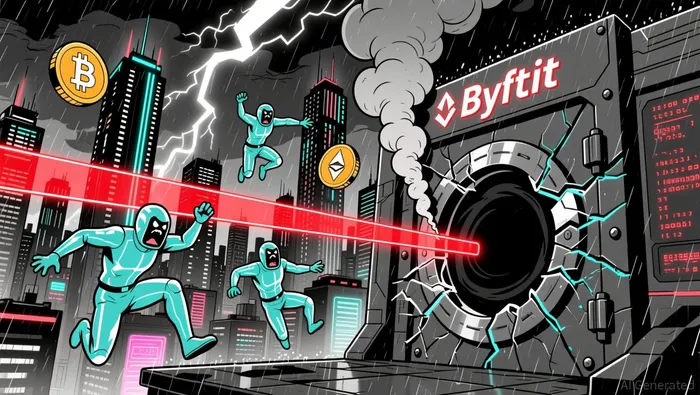
Beyond financial losses, these attacks exacerbate market volatility. The crypto sector, already prone to swings due to regulatory uncertainty and macroeconomic factors, now faces heightened risks from cyber threats. For instance, the Bybit heist coincided with a 12% drop in ETH prices within a week, reflecting investor panic and eroded trust in exchange security. Asset managers must now factor in not only market fundamentals but also the geopolitical and cyber risks that could trigger abrupt liquidity crises.
Strategic Risks for Crypto Asset Managers
The Lazarus Group's activities pose three critical strategic risks for asset managers:
1. Operational Vulnerabilities: The reliance on third-party services (e.g., multisig platforms, cold wallets) creates attack surfaces that hackers exploit. The Bybit heist demonstrated how a single compromised developer could unravel an entire exchange's security framework according to analysis.
2. Regulatory Scrutiny: Governments are responding to these threats with stricter oversight. U.S. lawmakers, including Senators Elizabeth Warren and Jack Reed, have called for enhanced cybersecurity measures and international collaboration to counter North Korean cyber operations. Regulatory shifts could increase compliance costs and limit arbitrage opportunities.
3. Investor Behavior Shifts: Post-heist, investors are prioritizing security over convenience. Hardware wallets, multi-signature solutions, and regular audits are becoming non-negotiable for institutional investors according to market analysis. This shift may reduce liquidity in less secure platforms, further fragmenting the market.
Mitigation Strategies and Investment Implications
To navigate these risks, asset managers must adopt a multi-layered approach:
- Enhanced Security Protocols: Implementing hardware wallets, multi-signature solutions, and continuous third-party audits can mitigate supply chain risks according to industry experts. For example, post-Bybit, leading exchanges have begun mandating biometric authentication for developer access to critical systems as reported.
- Diversification and Hedging: Diversifying across asset classes and geographies can reduce exposure to region-specific cyber threats. Additionally, hedging against volatility through options or stablecoins may protect portfolios during market shocks as suggested by financial analysts.
- Regulatory Engagement: Proactively engaging with policymakers to shape cybersecurity standards can position asset managers as industry leaders. The U.S. Treasury's recent emphasis on cross-border collaboration against North Korean cybercrime underscores the importance of regulatory alignment according to official statements.
Conclusion
The Lazarus Group's attacks are a harbinger of a new era in crypto investing-one where geopolitical and cyber risks are inextricably linked to market stability. For asset managers, the challenge lies in balancing innovation with security, and agility with caution. As North Korea's cyber operations evolve, so too must the strategies of those managing digital assets. The Bybit heist serves as a stark reminder: in the crypto world, the next threat may not come from market cycles or regulators, but from a state-sponsored hacker with a global agenda.






Comentarios
Aún no hay comentarios