
Rising Tensions in the Russia-Ukraine Conflict: A Geopolitical Crossroads for Investors
The Russia-Ukrainian conflict has entered a new phase of volatility, with drone strikes, territorial skirmishes, and stalled diplomacy reshaping global markets. As Ukraine's asymmetric warfare tactics disrupt Russia's military supply chains and geopolitical risks mount, investors face a critical juncture: prioritize safety or seize opportunities in sectors resilient to prolonged instability.
The Military Frontline: Drones as the New Battlefield
Ukraine's June 2025 drone campaign—targeting Russia's industrial heartlands—has exposed vulnerabilities in Moscow's war machine. Strikes on facilities like the Tambov Gunpowder Plant and Sverdlov State Enterprise have disrupted ammunition production, forcing Russia to rely on unreliable imports from North Korea. Meanwhile, Russia's use of Iranian Shahed drones has intensified reciprocal strikes, with over 400 drones launched in a single day.
This escalation has sent shockwaves through energy markets. reveal a direct correlation between conflict intensity and commodity volatility. As EU sanctions tighten and oil price caps drop to $45/barrel, Gazprom's stock has plummeted 40% since late 2022, underscoring the risks to Russian energy equities.
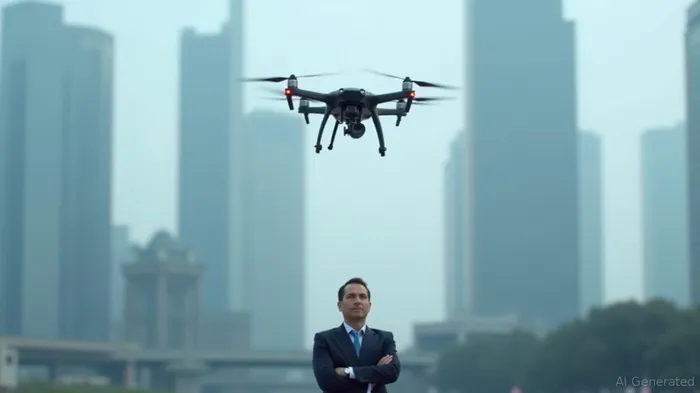
Defense Contractors: The Winners of Asymmetric Warfare
The drone arms race has made defense contractors indispensable. Companies like Kratos Defense (KTUS) and AeroVironment (AVAV) are reaping rewards from Ukraine's reliance on autonomous drones, while Raytheon (RTX) and Cubic (CUB) benefit from demand for counter-drone systems. highlights how defense spending is fueling corporate performance.
Historical analysis from 2020 to 2025 shows that a strategy of buying RTX five days before its quarterly earnings and holding for 20 trading days delivered a 16.84% compound annual growth rate, with a maximum drawdown of 33.71%. This underscores RTX's role as a resilient holding amid geopolitical volatility.
Russia's acknowledgment of drones' role in 50% of its destroyed military equipment signals a strategic pivot toward drone specialization. Investors should overweight firms with exposure to hypersonic tech and electronic warfare systems, as these technologies will dominate future conflicts.
Safe-Haven Assets: Gold and Treasuries in the Spotlight
Geopolitical uncertainty is driving capital toward low-risk assets. show a clear flight to safety: gold has risen 15% since early 2024, while 10-year Treasury yields have fallen to 3.4%, reflecting reduced risk appetite.
With no ceasefire in sight and U.S. aid to Ukraine dwindling, investors should maintain 10–15% allocations to gold ETFs (GLD) and long-dated Treasuries to hedge against volatility. These assets act as ballast in portfolios amid energy price swings and regional instability.
Beware the Risks: Regional Equities and European Industrials
The conflict's shadow extends beyond defense and energy. European industrials like Siemens and ThyssenKrupp face headwinds as Russia's economy contracts and sanctions curb cross-border trade. Meanwhile, regional equities in Ukraine and Russia are highly speculative; Gazprom's stock decline exemplifies the peril of betting on Moscow's recovery without sanctions relief.
Reconstruction and Cybersecurity: The Post-Conflict Playbook
A prolonged stalemate creates long-term opportunities. Post-war reconstruction in Ukraine—estimated at $750 billion—will benefit firms like Bechtel and Fluor (FLR). Additionally, Russia's hybrid tactics have amplified demand for cybersecurity solutions, with Palo Alto Networks (PANW) and CrowdStrike (CRWD) positioned to capitalize on rising cyber threats.
Investment Strategy: Navigating the New Geopolitical Reality
- Overweight: Defense contractors (RTX, LMT, PANW), gold (GLD), and Treasuries.
- Underweight: Russian equities (GAZP), European industrials, and energy stocks tied to unstable supply chains.
- Hedge: Use short positions in Gazprom or Brent crude futures if tensions escalate.
Conclusion
The Russia-Ukraine conflict is no longer a fleeting crisis but a defining geopolitical force reshaping markets. Investors must balance opportunistic bets on defense innovation with robust hedging in safe havens. As diplomacy falters and drones dominate the battlefield, portfolios built for resilience—and ready to pivot—will thrive in this era of instability.
Stay vigilant, and allocate accordingly.







Comentarios
Aún no hay comentarios