
Rising Sun and Stars: Why U.S.-China EdTech Is the Next Gold Mine
The geopolitical frost between the U.S. and China is thawing—slowly but surely—and investors who ignore the meltwater rushing into educationalEDUC-- and cultural exchanges are leaving money on the table. After years of trade wars and diplomatic ice, the post-Trump era is seeing a strategic thaw, and education technology is the icebreaker.
The data is clear: cross-border educational exchanges are rebounding, and with them, the demand for edtech platforms that bridge languages, cultures, and classrooms. This isn't just about textbooks and visas—it's a $773 billion market by 2033, fueled by AI, VR, and the insatiable hunger for global talent. Let me break it down.
The Thaw: From Hostility to Hub-and-Spoke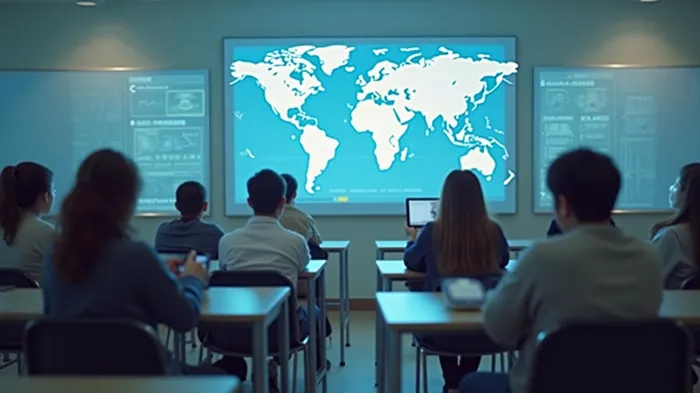
The Trump administration's policies froze U.S.-China exchanges, reducing American students in China from 11,000 to just 800 by 2024. But Beijing and Washington are now playing a cautious game of “trust through tech.” China's pledge to invite 50,000 Americans for exchanges by 2028 and the reintroduction of the Fulbright Act (H.R. 2381) signal a bipartisan push to reboot people-to-people diplomacy.
This isn't idealism—it's economics. The global EdTech market is projected to hit $215 billion in 2024, growing at 17% annually. And China's EdTech giants, which already dominate 60% of global VC funding, are primed to capture this demand.
Why Now? Three Megatrends Fueling the EdTech Boom
- Policy Tailwinds
- The U.S. is reversing Trump-era cuts to DEI programs, which are critical for cross-cultural learning.
- China's “Made in China 2025” plan prioritizes tech education, with a focus on AI and VR tools that will power its edtech exports.
- Technological Leapfrogging
AI tutors and VR classrooms are no longer sci-fi. Platforms like Kahoot! and Udemy are already serving cross-border users, but the next-gen tools will be bilingual, AI-powered, and immersive—think Mandarin/English VR labs or AI mentors that adapt to cultural nuances.
Demographic Firepower
- 300,000 Chinese students still study in the U.S., and their families are a goldmine for edtech tools that help them navigate American curricula. Conversely, U.S. schools need platforms to teach STEM to a rising wave of Chinese exchange students.
The Buy List: Where to Plant Your Flags
MOOCs (Massive Open Online Courses): Platforms like Coursera and edX are the gateway to cross-border learning. Their stock prices have dipped on fears of “tech backlash,” but this is a buying opportunity.
Language Tech: Apps like Duolingo and China's Tutorming are essential for cross-cultural fluency. With exchange programs surging, demand for these tools is set to explode.
AI-Powered EdTech: Companies like DreamBox Learning (private but ripe for IPO) and China's Squirrel AI are using AI to customize curricula for global students. Watch for IPOs or partnerships here.
VR/AR Education: STRIVR and China's Eon Reality are building virtual classrooms that let U.S. and Chinese students collaborate in 3D environments. This is the future of “classroom without borders.”
The Risks? Sure—But the Reward Is Worth It
There are speed bumps. U.S. export controls on AI and semiconductors could slow tech transfers. And privacy laws like GDPR and China's Cybersecurity Law create compliance hurdles. But here's the secret: invest in the platforms, not the politics. The companies that master data localization and forge partnerships (like Microsoft's Copilot for educators) will dominate.
Final Call: Buy Now Before the Crowd Catches On
The thaw between the U.S. and China won't be smooth, but one thing is certain: education is the soft power battleground. Edtech isn't just a sector—it's the bridge between two superpowers.
The numbers don't lie. The EdTech market is growing faster than fintech or biotech, and cross-border demand is its rocket fuel. This is your chance to bet on the future of global talent.
Act now—before the next earnings season proves this is the play of the decade.





Comentarios
Aún no hay comentarios