
Rising Strategic Opportunities in Global Wheat Markets Amid Surging South Korean Imports and Record Low Prices
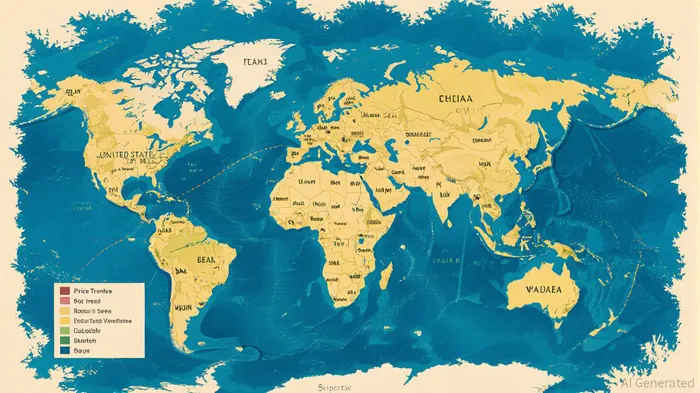
The global wheat market is undergoing a seismic shift, driven by a confluence of geopolitical realignments, structural demand shifts in Asia, and a paradox of record low prices amid surging imports. South Korea, a nation that imports nearly all its wheat, has emerged as a pivotal player in this transformation. Its strategic pivot toward U.S. wheat—fueled by quality premiums, trade agreements, and supply chain diversification—has created a ripple effect across global markets. For investors, this dynamic presents both risks and opportunities, particularly in identifying undervalued commodities and geographic suppliers poised to benefit from these structural changes.
South Korea's Strategic Pivot: Quality Over Cost
South Korea's wheat imports in 2025 have surged to 1.86 million metric tons (MMT) from the U.S., accounting for 8.1% of the U.S.'s 22.3 MMT global export target. This shift is not merely a response to supply chain disruptions from the Russia-Ukraine war but a calculated move to secure high-quality hard red winter (HRW) wheat. South Korean mills are paying a $5/ton premium for U.S. wheat due to its consistent protein content (≥12.5%) and milling standards, critical for industrial bakeries and noodle production. The U.S.-South Korea Free Trade Agreement (KORUS) further amplifies this trend by reducing tariffs, making U.S. wheat 2–5% cheaper than alternatives from Australia or Canada.
The timing of these imports—aligned with South Korea's peak flour production season (June–August 2025)—demonstrates a strategic effort to stabilize supply and reduce volatility. This has positioned U.S. agribusiness giants like Cargill, Archer Daniels Midland (ADM), and BungeBG-- as key beneficiaries. ADM's 14% net income rise in 2023, driven by higher commodity margins, underscores the sector's potential.
Global Oversupply and the Paradox of Low Prices
Despite South Korea's aggressive procurement, the global wheat market remains oversupplied. Record harvests in Australia (32 MMT in 2024/25), China (181.42 MMT), and the EU (137.25 MMT) have flooded the market, pushing prices to multi-year lows. The International Grains Council (IGC) projects a 38.1% global stock-to-use ratio for 2025/26, with export prices for U.S. wheat dropping by $2/ton in July 2025. This oversupply has created a bearish environment, with technical indicators like the Commodity Channel Index (CCI) at -15 and the Average Directional Index (ADX) at 10.22 signaling downward momentum.
However, this oversupply is not uniform. While global prices are depressed, regional disparities persist. South Korea's willingness to pay a premium for U.S. wheat highlights a structural demand shift: quality and reliability are now prioritized over cost. This trend is mirrored in other Asian markets, where urbanization and rising incomes are driving demand for premium wheat-based products like noodles and bread.
Undervalued Opportunities: Vietnam's Rice Sector as a Case Study
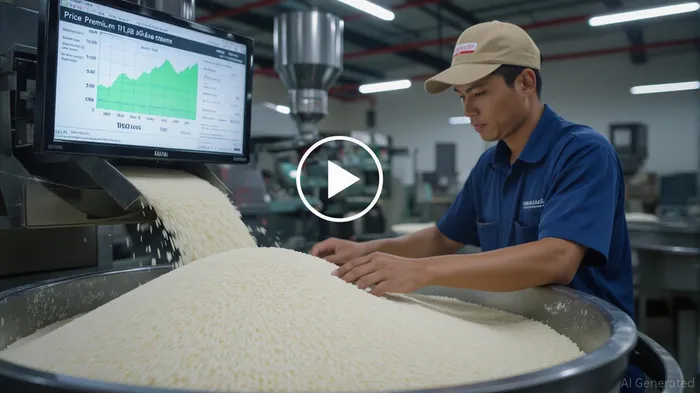
Beyond wheat, the Asia-Pacific region is witnessing a structural realignment in agricultural commodities. Vietnam's rice sector, for instance, is an undervalued opportunity shaped by geopolitical tailwinds and production efficiency gains. The U.S. trade deficit in rice—exacerbated by Trump-era tariffs—has weakened American competitiveness, allowing Vietnam to dominate global exports via the CPTPP. Vietnam's rice yields have increased from 5.73 t/ha to 6.16 t/ha over five years, driven by climate-resilient varieties and IoT-based crop monitoring.
Despite these fundamentals, Vietnam's rice sector remains undervalued. In H1 2025, export volumes rose 7.6% year-on-year to 4.9 MMT, but sector value fell 12.2% due to a 18.4% drop in average prices. This disconnect between fundamentals and market perception creates an attractive entry point for investors. Companies like Vinafood 2 and Mekong Rice Corporation, which focus on premium jasmine rice (ST24/25) and deep-processing into rice flour and noodles, are well-positioned to capitalize on this shift.
Strategic Investment Thesis: Diversification and Quality
For investors, the key takeaway is to prioritize quality over quantity in agricultural commodities. South Korea's wheat imports and Vietnam's rice sector exemplify how structural shifts—geopolitical, technological, and demand-driven—can create undervalued opportunities. Here's how to approach this:
- Agribusiness Stocks with Global Exposure: U.S. agribusiness firms like ADM and Cargill are well-positioned to benefit from South Korea's wheat demand. Their integrated supply chains and logistics expertise provide a buffer against price volatility.
- Wheat Futures as a Hedging Tool: While global prices are bearish, South Korea's procurement patterns suggest localized demand resilience. Investors could use wheat futures (e.g., CME ZW) to hedge against short-term volatility while capitalizing on long-term structural trends.
- Emerging Market Commodity Producers: Vietnam's rice sector offers a compelling case study. Firms with exposure to premium rice varieties and agri-tech innovations (e.g., Enfarm, Techcoop) are poised to outperform in a market prioritizing quality and sustainability.
Risks and Mitigation
- Supply Chain Disruptions: U.S. rail strikes or port congestion could delay South Korean imports. Diversifying suppliers (e.g., Canada, Australia) mitigates this risk.
- Price Volatility: Global oversupply and geopolitical tensions (e.g., U.S.-China trade dynamics) could destabilize prices. Hedging with futures and focusing on quality-driven markets (e.g., Japan, EU) can reduce exposure.
- Policy Shifts: Changes in trade agreements (e.g., KORUS renegotiations) or protectionist measures could disrupt flows. Monitoring policy developments and investing in companies with flexible supply chains is critical.
Conclusion
The global wheat market is at an inflection pointIPCX--, with South Korea's strategic imports and Vietnam's rice sector illustrating the power of quality, diversification, and geopolitical tailwinds. While record low prices and oversupply present challenges, they also create opportunities for investors who can identify undervalued commodities and geographic suppliers. By focusing on structural shifts—rather than short-term volatility—investors can position themselves to capitalize on the next phase of agricultural trade evolution.







Comentarios
Aún no hay comentarios