
Rising Steel Trade Tensions in Asia and Their Impact on Global Steel Producers
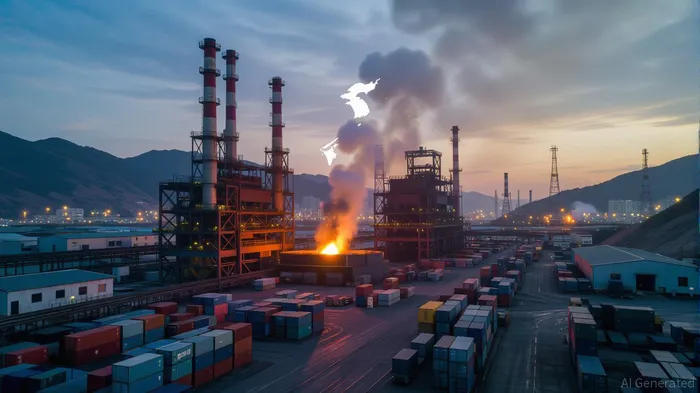
The steel industry, a cornerstone of global industrialization, is facing a new wave of trade tensions in Asia. In 2025, Japan and South Korea have intensified anti-dumping measures against Chinese and regional steel imports, reshaping export strategies and investment risks for producers across the region. These actions reflect a broader shift toward protectionism, driven by domestic industry lobbying and the need to shield vulnerable sectors from price undercutting. For investors, the implications are profound: supply chains are fracturing, market access is narrowing, and the race to innovate in green steel is accelerating.
The Anti-Dumping Surge: A Regional Defense Mechanism
Japan and South Korea have launched coordinated investigations into Chinese and each other's steel exports, targeting products like hot-rolled coil (HRC), nickel-based stainless steel, and hot-dip galvanized steel. South Korea's Korea Trade Commission (KTC) proposed provisional anti-dumping duties on Chinese HRC ranging from 28.16% to 33.57%, while Japan's Ministry of Economy, Trade and Industry (METI) is probing similar imports, citing prices up to 50% lower than domestic benchmarks. These measures aim to protect domestic producers like Nippon Steel and POSCOPKX--, which have seen margins eroded by cheap imports.
The financial stakes are high. South Korea's HRC imports from China and Japan totaled 3.43 million tons in 2024, with Chinese exports accounting for 45% of the market. If duties are finalized, Chinese producers could lose a critical export corridor, forcing them to pivot to higher-value products or diversify into Southeast Asia. Meanwhile, Japanese and South Korean steelmakers gain short-term relief but face long-term challenges: downstream industries like automotive and construction will grapple with higher input costs, potentially slowing demand growth.
Chinese Producers: Adapting to a New Export Reality
Chinese steelmakers are recalibrating their strategies in response to these trade barriers. Export data from January to May 2025 reveals a 22.1% year-over-year decline in HRC exports to Japan and South Korea, while overall steel exports grew by 8.9%. This divergence underscores a strategic shift toward value-added products. Export shares for coated sheets, plated sheets, and medium-thickness plates rose from 9% to 13%, 25% to 28%, and 13% to 15%, respectively.
However, this pivot is not without risks. Smaller Chinese producers lack the R&D budgets to compete in high-tech niches like hydrogen-based steel or ultra-high-strength alloys. Additionally, compliance with the EU's Carbon Border Adjustment Mechanism (CBAM) looms as a major hurdle, with potential compliance costs adding 5-10% to export prices. Geopolitical tensions further complicate matters: a re-election of Donald Trump could trigger a new round of U.S. tariffs, compounding pressures on Chinese exporters.
Korean Producers: Protectionism's Double-Edged Sword
South Korean steelmakers like POSCO and Hyundai Steel have benefited from the anti-dumping measures, which shield them from aggressive Chinese competition. However, the costs of protectionism are mounting. The automotive sector, which accounts for 31.74% of South Korea's special steel market revenue, faces margin pressures as HRC prices rise. Construction firms, reliant on steel for infrastructure projects, may also experience delays due to supply chain adjustments.
Moreover, South Korea's focus on green steel technologies—such as hydrogen-based FINEX and electric arc furnace (EAF) integration—requires significant capital. While POSCO has committed $227 million to hydrogen-based steelmaking in 2025, smaller producers may struggle to keep pace. This technological divergence could widen the gap between large and small firms, creating uneven investment risks.
Investment Risks and Strategic Opportunities
For investors, the key lies in balancing exposure to resilient domestic producers with strategic bets on downstream sectors. Here are three critical considerations:
- Diversification of Export Markets: Chinese producers must avoid over-reliance on any single region. Southeast Asia, particularly Vietnam, offers emerging opportunities, but regulatory hurdles and quality standards remain challenges.
- Green Steel Innovation: Companies investing in low-carbon technologies—like Nippon Steel's hydrogen direct reduction iron (H-DRI) or POSCO's FINEX—position themselves for long-term growth in decarbonizing markets. Historical data shows that both firms have demonstrated moderate short-term performance post-earnings, with POSCO exhibiting a 57.14% 3-day win rate and Nippon Steel at 50.00%, suggesting their earnings-driven strategies may offer limited but consistent upside.
- Geopolitical Vigilance: Trade policy shifts in the U.S. and EU, coupled with CBAM compliance, demand close monitoring. Investors should prioritize firms with agile supply chains and diversified revenue streams.
Conclusion: Navigating a Fractured Steel Landscape
The anti-dumping measures in Japan and South Korea are more than temporary trade barriers—they signal a structural shift in Asia's steel industry. For Chinese producers, the path forward lies in innovation and diversification. For Korean firms, the challenge is to balance short-term protection with long-term competitiveness. Investors must navigate these dynamics with a focus on resilience, sustainability, and geopolitical agility. In a world where trade tensions and climate goals collide, the winners will be those who adapt fastest.





Comentarios
Aún no hay comentarios