
Rising Short Interest in China Merchants Bank H-shares: A Bearish Signal or a Short-term Fluctuation?
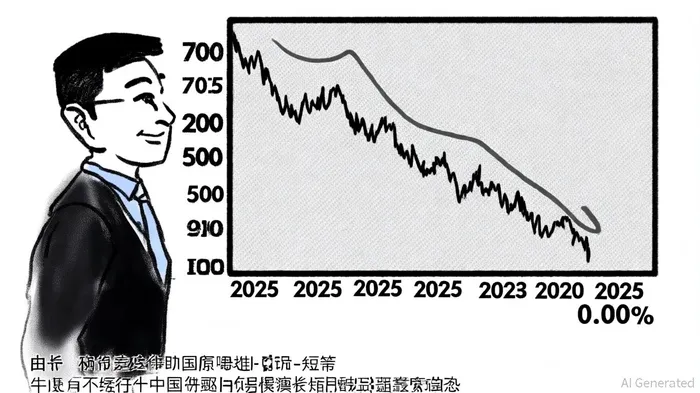
The recent discourse surrounding China Merchants Bank H-shares (3968.HK) has centered on whether a perceived rise in short interest signals a bearish outlook or merely a short-term market fluctuation. However, a closer examination of the data reveals a nuanced picture. According to a report by MarketBeat, short interest in China Merchants Bank's U.S.-listed depositary receipts (CIHKY) actually declined by 28.6% in August 2025, dropping from 700 shares to 500 shares as of August 31st[1]. This reduction left just 0.00% of the company's floating shares sold short, a level consistent with minimal bearish activity[2].
The Paradox of "Rising" Short Interest
The premise of "rising short interest" appears to be a misinterpretation of the data. While short interest in August fell sharply, some analysts have speculated about potential institutional shorting activity by major players like CitigroupC--. However, no concrete evidence of Citigroup's short positions in China Merchants Bank H-shares for September 2025 has been disclosed in publicly available filings or institutional reporting[3]. In fact, Citigroup has maintained a "Buy" rating for the stock, with a price target of HK$38.58 as of September 2024[4]. This bullish stance, coupled with the absence of short-position data, suggests that Citigroup's strategic focus on the bank aligns with long-term growth expectations rather than bearish bets.
Strategic Implications for Citigroup and the Market
Citigroup's broader strategic moves in China provide further context. The bank has announced a global workforce reduction of 10%, including 3,500 tech roles in China, as part of cost-cutting measures to improve profitability[5]. While these cuts are unrelated to short positions in China Merchants Bank, they reflect a broader recalibration of Citi's operations in the region. Regulatory challenges, such as U.S. penalties for data management lapses, have also delayed Citi's expansion plans in China[6]. These factors underscore the bank's prioritization of operational efficiency over speculative short-term trading strategies.
For China Merchants Bank itself, the low short interest—combined with a 336.0% dividend yield and strong earnings performance—points to a stock perceived as resilient by investors[7]. A drop in short interest often correlates with growing confidence in a company's fundamentals, as short sellers typically exit positions when positive momentum emerges. This trend contrasts with Citigroup's own short interest, which, while declining, remains higher than its peers' averages[8].
Is the Decline in Short Interest a Fluctuation or a Trend?
The August 2025 data suggests a structural shift rather than a temporary fluctuation. With short interest at 0.00% of the float, the stock's days-to-cover ratio stands at 0.0 days, indicating no immediate pressure from short-covering rallies[9]. This aligns with broader market optimism about Chinese financials, driven by macroeconomic stabilization and regulatory reforms. However, investors should remain cautious: short interest can rebound rapidly if earnings miss expectations or geopolitical risks resurface.
Conclusion
The narrative of "rising short interest" in China Merchants Bank H-shares appears to be a mischaracterization of the data. The sharp decline in short positions, coupled with Citigroup's bullish ratings and the bank's strong fundamentals, suggests a market environment where bearish sentiment is waning. For strategic investors, the key takeaway is that short-term volatility should not overshadow the long-term potential of a stock with robust earnings and a low short-interest profile.







Comentarios
Aún no hay comentarios