
The Rising Risks and Investment Implications of Phishing and Counterfeit Wallet Attacks in the Crypto Ecosystem
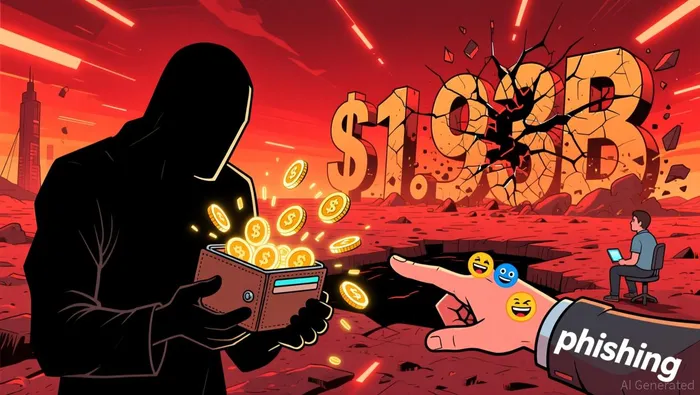
The crypto ecosystem in 2025 has become a battleground for security, with phishing and counterfeit wallet attacks escalating to unprecedented levels. According to a report by DeepStrike, losses from these threats reached $1.93 billion in the first half of the year alone, surpassing the entire 2024 total. This surge underscores a critical shift in the risk landscape for crypto investors, demanding a reevaluation of asset protection strategies and wallet security protocols.
The Scale and Nature of the Threat
Phishing attacks emerged as the most pervasive threat, accounting for $410.7 million in losses across 132 incidents. Fake exchange sites saw a 40% increase in phishing attempts, exploiting users' trust in familiar platforms. Meanwhile, wallet compromises dominated the damage, with $1.71 billion stolen through private key theft, seed phrase exposure, or malware-infected devices. These attacks often rely on social engineering, as seen in a high-profile case where an individual lost 783 BTC ($91 million) after sharing recovery phrases with impersonators posing as customer support staff.
North Korean threat actors, notably the Lazarus Group, have also intensified their focus on crypto targets. Their sophisticated phishing campaigns and social engineering tactics have infiltrated businesses, resulting in multi-million-dollar breaches. The decentralized nature of crypto assets makes them an attractive target for such groups, as stolen funds are often difficult to trace or recover.
Network-Specific Vulnerabilities
Ethereum and Tron networks reported higher victim rates per 100,000 wallets compared to Base and SolanaSOL--, highlighting disparities in platform security and user behavior. While this data suggests varying levels of risk across ecosystems, it also emphasizes the need for tailored due diligence. For instance, investors on high-risk networks may need to adopt stricter verification processes for third-party services or prioritize wallets with advanced encryption features.
Strategic Asset Protection: Best Practices for 2025
To mitigate these risks, investors must adopt a multi-layered approach to security. Cold storage remains the gold standard for large holdings, with leading custodians storing 90-95% of assets offline in air-gapped environments. Hardware wallets, such as those supporting multisignature (multi-sig) and multi-party computation (MPC) protocols, add critical safeguards by requiring multiple approvals for transactions. For institutional investors, partnering with crypto custody firms that offer regulatory compliance, insurance coverage, and transparent fee structures is essential. These firms should also integrate seamlessly with existing financial infrastructure, ensuring both security and operational efficiency. Meanwhile, self-custody models demand rigorous private key management, including secure vaults and regular audits to detect vulnerabilities.
The Role of Diversification and AI-Driven Tools
Beyond technical measures, strategic diversification can reduce exposure to single points of failure. AI-driven platforms like Token Metrics indices provide objective metrics for asset allocation, helping investors avoid over-concentration in high-risk tokens. By combining algorithmic analysis with human oversight, these tools enable more resilient portfolios in an environment where phishing and counterfeit wallet attacks remain rampant.
Conclusion
The 2025 crypto landscape demands a paradigm shift in how investors approach security. With phishing and counterfeit wallet attacks costing billions and showing no signs of abating, due diligence must extend beyond market analysis to include robust asset protection frameworks. By prioritizing cold storage, multi-sig wallets, and institutional-grade custody solutions, investors can navigate this volatile terrain with greater confidence. As the industry evolves, so too must its defenses-because in crypto, the cost of complacency is no longer just financial, but existential.






Comentarios
Aún no hay comentarios