
The Rising Risks in Crypto and Digital Finance: Lessons from Genesis Capital and Dubai's Fraud Crackdowns
Final Output (Modified Article with Exactly Three Tags):
The collapse of Genesis Capital in 2025 has sent shockwaves through the cryptocurrency market, exposing deep-seated vulnerabilities that threaten the stability of the entire digital asset ecosystem. Coupled with Dubai's aggressive 2025 crackdown on digital asset fraud, these events underscore a critical juncture for the industry-one where systemic risks and investor protection gaps demand urgent attention.
Systemic Risks: The Genesis Capital Collapse and Market Fragility
The failure of Genesis Capital, alongside earlier collapses like FTX and BlockFi, has amplified systemic risks in crypto markets. An event study analysis reveals that the FTX collapse triggered substantial negative abnormal returns across the top ten cryptocurrencies by market capitalization, with the most severe declines occurring in the days preceding and following the event according to research. This trust erosion created a cascading effect, accelerating the failures of interconnected firms like BlockFi and Genesis. The lack of robust regulatory oversight and liquidity infrastructure exacerbated the crisis, as institutional liquidity providers were scarce, leaving markets vulnerable to rapid devaluation.
The interconnectedness of crypto assets further compounds these risks. When large market participants face liquidity crunches or default, the impact propagates swiftly across the ecosystem. For instance, Genesis's insolvency not only froze investor funds but also 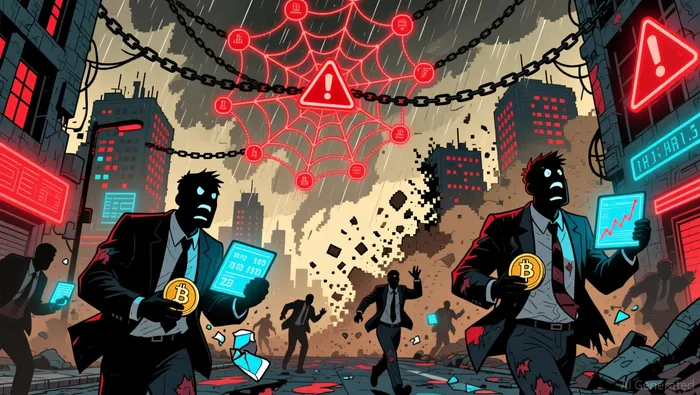 exposed the fragility of tokenized real estate and other novel asset classes, which rely heavily on trust in custodians and market stability.
Investor Protection Gaps: Dubai's Crackdown and Enforcement Challenges
While the Genesis collapse highlights systemic weaknesses, Dubai's 2025 fraud crackdown illustrates both progress and persistent gaps in investor protection. The Dubai Land Department (DLD) introduced legally recognized ownership certificates for real estate tokens, mandatory risk disclosures, and audited asset reserves, significantly reducing fraud in tokenized real estate transactions. These measures reflect a growing recognition of the need for transparency in digital assets, particularly as tokenization gains traction in traditional markets.
However, broader enforcement challenges persist. A recent investigation by the International Consortium of Investigative Journalists (ICIJ), dubbed Coin Laundry, revealed that major exchanges like Binance and OKX continued to facilitate transactions involving illicit funds, including those linked to organized crime and money laundering groups, despite legal agreements to improve compliance. This underscores a critical disconnect between regulatory intentions and operational enforcement, leaving investors exposed to risks that transcend geographic boundaries.
The Path Forward: Balancing Innovation and Stability
The 2025 crypto landscape is defined by a tension between innovation and stability. While Dubai's regulatory advancements signal a shift toward investor-centric frameworks, the sector remains plagued by structural vulnerabilities. For instance, thin order books and low free float in emerging markets-such as those in Asia-amplify the impact of even modest market shocks, as liquidity dries up and panic-driven selling accelerates.
To mitigate systemic risks, global regulators must prioritize harmonizing standards for asset classification, liquidity management, and anti-money laundering (AML) protocols. The evolving regulatory trends in 2025, including increased scrutiny of privacy tools and clearer legal frameworks, are steps in the right direction. However, enforcement must keep pace with innovation. As one expert notes, "Regulation without robust oversight is akin to building a dam without a spillway-it may hold for a while, but the pressure will eventually break it" according to analysis.
Conclusion
The Genesis Capital collapse and Dubai's fraud crackdowns serve as twin case studies in the crypto sector's ongoing struggle to balance growth with governance. Systemic risks remain acute, driven by interconnectedness, liquidity fragility, and regulatory fragmentation. Meanwhile, investor protection gaps persist, particularly in enforcement and cross-border compliance. For digital finance to mature into a resilient asset class, stakeholders must address these challenges with urgency and precision. The lessons of 2025 are clear: without systemic safeguards and enforceable protections, the crypto market will remain a house of cards, vulnerable to the next shock.







Comentarios
Aún no hay comentarios