
The Rising Risk of Crypto-Related Crime and Its Impact on Security Tech Investments: France's Battle Against Violent Crypto Theft and Data Leaks
The cryptocurrency sector, once hailed as a bastion of financial innovation, is increasingly under siege from a new breed of threat: violent thefts and data breaches. Nowhere is this more evident than in France, where a surge in "wrench attacks"-physical assaults targeting digital assets-has forced a reevaluation of both personal and institutional security strategies. As the line between digital and physical crime blurs, the demand for cybersecurity and asset protection solutions is accelerating, reshaping investment trends in the tech sector.
The Dark Side of France's Crypto Boom
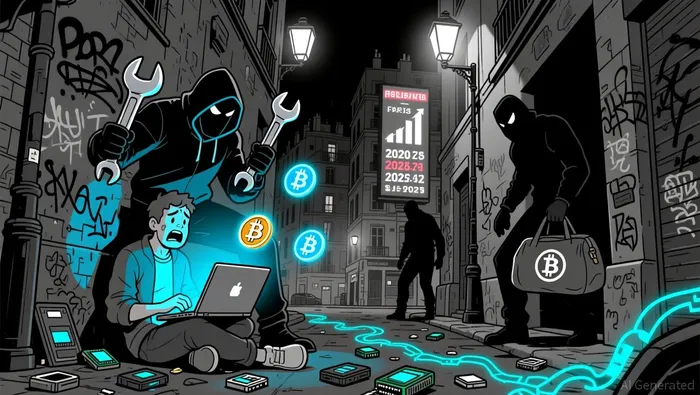
France's crypto ecosystem has long been a hub of innovation, but 2025 has brought a grim reality. Violent crimes targeting crypto holders have surged, with assailants using brute force to extract access to digital wallets. In February 2025, three masked intruders in Manosque, Alpes-de-Haute-Provence, staged a brazen home invasion to steal a USB drive containing cryptocurrency credentials according to reports. Similarly, the co-founder of Ledger, David Balland, was abducted and had a finger severed during an attack, while the daughter of Paymium's CEO was targeted in an attempted kidnapping as documented. These incidents, often referred to as "wrench attacks," exploit human vulnerabilities to bypass even the most advanced encryption according to analysis.
The scale of the problem is staggering. Over 70 such attacks occurred globally in 2025, with France accounting for more than a dozen according to data. The perpetrators, often leveraging publicly available data from company documents and social media, have turned personal information into a weapon. A tax official was even indicted for using internal software to identify wealthy crypto holders, mirroring the tactics used in the Manosque case as reported.
Government Response: A €1 Billion Push for Cyber Sovereignty
France's government has responded with a dual strategy: bolstering cybersecurity infrastructure and tightening regulatory frameworks. In 2025, the country announced a €1 billion investment in cybersecurity through 2025, aiming to solidify its digital sovereignty and counter threats like the DPRK's $1.5 billion ByBit hack according to analysis. This funding aligns with broader European efforts to combat cybercrime, including adherence to the EU's Markets in Crypto-Assets (MiCA) regulation and the Budapest Convention as stated.
The Sapin II Law, which enforces anti-corruption measures, has also been adapted to address crypto fraud. Legal tools like the Convention Judiciaire d'Intérêt Public (CJIP) now require companies to implement robust compliance programs, creating a legal framework to trace and recover stolen assets according to legal guides. Meanwhile, international cooperation remains a cornerstone of France's strategy. The country has called out Russia for past cyberattacks, including the 2017 MacronLeaks operation and the 2024 DDoS attacks targeting the Paris Olympics as reported.
Corporate Sector: From Panic to Proactive Defense
The corporate response has been equally urgent. French crypto entrepreneurs are now spending over $50,000 monthly on private security for their families, while some executives have openly advocated for the right to carry firearms according to NPR. Companies are also hiring specialists in blockchain resilience, digital forensics, and anti-extortion protocols to address human vulnerabilities in the digital asset ecosystem according to analysis.
Investment in cybersecurity startups has spiked. Filigran, a French firm specializing in data protection, secured a €50 million funding round-the largest cybersecurity investment in the country's history according to reports. Recruitment trends reflect a growing demand for cross-disciplinary roles that blend finance, data privacy law, and physical risk prevention according to analysis.
The Investment Landscape: A $377 Billion Opportunity
Global cybersecurity spending is projected to grow by 12.2% in 2025, surpassing $377 billion by 2028 according to Fortinet. This surge is driven by the need to counter AI-powered attacks, deepfakes, and synthetic identity fraud-threats that France's violent crypto crimes have amplified. The Chainalysis 2025 Crypto Crime Mid-Year Update reports that $2.17 billion has already been stolen from crypto services this year, with personal wallet compromises accounting for a significant share according to data.
France's focus on digital sovereignty is also attracting private capital. Programs like French Tech 2030 offer financial and strategic support to startups addressing cybersecurity and crypto compliance according to analysis. Meanwhile, the ByBit hack has underscored the need for international coordination to track illicit fund flows, particularly those linked to state-sponsored actors like North Korea's Lazarus Group according to IC3.
Conclusion: A New Era of Risk and Resilience
The convergence of physical and digital threats is redefining the security landscape. For investors, the implications are clear: cybersecurity and asset protection solutions are no longer optional but essential. France's proactive measures-ranging from government funding to corporate innovation-highlight a global shift toward resilience in the face of escalating crypto-related crime. As the sector evolves, the ability to protect both digital assets and human lives will determine the next wave of winners in the crypto economy.





Comentarios
Aún no hay comentarios