
Rising Regulatory Scrutiny of High-Leverage Bitcoin ETFs: Implications for Retail Investors and Market Stability
The U.S. Securities and Exchange Commission (SEC) has intensified its focus on leveraged BitcoinBTC-- ETFs, halting the review of proposals for products offering 3x and 5x exposure to cryptocurrencies and stocks. This regulatory shift, driven by concerns over excessive risk exposure, underscores a broader effort to protect retail investors and stabilize markets amid the inherent volatility of cryptoBTC-- assets. According to a report by Reuters, the SEC has issued warning letters to nine ETF providers-including Direxion, ProShares, and Tidal Financial-demanding revisions to their investment strategies or the withdrawal of filings. The agency's actions reflect a strict interpretation of Rule 18f-4 under the Investment Company Act of 1940, which mandates that leveraged ETFs adhere to value-at-risk (VaR) thresholds and maintain robust risk management programs.
Regulatory Risks: A New Era of Caution
The SEC's intervention signals a pivotal moment in the evolution of leveraged ETFs. Historically, these products have operated with minimal constraints, but the regulator's recent stance-explicitly rejecting leverage beyond 2x-has reshaped the landscape. As stated by Bloomberg Law, the SEC's primary concern is that high-leverage ETFs could amplify systemic risks, particularly in volatile markets like crypto. For instance, the agency has cited the 2025 crypto slump as a cautionary example: Bitcoin's price drop below $90,000 triggered catastrophic losses for leveraged ETFs tied to companies like Strategy, with the T-Rex 2X Long MSTR Daily Target ETF shedding 85% of its value. 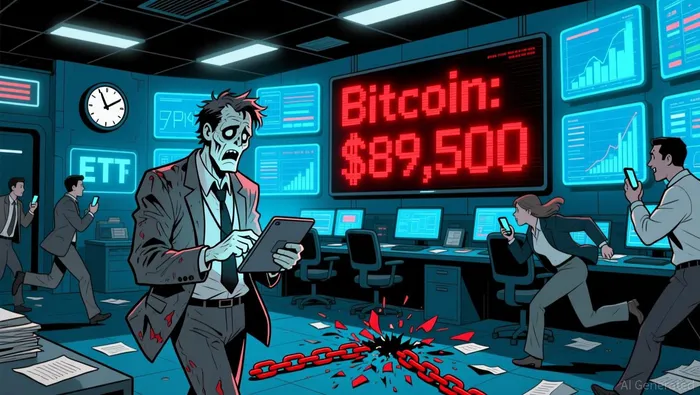 Such outcomes highlight the fragility of leveraged products in fast-moving markets.
The regulatory crackdown extends beyond the U.S. In Europe, the closure of the 3x Short AMD ETF illustrates the global instability of leveraged derivatives, further reinforcing the SEC's rationale for imposing stricter limits. These actions suggest a coordinated effort to mitigate counterparty risks and prevent cascading failures in the derivatives market, which has become increasingly intertwined with crypto assets.
Financial and Operational Risks: A Double-Edged Sword
Leveraged Bitcoin ETFs are inherently volatile, with compounding risks that exacerbate losses during downturns. Data from Morningstar reveals that 55% of leveraged ETFs have closed since 2023, while 17% have lost over 98% of their value. This poor performance is partly attributable to the mechanics of daily rebalancing, which erodes returns through beta decay and volatility drag. For example, the Defiance Daily Target 2x Long MSTR ETF's 85% loss in 2025 underscores how even moderate leverage can magnify downside risks in a bear market.
Operational challenges further compound these issues. High expense ratios, liquidity constraints, and the reliance on derivatives to achieve leverage create a fragile structure. As noted by Investment Executive, leveraged ETFs often attract sophisticated traders seeking short-term gains, but their complexity makes them unsuitable for most retail investors. The SEC's emphasis on risk management practices-such as VaR calculations and leverage caps-aims to address these vulnerabilities, though critics argue that such measures may stifle innovation in the crypto space.
Implications for Retail Investors and Market Stability
For retail investors, the regulatory tightening has significant implications. Leveraged ETFs, once marketed as accessible tools for amplifying returns, now require a deeper understanding of their risks. The SEC's warnings highlight the importance of investor education, particularly given the surge in demand for these products during periods of geopolitical and trade tensions. Retail investors must recognize that leveraged ETFs are not long-term holdings but rather speculative instruments best suited for short-term, directional bets.
From a market stability perspective, the SEC's actions aim to prevent the proliferation of high-risk products that could destabilize broader financial systems. The 2025 crypto slump demonstrated how leveraged ETFs can amplify market corrections, creating a feedback loop of panic selling and liquidity crunches. By capping leverage at 2x, the SEC seeks to reduce the likelihood of such scenarios, though this approach may also limit opportunities for investors seeking aggressive exposure to Bitcoin.
A Path Forward: Balancing Innovation and Caution
The regulatory landscape for leveraged Bitcoin ETFs is evolving rapidly. While the SEC's interventions have curtailed the availability of high-leverage products, they have also spurred innovation in risk-mitigated structures. For instance, the Calamos Laddered Bitcoin Structured Alt Protection ETF (CBOL) employs a laddered portfolio to provide downside protection while capping upside exposure, offering a middle ground between traditional ETFs and leveraged alternatives. Such models may represent the future of crypto investing, where structured products balance innovation with prudence.
In conclusion, the rising regulatory scrutiny of high-leverage Bitcoin ETFs reflects a necessary recalibration of risk in the face of crypto's inherent volatility. While these products offer the allure of amplified returns, their financial, operational, and counterparty risks demand a cautious approach. Retail investors must weigh these factors carefully, and regulators must continue to strike a balance between fostering innovation and safeguarding market stability.







Comentarios
Aún no hay comentarios