
Rising Real Estate Investor Activity in Q2 2025: Strategic Entry Points in a Shifting Housing Market
The U.S. real estate market in Q2 2025 has demonstrated a striking duality: resilience in commercial sectors and cautious optimism in residential markets. With total commercial real estate (CRE) transactions reaching $115 billion—a 3.8% annual increase—investors are recalibrating strategies amid shifting macroeconomic conditions. This analysis identifies strategic entry points for investors navigating a landscape defined by sectoral divergence, regional opportunities, and policy-driven tailwinds.
Commercial Real Estate: Sectoral Divergence and Strategic Allocation
The CRE market's performance in Q2 2025 underscores a clear bifurcation between thriving and struggling asset classes. Multifamily and office sectors led the charge, with multifamily transactions surging to $34.1 billion (up 39.5% year-over-year) and office deals hitting $16.7 billion (11.8% annual growth). These figures reflect investor confidence in housing demand and hybrid workspaces, despite broader economic headwinds.
Conversely, industrial, retail, and hospitality sectors faced declines of 6.3%, 14.2%, and 20.9%, respectively. The industrial sector's slowdown, driven by stabilized e-commerce growth and rising vacancy rates, signals a potential correction after years of pandemic-driven demand. Retail and hospitality, meanwhile, remain vulnerable to shifting consumer behavior and high operational costs. For investors, this divergence highlights the importance of sectoral selectivity: capital allocated to multifamily and office assets is likely to outperform in the near term.
Residential Real Estate: Navigating High-Cost Challenges
On the residential front, investors grapple with elevated interest rates and construction costs, which have dampened fix-and-flip activity. Q2 2025 data reveals a median gross profit of $65,000 for flips, with a 25% return on investment before expenses[2]. While these figures remain positive, they represent a moderation compared to pre-2024 levels.
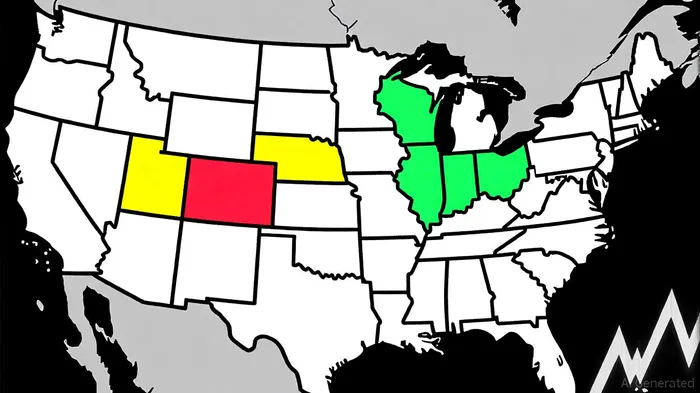
However, rental property investors have found fertile ground in the Midwest and Southeast, where markets like Detroit and Cleveland offer rental yields exceeding 9%[2]. These regions benefit from affordability, population stabilization, and infrastructure investments. Investors leveraging debt-service coverage ratio (DSCR) loans and private funding—tools that minimize reliance on traditional financing—are particularly well-positioned to capitalize on these opportunities[2].
Macroeconomic Tailwinds and Policy Catalysts
Despite tempered GDP growth forecasts (CBRE now predicts 1.5% annual expansion due to fiscal uncertainty[3]), the real estate sector remains a bright spot. The recently enacted tax-and-spending bill, which includes favorable provisions for real estate depreciation and pass-through income, has bolstered investor confidence[3]. CBRECBRE-- projects a 10% annual growth in CRE investment volume, underscoring the sector's resilience[3].
Strategic Entry Points for Q3 2025 and Beyond
- Multifamily in Sun Belt Markets: With price-per-square-foot gains outpacing other sectors, multifamily investments in high-growth Sun Belt cities (e.g., Raleigh-Durham, Phoenix) offer long-term appreciation potential.
- Value-Add Office Assets: Investors should target office properties in secondary markets with strong employment growth, focusing on repositioning for hybrid work trends.
- Distressed Retail and Hospitality Assets: As cap rates widen in these sectors, selective acquisitions of well-located, cash-flow positive properties could yield attractive risk-adjusted returns.
- Residential DSCR Loans in Undervalued Regions: The Midwest's combination of high yields and lower competition makes it a prime target for rental-focused strategies[2].
Conclusion
The Q2 2025 real estate landscape demands a nuanced approach: prioritize sectors and regions with structural demand while avoiding overextended asset classes. As interest rates stabilize and policy tailwinds persist, investors who act decisively in Q3 can secure entry points that align with long-term value creation. The key lies in balancing optimism with pragmatism—a hallmark of successful real estate strategy in turbulent markets.





Comentarios
Aún no hay comentarios