
Rising Political Risks and Credit Market Volatility in Brazil
Brazil's economic and political landscape in 2025 is marked by a precarious interplay of domestic fiscal challenges and global uncertainties. As the country grapples with a public debt structure increasingly dominated by floating-rate instruments, rising interest rates, and a fragile fiscal outlook, credit markets are bracing for heightened volatility. According to Eurasia Group's Top Risks 2025, Brazil's political and economic risks are converging to create a "perfect storm" for investors, with sovereign debt exposure and currency instability at the forefront.
Sovereign Debt Exposure: A Double-Edged Sword
Brazil's public debt now features a 20-year high in floating-rate bonds (LFTs), which account for nearly half of its total debt, according to Reuters. This structure amplifies sensitivity to monetary policy shifts. The Central Bank's aggressive tightening campaign, with the Selic rate projected to reach 13.5% by year-end, has pushed debt servicing costs to unsustainable levels, according to Valor. Data from Reuters indicates that Brazil's debt servicing costs could rise by over 40% in 2025, straining fiscal resources and increasing the risk of a debt spiral.
Compounding this, the Lula administration faces a primary deficit of nearly 8% of GDP, a figure that underscores the urgency of fiscal reforms ahead of the 2026 presidential election, the Eurasia Group report notes. Failure to stabilize public finances could trigger a loss of investor confidence, further weakening the Brazilian real (BRL) and exacerbating inflationary pressures, as the Valor analysis highlights.
Political and External Risks: A Global Chessboard
Brazil's vulnerability extends beyond its borders. A deteriorating global economic environment-including U.S. interest rate hikes, potential trade wars, and U.S.-China geopolitical tensions-poses significant risks to the BRL and inflation, the Eurasia Group report warns. For instance, a potential Trump administration in 2026 could reimpose tariffs on Brazilian exports, directly impacting the country's trade balance and currency stability, according to Eurasia Group's analysis.
Domestically, the government's recent fiscal package has worsened financial conditions, with bank lending slowing to 10.1% year-on-year in August and corporate refinancing risks rising, Reuters reported. Fitch Ratings warns that firms with limited access to international markets are particularly exposed to liquidity crunches.
Hedging Strategies: Navigating the Storm
To mitigate these risks, investors are increasingly adopting sophisticated hedging tools. S&P Dow Jones Indices (S&P DJI) has introduced the iBoxx BRL Hedged USD Credit Indices, which embed a -30% overlay in BRL futures to reduce currency volatility, according to an Indexology post. That analysis shows the iBoxx USD Liquid Investment Grade BRL Hedge Carry Index (BRL) cut volatility from 15.12% to 2.56% compared to its unhedged counterpart, while boosting the Sharpe ratio from 0.75 to 3.61.
For predictable income streams, forward contracts and options strategies are recommended to manage downside risks, as outlined in a comprehensive hedging FX guide. Indirect hedging tools, such as currency ETFs and mutual funds, also offer accessible solutions, though they may involve tracking errors. These strategies collectively provide a robust framework for preserving yield potential in Brazil's high-yield but volatile debt markets.
Conclusion: A Delicate Balancing Act
Brazil's credit markets are at a crossroads. While the Lula administration's fiscal challenges and external uncertainties heighten risks, innovative hedging strategies offer a lifeline for investors. However, without credible fiscal adjustments and a stable political environment, Brazil's economic trajectory remains fraught with volatility. As global investors navigate this complex landscape, the ability to hedge against currency swings and sovereign risks will be critical to unlocking long-term value.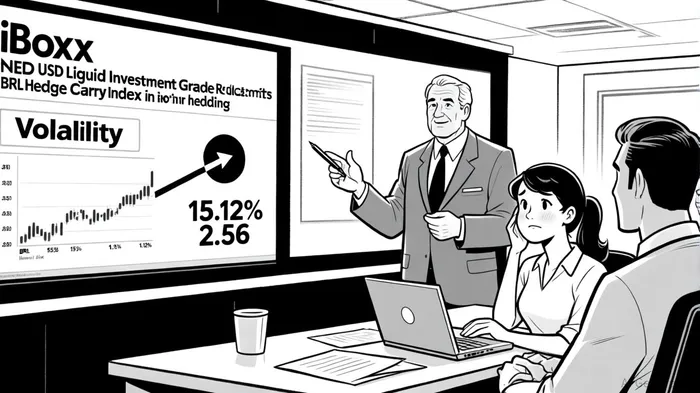







Comentarios
Aún no hay comentarios