
The Rising Down Payment Trend and Its Implications for Real Estate Investment Strategy in 2026
The real estate market in 2025 witnessed a significant shift in buyer behavior, marked by elevated down payment requirements and a complex interplay between equity accumulation and affordability challenges. These trends, driven by record-high home prices and persistent mortgage rate pressures, have profound implications for 2026 investment strategies. As investors navigate a market recalibrating to post-pandemic dynamics, understanding the relationship between down payments, equity, and affordability is critical to identifying opportunities and mitigating risks.
2025 Trends: Elevated Down Payments and Equity Dynamics
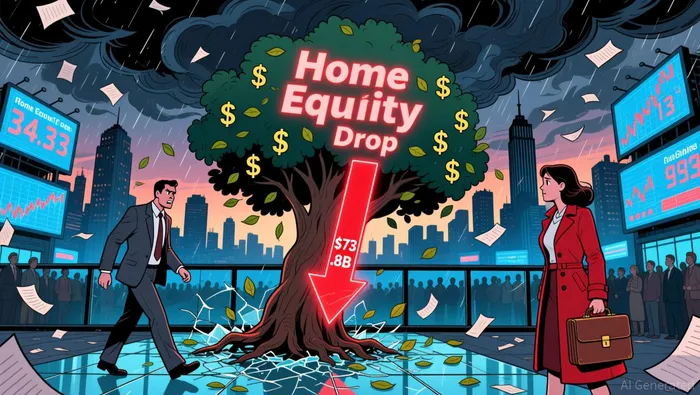
In 2025, the average down payment for a primary residence reached 14.4% of the purchase price, or approximately $30,400, a stark increase from pre-pandemic levels. This surge reflects the dual pressures of rising home prices and elevated mortgage rates, which have constrained traditional financing options. While higher down payments contribute to stronger initial equity stakes, they also highlight a broader trend: homeowners increasingly leveraging equity to offset affordability gaps. By Q3 2025, total homeowner equity declined by $373.8 billion year-over-year, reaching $17.1 trillion, as affordability challenges pushed many first-time and lower-income buyers toward minimal down payments or piggyback loans. This dynamic has exacerbated negative equity risks, with 2.2% of U.S. homeowners falling into negative equity by mid-2025, a 21% increase from the prior year.
Regional disparities further complicate the picture. The Northeast and Midwest saw modest equity gains, while states like Florida and California experienced notable declines, underscoring the influence of local market conditions on equity accumulation. These trends suggest that while down payments remain a cornerstone of equity building, their effectiveness is increasingly contingent on geographic and economic factors.
Affordability Dynamics and First-Time Buyers
For first-time buyers, the 2025 landscape was particularly challenging. The average down payment of 14.4%-the highest in nearly four decades-combined with elevated mortgage rates and rising non-mortgage costs (e.g., insurance, taxes), created a formidable barrier to entry. Many first-time buyers resorted to alternative strategies, such as pooling resources with family or roommates, to meet down payment requirements. Despite these efforts, affordability remained a pressing issue, with 2025 home prices and rates outpacing wage growth and exacerbating financial strain for vulnerable populations.
2026 Implications: A Path to Normalization
Looking ahead, 2026 presents a cautiously optimistic outlook. Housing economists project a 1% to 2% national price increase, with stronger appreciation in urban hubs like Chicago and New York City. Mortgage rates, expected to stabilize in the 6.0% to 6.4% range, may provide modest relief to buyers, particularly as the National Association of Realtors forecasts a 14% rise in home sales driven by increased inventory and a waning "lock-in effect". This shift signals a gradual normalization of buyer-seller dynamics, with more flexibility for first-time buyers and younger generations like Millennials and Gen Z entering the market.
 For investors, the key lies in aligning strategies with these evolving conditions. Regions with strong job growth in resilient sectors-such as tech, healthcare, and manufacturing-and favorable affordability metrics, including the Sun Belt and Mountain West, are poised to attract significant capital. Secondary cities like Columbus, Ohio, and Kansas City, Missouri, exemplify this trend, offering a blend of affordability, infrastructure development and proximity to educational institutions.
Strategic Adjustments for 2026
Investors must also adapt to shifting equity dynamics. While higher down payments strengthen initial equity positions, they also necessitate a focus on long-term wealth-building strategies. For example, refinancing opportunities may emerge as mortgage rates stabilize, allowing homeowners to lock in lower rates or optimize loan terms. Additionally, equity-based tools like cash-out refinances or home equity loans could enable investors to leverage accumulated value for reinvestment or debt reduction.
Demographic targeting will further refine investment approaches. Aging millennials, now in their late 30s to early 40s, are prioritizing larger suburban homes with strong schools, while Gen Z first-time buyers emphasize affordability and walkability. Investors should prioritize multifamily housing in urban cores and starter homes in secondary markets to align with these preferences.
Conclusion
The 2025 surge in down payments and the associated equity dynamics underscore a market in transition. While affordability challenges persist, 2026 offers a path toward normalization, with improved buyer access and regional opportunities emerging. For investors, success hinges on strategic regional targeting, demographic alignment, and a nuanced understanding of equity-based tools. As the market evolves, those who adapt to these trends will be best positioned to capitalize on the opportunities ahead.







Comentarios
Aún no hay comentarios