
Rising Input Costs and the Fed's Policy Dilemma in a Stagnant Rate Environment
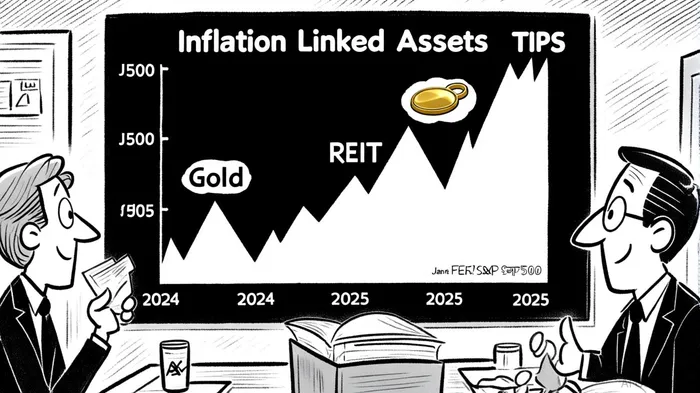
The Federal Reserve's 2025 policy pivot has created a paradoxical economic landscape: rising input costs persist alongside a rate-cutting cycle designed to mitigate stagnation. This tension has reshaped the performance of inflation-linked asset classes, offering both opportunities and risks for investors. As the Fed navigates a delicate balance between inflation control and economic growth, strategic positioning in assets that hedge against price pressures—and benefit from shifting monetary policy—has become critical.
Treasury Inflation-Protected Securities (TIPS): A Safe Haven in a Volatile Climate
Treasury Inflation-Protected Securities (TIPS) have emerged as a standout performer in 2025, with TIPS funds returning an average of 3.4% year-to-date[2]. This outperformance is driven by two key factors: rising long-term inflation expectations (now at 3.9% as of September 2025[4]) and the Fed's rate cuts, which reduced opportunity costs for holding inflation-linked bonds. The five-year breakeven inflation rate, a market-based gauge of inflation expectations, peaked at 2.66% in February 2025[2], reflecting fears of stagflation fueled by geopolitical tensions and potential trade wars. TIPS, particularly longer-maturity variants, have capitalized on these dynamics, as falling long-term yields and economic slowdown concerns amplify their appeal[2].
Gold: A Dual-Function Hedge
Gold's surge to record highs in 2025 underscores its role as both an inflation hedge and a safe-haven asset. The Fed's rate cuts, described by Chair Jerome Powell as a “risk management cut,”[3] reduced the opportunity cost of holding non-yielding gold, while geopolitical uncertainties and trade war fears drove demand for safe assets[3]. This dual dynamic has made gold a compelling addition to portfolios, particularly as central banks and institutional investors continue to allocate to the metal[3].
Real Estate: Navigating Lower Rates and Sector Divergence
Real estate, particularly equity REITs, has shown mixed but resilient performance amid the Fed's easing cycle. Q3 2024 saw listed REITs deliver nearly 17% total returns, outpacing the S&P 500 by 11 percentage points[2], as falling real rates and reduced borrowing costs boosted valuations. Office REITs, for instance, surged 29.5% in Q3 2024[2], benefiting from lower financing costs and sector leverage. However, challenges persist in distressed sectors like industrial and multifamily, where occupancy rates remain uneven[4]. Looking ahead, REITs are prioritizing Sun Belt markets (e.g., Atlanta, Houston) for growth, while adopting cautious capital deployment strategies to mitigate risks in high-regulation regions[4].
Commodities: Divergent Paths in a Rate-Cutting World
Commodities have exhibited divergent responses to the 2025 rate-cut cycle. Precious metals like silver, which tracks gold's inflation-hedging appeal, are projected to rise to $35–$38 per ounce due to ETF inflows and China's economic bifurcation[1]. In contrast, industrial metals like copper and aluminum are expected to remain range-bound, with copper averaging $9,000 per ton in 2024 and potentially rising to $12,500 per ton in 2025 if a soft landing materializes[1]. Energy commodities face headwinds, with Citi forecasting a surplus in oil markets and Brent crude prices dropping to $60 per barrel in 2025[1], even if OPEC+ maintains production cuts.
Strategic Positioning: Balancing Inflation Protection and Growth
Investors must adopt a nuanced approach to inflation-linked assets in this environment. TIPS and gold offer robust inflation protection but may underperform in a scenario of declining inflation. Real estate and select commodities (e.g., silver) provide dual benefits of income and capital appreciation but require sector-specific due diligence. Meanwhile, growth stocks and long-term bonds face headwinds as higher discount rates erode their present value[4]. A diversified portfolio that includes a mix of TIPS, precious metals, and high-occupancy real estate sectors—while hedging against rate volatility—appears best positioned to navigate the Fed's policy dilemma.







Comentarios
Aún no hay comentarios