
The Rising Influence of Microsoft Bing in the Digital Engagement Economy
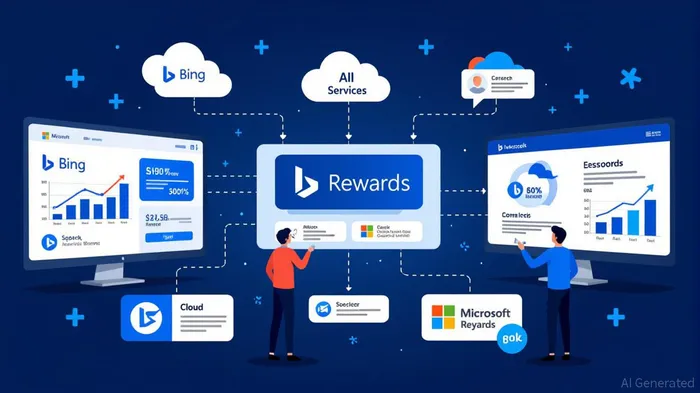
The digital engagement economy is undergoing a seismic shift, driven by artificial intelligence (AI), evolving user behavior, and the consolidation of tech ecosystems. At the heart of this transformation lies MicrosoftMSFT-- Bing, a search engine long overshadowed by GoogleGOOGL-- but now repositioning itself as a linchpin in Microsoft's broader strategy to dominate the attention economy. While direct data on Bing's 2025 market share remains elusive, indirect evidence—from AI integration to the explosive growth of the Microsoft Rewards ecosystem—suggests a compelling investment narrative.
The AI-Driven Reinvention of Bing
Microsoft's partnership with OpenAI has transformed Bing into a testing ground for cutting-edge AI applications. The integration of ChatGPT and DALL-E into Bing's search experience has not only enhanced user engagement but also positioned the platform as a gateway to AI-driven productivity and creativity. According to the Top 10 Emerging Technologies of 2025, AI-augmented search tools are among the fastest-growing categories, with users increasingly prioritizing platforms that offer contextual, conversational interactions over traditional keyword-based results .
While specific market share figures for 2025 are unavailable, Bing's historical trajectory—coupled with Microsoft's aggressive R&D investments—points to a narrowing gap with Google. The company's focus on AI-driven personalization aligns with broader trends identified in the Future of Jobs Report 2025, which emphasizes the role of adaptive, AI-powered tools in reshaping user workflows .
Microsoft Rewards: A Trojan Horse for Ecosystem Lock-In
The Microsoft Rewards ecosystem, once a niche loyalty program, has evolved into a sophisticated engagement engine. By gamifying user interactions—rewarding searches, app usage, and cloud storage with points redeemable for physical and digital goods—Microsoft has created a flywheel effect that deepens user dependency on its ecosystem.
Though 2025 user growth metrics are not publicly available, the program's expansion into partnerships with global retailers, streaming services, and even cryptocurrency platforms suggests a strategic pivot toward becoming a universal engagement layer. This mirrors trends highlighted in the 7 Global Shifts Defining 2025, which notes the rise of “hybrid digital-physical” loyalty systems as a key driver of consumer retention .
Strategic Synergies and Investment Implications
The interplay between Bing and Microsoft Rewards is not coincidental. Bing serves as the primary touchpoint for user acquisition, while Rewards ensures retention through behavioral incentives. This synergy is amplified by Microsoft's cloud infrastructure, which enables hyper-personalized experiences at scale. For investors, the ecosystem's closed-loop design—where user data fuels AI improvements, which in turn enhance Rewards' relevance—creates a self-reinforcing value proposition.
Critics may argue that Bing's market share remains a fraction of Google's, but this overlooks the qualitative shift in user engagement. The Tracking Tariffs report underscores how geopolitical fragmentation is driving demand for localized, AI-native platforms , a space where Microsoft's hybrid cloud and AI capabilities offer a distinct advantage.
Conclusion: A Bet on the Future of Attention
In the absence of granular 2025 data, the case for Bing and Microsoft Rewards rests on their alignment with macro-level trends: AI integration, ecosystem lock-in, and the monetization of user attention. While risks such as regulatory scrutiny and Google's counter-moves persist, Microsoft's financial heft and first-mover advantage in AI-positioned search make it a compelling long-term play. For investors, the question is not whether Bing will overtake Google, but whether the digital engagement economy will reward those who build the infrastructure for its next phase.





Comentarios
Aún no hay comentarios