
Rising Inflation and Portfolio Rebalancing: Navigating Bond Yields and Equity Valuations
The U.S. inflation rate edged higher in June 2025, reaching 2.7% year-over-year, with shelter costs, food, and healthcare expenses driving the rise. Meanwhile, the 10-year Treasury yield stands at 4.43%, reflecting persistent inflationary pressures and shifting monetary policy expectations. For investors, this environment demands a nuanced approach to portfolio rebalancing—one that balances exposure to bonds, equities, and inflation-hedging assets.
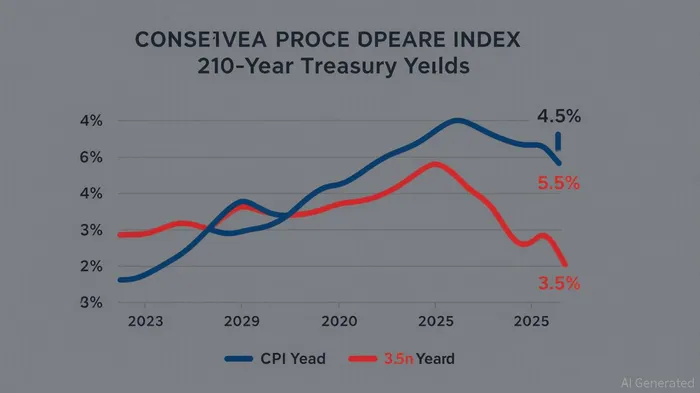
Inflation's Dual Impact: Bonds and Equities Under Pressure
The shelter component—including rent and owners' equivalent rent—remains the largest contributor to inflation, rising 3.8% annually. This persistent pressure complicates bond markets, as higher inflation erodes the real returns of fixed-income securities. The 10-year Treasury yield's climb to 4.43% reflects investors pricing in expectations of prolonged inflation and uncertainty over the Federal Reserve's next moves.
For equity investors, high inflation poses a mixed challenge. While sectors like healthcare and utilities may thrive due to their pricing power, tech and consumer discretionary stocks could struggle if rising costs curb spending. . Valuations in growth-heavy sectors appear stretched, making them vulnerable to rising rates.
Bond Market Dynamics: Yields and Duration Risk
The Federal Reserve's federal funds rate, currently at 4.5%, has been held steady for four consecutive meetings, though policymakers signal potential cuts by year-end. This creates a conundrum for bond investors:
- Short-Term Bonds: May offer stability if rates decline, but their yields are lower.
- Long-Term Bonds: Carry duration risk, as rising rates could depress prices.
Consider inflation-protected securities (TIPS), which adjust principal for CPI changes. For example, . TIPS have outperformed nominal bonds in 2025, reflecting their inflation hedge.
Equity Strategy: Focus on Resilience and Dividends
Equities are not immune to inflation's effects, but certain sectors and companies can navigate it better:
1. Healthcare and Utilities: These defensive sectors benefit from steady demand and pricing power. For instance, healthcare costs rose 3.4% annually, supporting firms like UnitedHealth Group (UNH).
2. Consumer Staples: Companies with pricing power, such as Procter & Gamble (PG), can pass costs to consumers.
3. High-Quality Dividend Stocks: Firms with strong balance sheets and consistent payouts, such as Johnson & Johnson (JNJ), offer stability.
Avoid overexposure to rate-sensitive sectors like real estate (despite rising rents) or tech, where growth may slow if borrowing costs remain elevated.
Portfolio Rebalancing: A Pragmatic Approach
Investors should adjust their portfolios to reflect these dynamics:
1. Reduce Duration Exposure: Shift bond allocations toward shorter maturities or floating-rate instruments to mitigate interest rate risk.
2. Incorporate Inflation Hedges: Allocate 5-10% to TIPS or commodities (e.g., gold ETFs like GLD) to protect against price increases.
3. Sector Rotation: Increase exposure to healthcare, utilities, and consumer staples while trimming cyclical sectors like industrials.
4. Rebalance Equities: Use dips in growth stocks to rebalance toward value or dividend-focused funds.
Risk Considerations
- Fed Policy Uncertainty: If the Fed cuts rates unexpectedly, long-term bonds could rally, but equity volatility may rise if inflation proves sticky.
- Geopolitical Risks: Supply chain disruptions or energy price spikes (natural gas rose 14.2% annually) could amplify inflation.
Conclusion
The current environment demands a portfolio that balances safety and growth. By trimming duration risk, emphasizing inflation-resistant equities, and maintaining liquidity, investors can navigate rising rates and inflation without overexposure to volatility. As the Fed's next moves unfold, proactive rebalancing—guided by both sector fundamentals and macro trends—will be key to preserving capital and capitalizing on opportunities.
Investment Advice:
- Bonds: Prioritize short-term Treasuries and TIPS over long-term corporates.
- Equities: Focus on dividend-paying defensive stocks and healthcare sectors.
- Rebalance: Trim cyclical exposures and use equity dips to reallocate toward undervalued inflation hedges.
In a world where inflation and yields remain elevated, adaptability—and a disciplined rebalancing strategy—are the best defenses.







Comentarios
Aún no hay comentarios