
The Rising Imperative of Cybersecurity Infrastructure Resilience in a Digitally Fragmented World
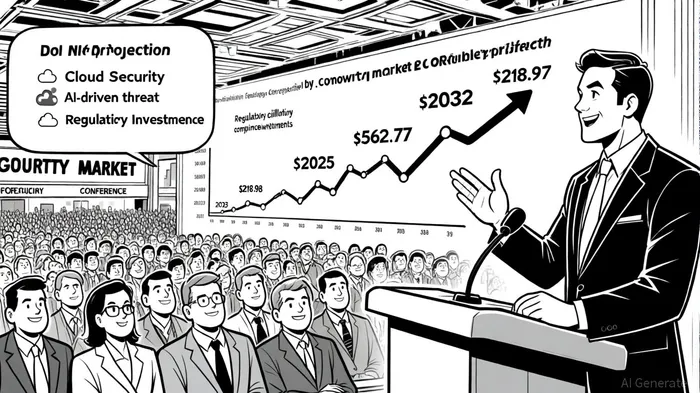
The global cybersecurity landscape is undergoing a seismic shift, driven by the accelerating digitization of critical infrastructure and the escalating sophistication of cyber threats. As enterprises and governments race to fortify their digital perimeters, the demand for resilient cybersecurity infrastructure has surged to unprecedented levels. According to a report by the Global Cybersecurity Market Report 2025, global spending on enterprise cybersecurity solutions is projected to exceed $280 billion in 2025, with the market size anticipated to reach USD 218.98 billion in 2025 and grow to USD 562.77 billion by 2032, reflecting a compound annual growth rate (CAGR) of 14.4% during the forecast period[1]. This trajectory underscores a critical inflection point for investors seeking to capitalize on the convergence of technological innovation and regulatory urgency.
Market Dynamics: Sectors and Regions Leading the Charge
The finance, technology, healthcare, and manufacturing sectors are the primary drivers of this growth, embedding cybersecurity into every layer of their digital workflows. For instance, the BFSI sector is prioritizing real-time user authentication and secure data collaboration platforms to comply with stringent data protection laws[1]. Meanwhile, the manufacturing industry is investing heavily in operational technology (OT) security to safeguard industrial control systems from ransomware attacks[1].
Regionally, North America dominates the market with a 2025 valuation of $108 billion, fueled by federal and enterprise cyber modernization initiatives[1]. The United States alone is projected to generate $86.4 billion in cybersecurity revenue in 2025, reflecting its role as a global innovation hub[2]. Europe is closely following, with a focus on privacy-enhancing technologies (PETs) to align with the EU's data sovereignty agenda[1]. The Asia-Pacific region, meanwhile, is emerging as a high-growth market, driven by government-funded national cyber initiatives in countries like India and China[1].
Technological Innovations Reshaping Cyber Defense
The integration of artificial intelligence (AI) and machine learning is transforming cybersecurity from a reactive to a predictive discipline. Over 73% of enterprise security operations centers (SOCs) now employ AI-based threat detection systems, enabling real-time anomaly identification and threat neutralization[1]. Generative AI is further enhancing resilience by creating complex encryption keys and passwords that are nearly impossible to crack[2].
Cloud security, a subset of this innovation, is experiencing exponential growth. As hybrid work environments become the norm, cloud security spending is projected to grow by 27% year-over-year, outpacing traditional on-premises solutions[1]. This trend is particularly evident in the adoption of zero-trust architectures and secure access service edge (SASE) frameworks, which are redefining how enterprises manage access to distributed resources.
Regulatory Tailwinds and Investment Opportunities
Governments worldwide are enacting aggressive cybersecurity legislation to mitigate systemic risks. The U.S. Cybersecurity Strategy 2025 mandates breach reporting within 72 hours and enforces minimum resilience standards for critical sectors[1]. Similarly, the EU's NIS2 Directive expands its scope to cover additional industries and imposes stricter penalties for non-compliance[1]. These regulatory shifts are creating a compliance-driven demand for cybersecurity solutions, particularly in sectors like energy, healthcare, and finance.
For investors, the most compelling opportunities lie in companies specializing in cloud security, AI-driven threat intelligence, and compliance automation. Startups leveraging generative AI for encryption and legacy system modernization are also attracting significant venture capital interest[2]. Additionally, firms providing secure data collaboration platforms—critical for cross-border operations in a post-GDPR world—are well-positioned to benefit from Europe's regulatory momentum[1].
Conclusion: A Resilience-First Future
The accelerating demand for enterprise cybersecurity solutions is not merely a response to threats but a strategic imperative for sustaining digital trust. With market growth rates outpacing traditional IT investments and regulatory frameworks tightening globally, the case for cybersecurity infrastructure resilience is both urgent and unassailable. Investors who align with this paradigm shift—focusing on AI-native security platforms, cloud-native architectures, and compliance-centric tools—stand to benefit from a market poised for sustained expansion.







Comentarios
Aún no hay comentarios