
The Rising Hidden Costs of Homeownership and Their Impact on Real Estate Returns
The Burden of Hidden Costs: A National and Regional Breakdown
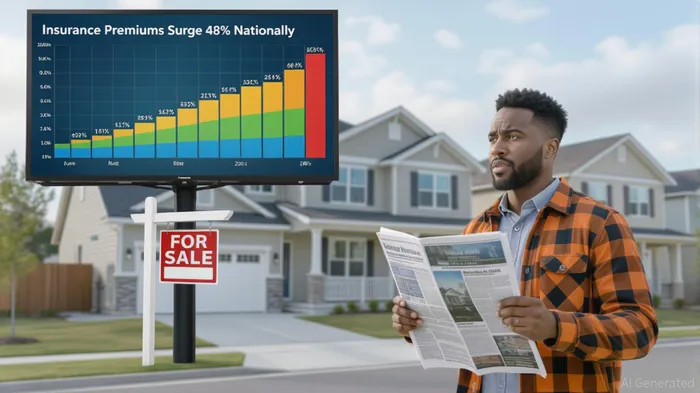
The Zillow and Thumbtack analysis reveals stark regional disparities. , according to Zillow data. Bankrate's 2025 study further underscores the gravity: the average annual cost of maintaining a single-family home , . , these expenses dwarf income growth, according to Bankrate analysis.
Impact on Investment Returns: Cap Rates, Interest Rates, and Regional Volatility
The financial pressure extends beyond individual homeowners. For investors, rising non-mortgage costs are compressing net operating income (NOI) and driving up capitalization rates. A 2025 analysis highlights that cap rates have expanded, . This trend is compounded by interest rates, , reshaping valuation models and investor expectations. Higher borrowing costs have forced many property owners to reassess risk-return profiles, with required returns for real estate investments climbing to offset elevated risk-free rates.
Regional case studies illustrate this volatility. SmartCentres REIT, for instance, in Q3 2025, partly due to interest rate-driven fair value adjustments. Conversely, Pro REIT capitalized on industrial sector growth, . These divergent outcomes underscore the importance of sector and location in mitigating the impact of hidden costs.
Shifting Buyer Behavior and Market Dynamics
Buyer behavior is also evolving in response to these pressures. Higher interest rates and affordability challenges have prompted a shift toward smaller homes, suburban relocation, and a preference for energy-efficient properties research. In major cities, first-time buyers are increasingly relying on affordable housing programs or exploring secondary markets. Phoenix, for example, has emerged as a hot spot due to its relative affordability and migration trends data. Meanwhile, platforms like Arrived are democratizing real estate investment, .
Financial Modeling in a New Era
To navigate these challenges, real estate financial modeling has become more sophisticated. Development models now simulate construction delays, cost overruns, and phased debt drawdowns, while acquisition models emphasize sensitivity analyses for exit cap rates and vacancy assumptions according to . ESG integration has also gained prominence, with green capital expenditures and energy savings factored into valuations, particularly in Europe and Asia-Pacific according to Magistral Consulting.
Conclusion: A Call for Strategic Adaptation
The rising hidden costs of homeownership are redefining real estate as an asset class. Investors must now account for these expenses in their risk assessments, favoring markets with lower operational burdens and leveraging technology to enhance liquidity and efficiency. As the Zillow and Bankrate data demonstrate, the days of real estate as a passive, low-risk investment are fading. Success in 2025 and beyond will belong to those who adapt to the new financial realities of homeownership.







Comentarios
Aún no hay comentarios