
Rising Hedging Costs in 2025: Navigating Implied Volatility and Risk Premium Dynamics
The 2025 investment landscape is defined by a paradox: elevated implied volatility coexists with muted stock-level dispersion, creating a volatile yet tightly correlated market environment. According to the S&P Dow Jones Indices' March 2025 Dispersion, Volatility & Correlation Dashboard, the VIX has surged to 22.40, while the VIXEQ (equity volatility index) hit 40.74-the highest since September 2022. Yet, implied dispersion (DSPX) remains at 1.96, and actual dispersion has fallen, signaling a classic volatility reversion setup, according to the Shell Capital report. This dynamic, where macro-level risk is priced in but stock-level divergence is subdued, has profound implications for hedging strategies and risk premiums.
The Volatility-Reversion Conundrum
The disconnect between implied volatility and dispersion has created fertile ground for asymmetric strategies, such as selling overpriced options or shorting VIX futures, the Shell Capital report argues. However, this environment also amplifies hedging costs. For instance, the persistent positive correlation between equities and bonds-a structural shift from historical norms-has eroded traditional diversification benefits, forcing investors to seek alternative hedges, as detailed in a deep hedging paper. BNY's 2025 Capital Market Assumptions note that U.S. equities are expected to outperform international counterparts, driven by AI-driven productivity gains, but this comes amid a backdrop of modest fixed-income returns and rising macroeconomic uncertainty, according to a Harbourfronts study.
Meanwhile, commodities and currencies have exhibited divergent behaviors. Gold and silver surged 15% and 30%, respectively, in Q3 2025, as safe-haven demand intensified amid geopolitical tensions and policy shifts, according to the J.P. Morgan outlook. Conversely, base metals like copper face downward pressure due to moderate industrial demand. In currencies, the U.S. dollar's stability-bolstered by high interest rates and tariff policies-has led to elevated hedging costs for firms with USD exposure. For example, annualized hedging costs for one-month USD/EUR forwards now range between 3% and 4%, driven by the 5.25% U.S. Federal Reserve rate versus the ECB's 2.5%, according to a Milltech report.
Risk Premium Dynamics: VRP and Illiquidity
The volatility risk premium (VRP)-the difference between implied and realized volatility-has emerged as a critical factor in hedging decisions. A 2025 study by Harbourfronts found that VRP is generally positive across asset classes and correlates with trading volume, with high-volume markets offering clearer signals for volatility forecasting. In equities, strategies like one-month at-the-money straddles with daily delta hedging have been proposed to systematically capture VRP, though such approaches require disciplined risk management during volatility spikes, as noted in the Shell Capital report.
In illiquid markets, such as BitcoinBTC-- options, a distinct illiquidity premium compensates market makers for hedging challenges. Research shows that a one-standard-deviation increase in Bitcoin option illiquidity predicts a 0.07% rise in daily delta-hedged returns for calls and 0.06% for puts, according to the Harbourfronts study. This premium reflects the costs of rebalancing, inventory management, and price jumps in low-liquidity environments.
Hedging Costs: A Corporate Pain Point
For corporations, hedging costs have become a significant drag on returns. A mid-2025 report by Market Navigator highlights that 81% of firms in Europe, North America, and the UK now hedge currency exposure, up from 67% in 2023, according to the Milltech report. European firms, in particular, report an average hedge ratio of 48% and longer hedge durations (5.3 months), reflecting efforts to stabilize cash flows amid volatility. However, 80% of firms globally noted increased hedging costs over the past year, with interest rate differentials and tariff uncertainties compounding the challenge, the Milltech report also found.
Technological innovations are offering partial relief. Institutions like Lloyds Banking Group have adopted algorithmic FX trading solutions to reduce transaction costs and improve liquidity management, per the Milltech report. Yet, the rising cost of protection remains a balancing act for CFOs, who must weigh the financial consequences of inaction-75% of firms globally reported losses from unhedged currency risk, the Milltech report notes.
Strategic Implications for Investors
The interplay of volatility, risk premiums, and hedging costs demands dynamic, asset-specific strategies. In equities, low-volatility and defensive strategies are gaining traction as near-term hedges, a view echoed in the J.P. Morgan outlook. For commodities, gold and silver are seen as asymmetric opportunities due to their uncorrelated nature, while base metals require caution. In fixed income, U.S. Treasuries are increasingly viewed as critical tools for hedging equity volatility, offering both income and stability, according to a CFRA analysis.
Moreover, the VRP-adjusted RIV (Risk-Adjusted Implied Volatility) models are gaining popularity for their superior predictive accuracy compared to traditional GARCH or IV-based forecasts, as found in the Harbourfronts study. These models, combined with deep hedging frameworks that integrate implied volatility surfaces and transaction costs, are reshaping risk management in index option portfolios, building on insights from the deep hedging paper.
Conclusion
As 2025 unfolds, investors must navigate a landscape where rising hedging costs are inextricably linked to implied volatility and risk premium dynamics. The volatility reversion setup, coupled with structural shifts in asset correlations, necessitates adaptive strategies that balance protection with cost efficiency. For corporations, the challenge lies in leveraging technology and tailored hedging ratios to mitigate exposure without sacrificing profitability. For asset managers, the key is to harness VRP and illiquidity premiums through innovative models that align with evolving market realities.
In this environment, the old adage holds true: Diversification is not a relic, but its implementation must evolve.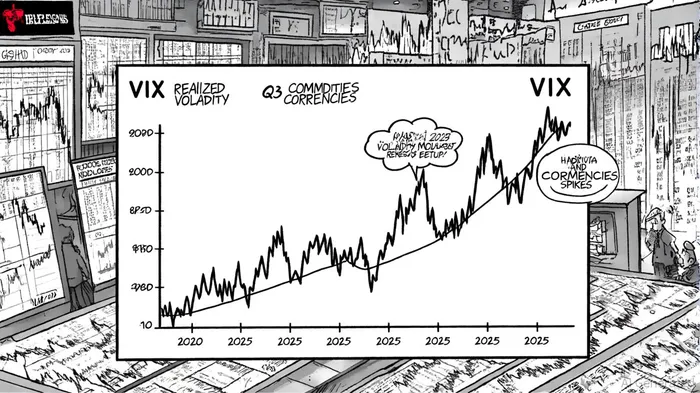






Comentarios
Aún no hay comentarios