
The Rising Dividend Appeal of Large-Cap ETFs in a Shifting Rate Environment
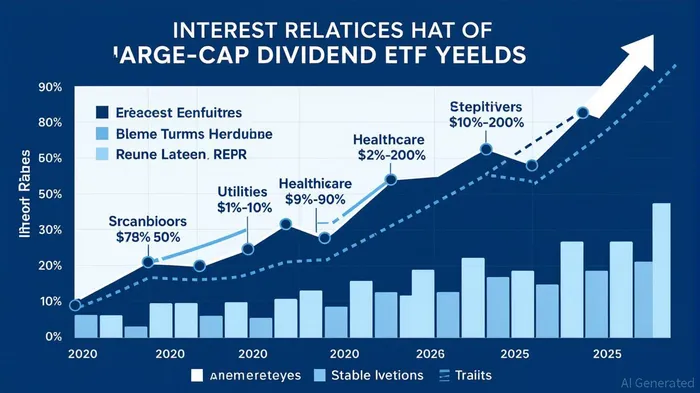
In an era of economic uncertainty and fluctuating interest rates, large-cap exchange-traded funds (ETFs) focused on dividend sustainability have emerged as a compelling solution for income-oriented investors. As central banks grapple with inflationary pressures and shifting monetary policies, the appeal of these ETFs lies in their ability to balance risk mitigation with consistent cash flow generation. This analysis explores how large-cap dividend ETFs are redefining strategic income generation in a 2025 rate environment, emphasizing their structural advantages and sectoral diversification.
Dividend Sustainability: A Pillar of Resilience
Dividend sustainability is the cornerstone of income-focused investing, particularly in a landscape where interest rate volatility can erode bond yields and complicate fixed-income strategies. Large-cap ETFs prioritize companies with robust financial health, low payout ratios, and a history of consistent dividend growth. For instance, firms in sectors like utilities and healthcare—known for stable cash flows—often anchor these portfolios, ensuring resilience even as borrowing costs rise [1].
According to a report by Dividend.com, ETFs that screen for companies with payout ratios below 60% and at least 15 years of consecutive dividend increases are particularly well-positioned to weather macroeconomic headwinds [2]. This focus on conservative payout structures reduces the risk of dividend cuts, a critical consideration as investors navigate a potential tightening cycle.
Strategic Sector Allocation in a Shifting Rate Environment
The performance of large-cap dividend ETFs is closely tied to their sectoral composition. Utilities and real estate investment trusts (REITs), for example, have historically maintained high dividend yields despite rising rates due to their inelastic demand and long-term asset lifecycles [3]. Similarly, healthcare companies benefit from demographic tailwinds and regulatory stability, making them less sensitive to interest rate fluctuations [2].
Preferred dividends, which are fixed and take precedence over common dividends, further enhance income predictability. These instruments, often included in dividend-focused ETFs, offer a hybrid of equity and debt characteristics, providing a buffer against economic downturns [1]. For investors seeking regular income, ETFs with monthly or quarterly distributions—such as those tracking high-yield dividend stocks—add flexibility to cash flow planning [3].
Income Generation: Balancing Yield and Risk
Strategic income generation in large-cap ETFs extends beyond dividend selection. Diversification across sectors and geographies, coupled with disciplined reinvestment mechanisms, amplifies returns. Dividend reinvestment plans (DRIPs), for instance, allow investors to compound gains by automatically reinvesting payouts into additional shares, bypassing transaction costs [3].
Moreover, ETFs with a focus on dividend growth—rather than just yield—offer a dual benefit: compounding from reinvested dividends and potential capital appreciation. As noted by financial analysts, this approach aligns with long-term wealth-building goals, even in a higher-rate environment where income alternatives may be scarce .
Conclusion: A Strategic Case for Large-Cap Dividend ETFs
While the absence of granular 2023–2025 performance data for specific ETFs limits immediate empirical validation, the structural strengths of large-cap dividend ETFs remain evident. Their emphasis on financial discipline, sectoral diversification, and income predictability positions them as a cornerstone for investors seeking to navigate a shifting rate environment. As central banks continue to recalibrate monetary policy, these ETFs offer a pragmatic blend of sustainability and strategic income generation—a duality that will likely grow in importance in the years ahead.







Comentarios
Aún no hay comentarios