
The Rising Demand for Travel Alternatives During Family Holidays
The Fracturing of Traditional Holiday Norms
Consumer surveys reveal a growing disconnect between traditional family holiday expectations and modern realities. The 2025 U.S. Family Travel Survey highlights that 73% of families cite affordability as a primary barrier to travel, according to a NYU SPS Family Travel Survey, a challenge exacerbated by inflation and rising living costs. Meanwhile, dissatisfaction with rigid workplace holiday policies-such as mandatory work during Christmas without compensation-has left many families seeking alternatives to conventional travel plans, as noted in a ABC report. This discontent has accelerated the adoption of non-traditional options, including short-term rentals and road trips, which offer greater flexibility and cost control.
Airbnb's 2024 data underscores this shift: travel spending in Georgia alone generated $2.6 billion in economic activity, supporting 32,900 jobs and $617 million in tax revenue, according to a Travel Spending Report. Destinations like Savannah and metro Atlanta thrived on the popularity of home-like accommodations, which allow families to reduce dining costs and customize their experiences. For investors, this signals a broader trend: the hospitality sector's future lies in adapting to the demand for personalized, budget-conscious, and experience-driven travel.
Hilton's Strategic Response: The "Whycation" and Family-Centric Innovation
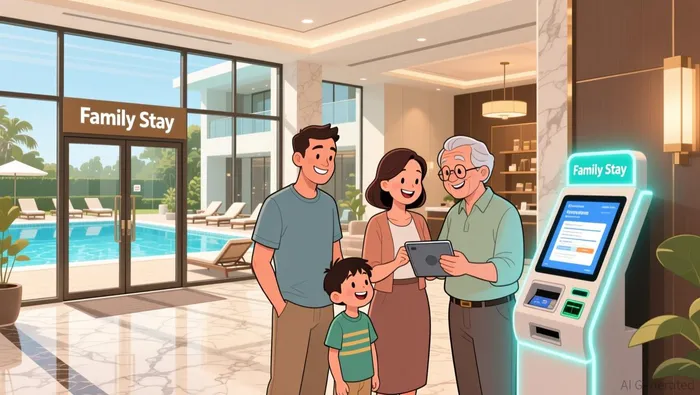
Hilton Hotels is positioning itself at the forefront of this evolution. The company's 2026 Trends Report emphasizes the "whycation"-a shift from destination-focused trips to emotionally driven journeys centered on rest, reconnection, and meaningful experiences, according to a Hilton Trends Report. This aligns with the survey finding that 84% of parents who involve children in travel planning report enhanced adaptability and openness to new experiences, according to a NYU SPS Family Travel Survey. By leveraging the "kidfluence" phenomenon, Hilton is tailoring its offerings to appeal to younger travelers while maintaining family-friendly amenities such as pet-friendly rooms, digital check-in, and on-site pools.
The company is also capitalizing on the resurgence of U.S. road trips, with 61% of travelers unwilling to drive more than five hours without a hotel stay and 83% prioritizing free breakfast, according to a Hilton Trends Report. These insights have led Hilton to emphasize home-like comforts and flexible booking options, ensuring it remains competitive against alternative accommodations. Additionally, Hilton's loyalty programs are being repositioned to capitalize on intergenerational travel habits: two-thirds of travelers say their hotel choices are shaped by their parents, according to a Hilton Trends Report, a dynamic that strengthens customer retention and brand loyalty.
Investment Case: Hospitality Sector Growth in 2026
The convergence of these trends presents a compelling investment opportunity. While Hilton Food Group faces headwinds in its seafood operations, according to a Just Food report, the core hospitality division is strategically aligned with 2026's travel landscape. The 2025 Family Travel Survey notes that 61% of parents plan to use travel advisors in the next two years, driven by the desire for exclusive benefits and peace of mind, according to a NYU SPS Family Travel Survey. This bodes well for hotel chains with robust loyalty programs and partnerships, as they can offer curated, cost-effective packages to families.
Moreover, the rise of multigenerational and skip-gen trips-such as grandparents traveling with grandchildren without parents-creates a niche market for culturally rich, accessible destinations, according to a NYU SPS Family Travel Survey. While the industry currently earns a low grade (C-) on inclusivity for families with special needs, according to a NYU SPS Family Travel Survey, there is significant untapped potential for brands that prioritize accessibility and staff training.
Conclusion
The hospitality sector's 2026 growth trajectory hinges on its ability to adapt to the "whycation" ethos and family-centric preferences. Hilton's strategic focus on flexibility, emotional connection, and technological convenience positions it to outperform in a market where 92% of families are actively seeking travel solutions, according to a NYU SPS Family Travel Survey. For investors, the key takeaway is clear: the sector's future lies in embracing alternative travel models and redefining the family holiday experience.







Comentarios
Aún no hay comentarios