
Rising Demand for On-Campus Food Services Amid Campus Living Expansion
The U.S. higher education sector is undergoing a transformative phase, driven by a surge in campus living infrastructure and a corresponding rise in demand for on-campus food services. As universities expand student housing to accommodate growing enrollment and evolving student expectations, the commercial real estate and food service industries are poised for significant growth. This article examines the interplay between campus housing developments and dining service investments, highlighting strategic opportunities for investors in this dynamic market.
Campus Housing Expansion: A Catalyst for Growth
Student housing has emerged as one of the most resilient sectors in commercial real estate, with
as of September 2025. Southern markets, in particular, have led the charge, with institutions like the University of Tennessee and Florida State University (FSU) spearheading large-scale developments. For instance, , while
. These projects are often
funded through public-private partnerships (P3s), which mitigate financial risks for universities while enabling rapid expansion.
The growth is not merely quantitative but also qualitative. Developers are
prioritizing , , and mixed-use designs to meet the demands of Generation Z students. For example,
FSU's northwest campus transformation , reflecting a shift toward integrated living and dining ecosystems. 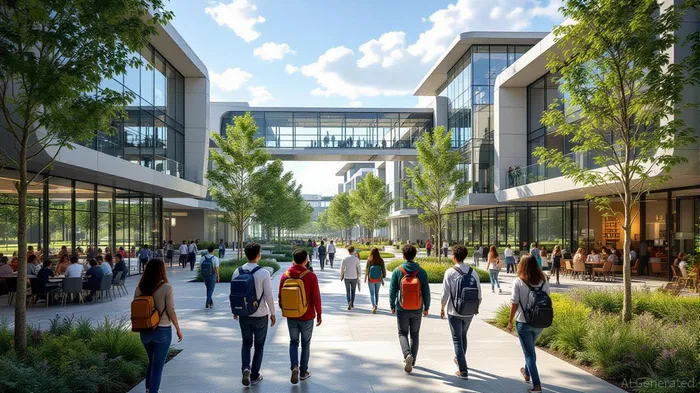
Dining Services: Adapting to a New Era
The expansion of student housing directly correlates with increased demand for on-campus dining. As institutions add thousands of beds, they must also scale their food service operations to meet the needs of a growing population.
According to a report by CBORD, . .
Moreover, universities are diversifying their revenue streams. For example,
FSU's new dining facility is expected to generate additional income through partnerships with food delivery services and off-campus dining options. The University of Tennessee has also
introduced like the , which features a range of global cuisines to cater to diverse student preferences.
Case Studies: Strategic Investments in Action
University of Tennessee
The University of Tennessee's partnership with RISE Real Estate has enabled the construction of three new residence halls,
. These developments are accompanied by expanded dining options, including the recently opened Crust and Hillside Café, which emphasize fresh, locally sourced ingredients.
The university's 2025-2026 operating budget .
Florida State University
for the Northwest Community Housing & Dining project underscores its commitment to modernizing campus infrastructure. The new dining facility, ,
designed to integrate smart technologies for efficiency. This project aligns with FSU's broader master plan to create a pedestrian-friendly academic village, enhancing student life while attracting ancillary businesses to the area.
Future Outlook: Market Projections and Trends
The U.S. student accommodation market is
projected to grow , . This expansion is fueled by international student enrollment, , and the increasing adoption of PBSA () models.
Investors should also note the role of automation and sustainability in shaping the future of campus dining.
As institutions seek to reduce costs and improve efficiency, and eco-friendly practices will become critical differentiators. Additionally, the ""-a projected decline in college-age populations-has prompted universities to innovate, creating opportunities for food service providers to collaborate on revenue-generating initiatives.
Conclusion
The convergence of campus housing expansion and on-campus dining innovation presents a compelling investment landscape. Universities are not only building more beds but also reimagining how students eat, live, and interact. For investors, this means opportunities in commercial real estate development, food service technology, and strategic partnerships with educational institutions. As the sector continues to evolve, those who align with the priorities of Generation Z students and leverage cutting-edge solutions will be best positioned to capitalize on this growth.







Comentarios
Aún no hay comentarios