
Rising Crypto Phishing Risks: Assessing the Financial Threat of Phishing-as-a-Service and Its Impact on Investor Confidence
The PaaS Ecosystem: A Structured Menace
Phishing-as-a-service has professionalized cybercrime. Operators develop sophisticated toolkits, while affiliates deploy them at scale, often splitting profits in a 20-80 ratio, according to a Crypto Enforcement Trends 2025 report. The Eleven Drainer, a prominent example, exemplifies this model. By leveraging high-reputation domains and fingerprinting techniques to evade detection, it has stolen $135 million from 76,582 victims on EthereumETH-- alone, using smart contracts to automate fund distribution, as noted in the Crypto Enforcement Trends 2025 report. Incentives like sports car giveaways further motivate affiliates, creating a self-sustaining ecosystem of exploitation.
These operations are not limited to technical sophistication; they exploit human behavior. Fake exchange sites, malware such as CLEARFAKE, and social engineering tactics-like infiltrating IT systems through compromised personnel-have become standard, according to the Chainalysis 2025 Crypto Crime Mid-Year Update and a Kroll Cyber Threat Landscape Report. The ByBit hack, which saw $1.5 billion stolen by DPRK-linked actors, underscores how even institutional-grade platforms are vulnerable when human error or insider threats are weaponized, as noted in the Chainalysis 2025 Crypto Crime Mid-Year Update.
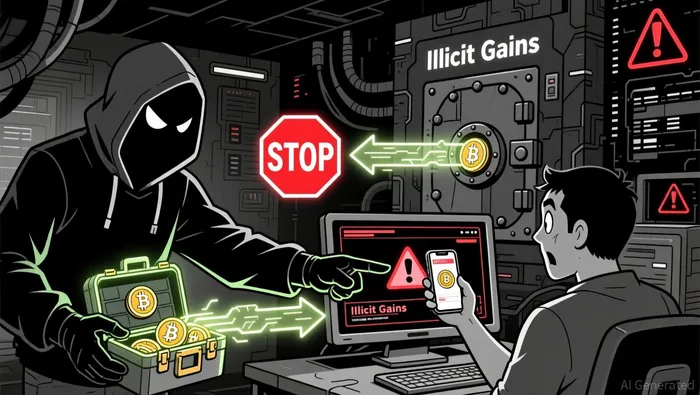
Market Confidence and the Cost of Distrust
The financial impact of these attacks extends beyond direct losses. A 40% year-on-year increase in phishing attempts, according to a Kroll Cyber Threat Landscape Report, has created a climate of fear, particularly among retail investors. For institutions, the stakes are equally high: the Kroll report notes that crypto kidnappings and ransom attempts are now part of the threat landscape, with high-net-worth individuals targeted for their holdings, as noted in the Kroll Cyber Threat Landscape Report. This erosion of trust distorts market confidence, as investors-both individual and institutional-hesitate to allocate capital to an asset class perceived as insecure.
The ripple effects are evident. Cold storage adoption has surged, but this comes at the cost of liquidity and usability. Meanwhile, decentralized finance (DeFi) platforms face heightened scrutiny, as attacks on payable functions and ERC-20 token approvals reveal systemic vulnerabilities, as noted in the Crypto Enforcement Trends 2025 report. For markets, this translates to volatility: fear-driven sell-offs and regulatory overreach could further fragment an already fragmented industry.
Mitigation Strategies: A Path Forward
Addressing PaaS threats requires a multi-layered approach. For institutions, robust security protocols-such as regular penetration testing, multi-factor authentication (MFA), and secure private key storage-are non-negotiable, as noted in the Kroll Cyber Threat Landscape Report. Proactive measures like Know Your Customer (KYC) procedures and threat intelligence sharing can disrupt attack vectors before they materialize. Retail investors, meanwhile, must prioritize education: avoiding public displays of wealth, using hardware wallets, and verifying the authenticity of exchange sites are critical steps, as noted in the Chainalysis 2025 Crypto Crime Mid-Year Update.
Regulatory bodies also play a role. The rise of drainer-as-a-service (DaaS) models highlights gaps in tracking systems, as only a fraction of these activities are flagged, as noted in the Crypto Enforcement Trends 2025 report. Strengthening cross-border collaboration and incentivizing bug bounty programs could help close these blind spots.
Conclusion: Security as a Pillar of Adoption
The crypto industry's future hinges on its ability to secure digital assets against evolving threats. While phishing-as-a-service operations like Eleven Drainer pose significant risks, they also reveal opportunities for innovation in cybersecurity. Investors who prioritize platforms with transparent security frameworks-and avoid those with lax protocols-will be better positioned to navigate this landscape. For the broader market, the lesson is clear: without trust, adoption will stall. In 2025, security is not just a technical requirement-it is the foundation of sustainable growth.






Comentarios
Aún no hay comentarios