
Rising Crime-Linked Financial Risks in Diaspora Nigerian Communities: Assessing Reputational and Economic Impacts on African Investment
The Shadow of Crypto and Regulatory Ambiguity
Nigeria's virtual asset sector has emerged as a double-edged sword. While it has attracted innovation and capital, it has also become a haven for illicit financial flows. A 2024 study highlights how Nigerian cryptocurrency platforms, operating in a regulatory gray area, have enabled money laundering and fraud, according to a ScienceDirect article. Platforms like Patricia, which launched its own digital tokens in 2023 despite regulatory warnings, exemplify this risk. The Central Bank of Nigeria (CBN) has since issued guidelines to formalize oversight, but inconsistent enforcement across African jurisdictions has left gaps that criminals exploit, according to the ScienceDirect article.
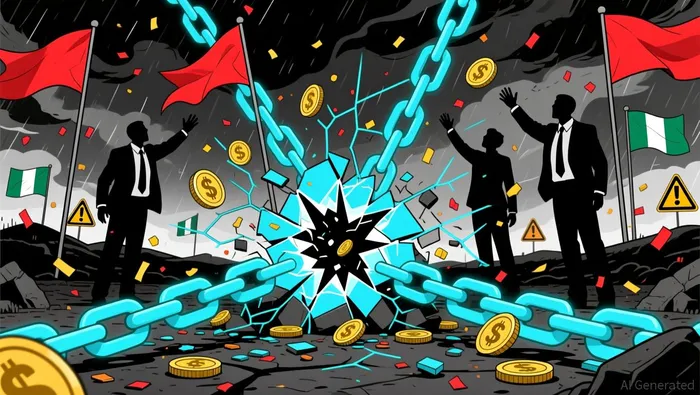
The reputational damage extends beyond Nigeria. Investors in African markets now associate virtual asset transactions with heightened regulatory risk, complicating efforts to attract capital. For instance, the CBN's 2023 guidelines, while a step toward clarity, have been criticized for their reactive nature, leaving foreign firms wary of navigating Nigeria's evolving legal landscape, according to the ScienceDirect article.
High-Profile Cases and Investor Distrust
Criminal convictions and corruption allegations involving Nigerian diaspora members have further eroded confidence. A notable case is that of Lebanese-Nigerian businessman Gilbert Chagoury, who secured a $700 million contract to renovate Lagos ports despite his firm's lack of port-sector experience, as reported by ThisDay Live. The project, backed by UK Export Finance and Citibank, has drawn accusations of cronyism, raising questions about transparency in Nigeria's infrastructure spending, according to the ThisDay Live. Such incidents amplify reputational risks for foreign investors, who fear entanglement in politically motivated contracts, according to the ThisDay Live.
Similarly, the ongoing lawsuit by Nigerian–Norwegian executive Olukayode Togun against Halliburton-alleging racial discrimination in expatriate benefits-has spotlighted broader governance issues in Nigeria's oil sector, as reported by ThisDay Live. While the case remains unresolved, it underscores how diaspora-linked legal disputes can tarnish the reputation of multinational corporations operating in the region, according to the ThisDay Live.
FDI Fluctuations and the Aid Vacuum
FDI trends in Nigeria reflect this volatile environment. In 2023, the country recorded a negative FDI flow of -$187 million due to equity divestments in the oil sector, according to a Trends Research report. Yet, by 2025, FDI rebounded by 24% to $2 billion, driven by resource extraction and construction projects, according to the Trends Research report. This duality-where FDI surges despite reputational risks-highlights the allure of Africa's natural resources and growing consumer markets, even as political instability and regulatory uncertainty persist, according to the Trends Research report.
The continent's broader FDI landscape has also been reshaped by external factors. A 70% reduction in U.S. health-related aid to Africa from 2021 to 2025 has forced governments to seek self-sufficiency, with Nigeria allocating additional funds to mitigate the impact, according to a NPR report. While this shift may reduce dependency on foreign aid, it has also intensified scrutiny of domestic governance and corruption, further complicating FDI decisions, according to the NPR report.
Navigating the Risks: Strategies for Investors
For investors, the path forward requires a nuanced approach:
1. Enhanced Due Diligence: Scrutinize the backgrounds of diaspora-linked partners and projects, particularly in high-risk sectors like virtual assets and infrastructure.
2. Engage with Regulators: Collaborate with African financial authorities to advocate for clearer, enforceable regulations that address money laundering and corruption.
3. Diversify Exposure: Spread investments across African markets to mitigate country-specific risks tied to Nigeria's diaspora-related challenges.
4. Leverage AfCFTA Opportunities: Capitalize on the African Continental Free Trade Area's potential to create a more integrated and resilient economic bloc.
Conclusion
The interplay between diaspora-linked crimes, regulatory ambiguity, and investor perceptions is reshaping Africa's investment landscape. While Nigeria's economic potential remains undeniable, the reputational costs of unchecked criminal activities cannot be ignored. Investors must balance the continent's growth prospects with a rigorous assessment of geopolitical and reputational risks-a task that demands both vigilance and adaptability in an increasingly complex environment.







Comentarios
Aún no hay comentarios