
Rising Costs in Offshore Wind Undermine Mitsubishi's Green Ambitions—What This Means for Japan's Energy Transition and Investor Returns?
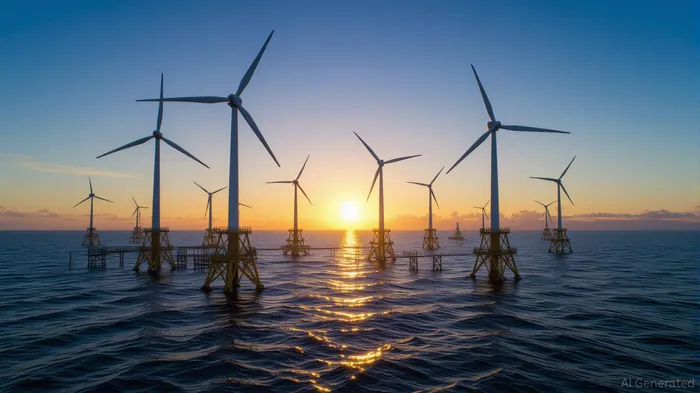
Japan's offshore wind sector, once a beacon of hope for decarbonization, is now a cautionary tale of financial fragility in a volatile global economy. Mitsubishi Corporation, a key player in the country's renewable energy ambitions, has been forced to reassess its $354 million impairment-laden projects in Akita and Chiba prefectures. These developments underscore a broader crisis: the sector's vulnerability to macroeconomic headwinds, geopolitical instability, and supply chain bottlenecks. For investors, the question is no longer whether offshore wind can succeed in Japan, but how to navigate the risks of a high-cost, high-uncertainty environment.
The Cost Conundrum: Steel, Cables, and the Yen's Depreciation
The financial viability of offshore wind projects hinges on material costs, which now account for 70% of total project expenses. Steel and cable prices have surged by 50–80% since 2018, driven by global inflation, energy price shocks, and Japan's reliance on imported components. The yen's depreciation—down 20% against the dollar since 2021—has further inflated costs for turbines, cables, and labor. Mitsubishi's 52.2 billion yen impairment charge reflects the reality that construction costs for its 1.76 GW projects have risen by 30–40% since 2021, eroding margins and profitability.
The government's proposed solutions—extended lease terms and revised auction rules—aim to stabilize developer returns but may not offset the compounding pressures of rising interest rates and supply chain delays. For instance, Japan's lack of a domestic turbine manufacturing base forces reliance on European and Chinese suppliers, whose prices are now inflated by global energy crises and trade tensions.
Strategic Risks: Geopolitics and Policy Uncertainty
Mitsubishi's retreat highlights the strategic risks of investing in renewable energy in a geopolitically volatile world. The Russia-Ukraine war disrupted global supply chains, while the Red Sea crisis has added $100 million in annual shipping costs for the sector. Meanwhile, Japan's fragmented infrastructure—delayed grid upgrades, underdeveloped ports, and limited stakeholder engagement with local fisheries—has created operational bottlenecks.
The government's 10 GW by 2030 target now faces a credibility gap. While policy reforms like cost-adjustment mechanisms in tenders (set for 2025) aim to attract investment, they lack the urgency of China's localized supply chains or South Korea's streamlined permitting processes. For investors, this means Japan's offshore wind sector remains a high-risk, high-reward proposition, with outcomes hinging on policy execution and global macroeconomic stability.
Investor Implications: Balancing Long-Term Vision with Short-Term Realities
Mitsubishi's case offers a blueprint for assessing renewable energy investments in volatile markets. Key considerations include:
1. Currency Exposure: The yen's weakness has amplified costs for imported materials. Investors should monitor FX hedging strategies and the yen's trajectory against the dollar and euro.
2. Policy Risk: Japan's regulatory shifts (e.g., lease extensions) are positive but must be paired with infrastructure investments. A would highlight the gapGAP--.
3. Project-Specific Viability: Mitsubishi's impairment charge underscores the need for granular due diligence. Projects with fixed-price contracts or cost-adjustment clauses may offer better resilience.
For now, the sector's long-term potential remains intact. Japan's 45 GW by 2040 target aligns with global decarbonization trends, and offshore wind could become a cornerstone of energy security. However, investors must brace for near-term volatility. A diversified approach—balancing exposure to Japanese renewables with more mature markets like Europe or China—may mitigate risks while capturing growth.
Conclusion: A Test of Resilience
Mitsubishi's struggles are a microcosm of the broader challenges facing renewable energy in a post-pandemic, post-Ukraine world. While the company's commitment to decarbonization remains, its financial setbacks highlight the need for robust risk management and policy innovation. For Japan, the path to 45 GW of offshore wind by 2040 will require not just technological ambition but also economic pragmatism. Investors, in turn, must weigh the sector's strategic importance against its current financial fragility—a delicate balancing act that will define the next decade of energy transitions.







Comentarios
Aún no hay comentarios