
The Rising Cost of Prolonged Unemployment: Sector-Specific Implications for Banks and Biotech
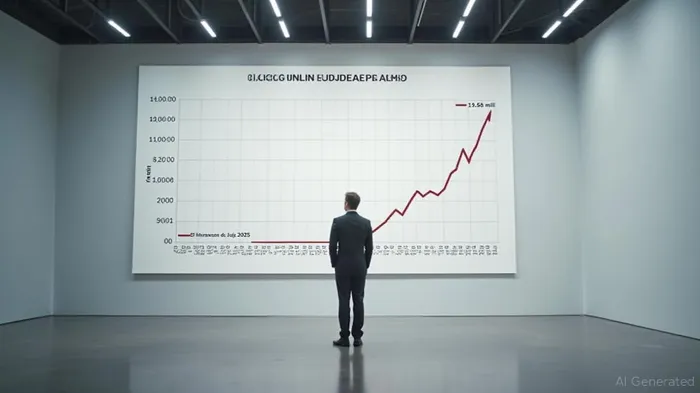
The U.S. labor market is at a crossroads. While initial jobless claims have dipped to 221,000 in recent weeks, the rise in Continuing Jobless Claims—now at 1.956 million as of July 5, 2025—paints a more troubling picture. This metric, which tracks individuals remaining unemployed for multiple weeks, has surged 5.9% year-over-year and reflects a labor market where hiring is stalling and economic uncertainty looms large. The implications are not uniform across sectors. For banks, the risk of delinquency and credit deterioration is rising. For biotechnology, the fallout is subtler but equally profound: a shrinking demand base and a capital-starved innovation ecosystem.
Banks: A Delicate Balancing Act
The banking sector's exposure to prolonged unemployment is stark. As households remain jobless, the likelihood of missed mortgage, auto, and credit card payments increases. U.S. Bancorp (USB), a regional bank with a diversified portfolio, offers a case study. In Q2 2025, the bank reported a 13.2% year-over-year rise in net income to $1.815 billion, driven by disciplined cost-cutting and a 11.8% decline in credit loss provisions. Yet its net interest margin (NIM) of 2.66% remains under pressure from Federal Reserve rate cuts and aggressive deposit pricing competition.
The challenge for banks like USB is twofold: managing margin compression while absorbing the risk of a potential delinquency wave. Regional banks with high concentrations in consumer credit or commercial real estate (CRE) are particularly vulnerable. The Federal Reserve's Beige Book notes that hiring remains “cautious,” with employers delaying decisions amid trade policy uncertainty. For banks, this means prolonged exposure to weak loan performance.
Investment Insight: Regional banks with robust non-interest income streams and conservative credit portfolios are better positioned to weather the storm. However, those reliant on fee-based models or CRE lending should be scrutinized closely.
Biotechnology: A Sector in Survival Mode
The biotechnology industry's struggles are less visible but no less critical. Elevated jobless claims correlate with reduced healthcare spending and delayed medical procedures, directly impacting demand for biotech therapies. Compounding this is a funding drought: venture capital inflows have slowed, and mergers and acquisitions have stalled, leaving companies to tighten belts.
By 2024, biotech jobless claims had surged, with over 24,000 jobs lost in the sector alone. Hiring freezes have persisted, with job postings in Q2 2024 down 36% year-over-year. The talent pool has swelled, creating a “buyer's market” for employers. Even giants like Bristol Myers Squibb and BiogenBIIB-- have cut thousands of jobs, reflecting a broader shift toward cost discipline.
Yet within this bleak landscape, niche opportunities emerge. Companies leveraging AI for drug discovery, regulatory affairs, and gene therapy manufacturing continue to attract interest. These areas align with long-term trends in personalized medicine and regulatory efficiency. For investors, the key is to distinguish between firms adapting to a leaner ecosystem and those merely surviving.
Investment Insight: Biotech firms with hybrid expertise in biology, data science, and regulatory compliance are more likely to thrive. Avoid companies reliant on speculative pipelines or those with high burn rates.
Strategic Positioning in a Fractured Market
The interplay between elevated jobless claims and sector-specific vulnerabilities demands a nuanced approach. For banks, the focus should be on capital resilience and credit quality. For biotech, it's about innovation with purpose. Both sectors require a lens that balances short-term risks with long-term potential.

As the Federal Reserve contemplates further rate cuts and policymakers grapple with trade tensions, investors must remain vigilant. The labor market's fragility is a harbinger of broader economic shifts. For those willing to navigate the volatility, the rewards lie in sectors that adapt—not just survive.
Final Word: In a world where prolonged unemployment reshapes demand and risk, the winners will be those who align their strategies with the new economic reality. For banks, that means prudent lending. For biotech, it means precision in innovation. The question is not whether to invest—but how to invest wisely.







Comentarios
Aún no hay comentarios