
The Rising Cost of Homeownership: How Insurance, Tax, and Tariff Trends Are Reshaping the Housing Market
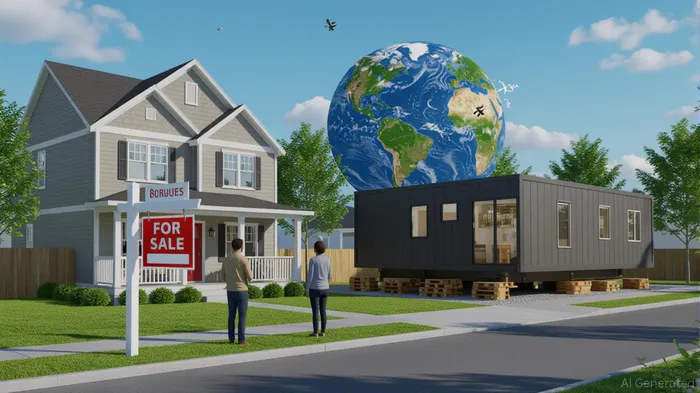
The U.S. housing market in 2025 is undergoing a seismic shift, driven by a confluence of economic and policy forces. As trade tensions escalate and global supply chains fragment, the cost of homeownership is climbing at an unprecedented rate. For real estate investors, the challenge lies not only in navigating these headwinds but in identifying opportunities within the chaos.
Tariffs and the Construction Cost Conundrum
The resurgence of high tariffs under President Donald Trump's administration has reshaped global trade patterns, with direct implications for construction. By July 2025, the average effective U.S. tariff rate had surged to 18.2%—the highest since 1934[2]. These tariffs, targeting critical materials like copper and steel, have driven up construction costs, squeezing margins for developers and indirectly inflating property values. Countries are now diversifying trade networks, but the resulting logistical complexity and delays further strain supply chains[1]. For investors, this means traditional residential projects are becoming riskier propositions, with cost overruns and delayed timelines becoming the norm.
Insurance and Tax Policies: A Double-Edged Sword
While specific data on insurance premium increases remains elusive, the broader economic instability caused by trade wars has undeniably raised operational risks for property owners. Insurers are recalibrating rates to account for supply chain disruptions and inflationary pressures, a trend mirrored in property tax assessments. As construction costs rise, local governments are adjusting tax policies to reflect inflated property values, creating a feedback loop that exacerbates affordability challenges[1]. For investors, this dual burden of higher insurance and tax costs necessitates a reevaluation of traditional ROI models.
Strategic Shifts: Modular Housing and Co-Living Spaces
Amid these challenges, alternative housing solutions are gaining traction. Modular housing, which leverages prefabricated components to reduce costs and timelines, is emerging as a viable countermeasure to rising material prices[1]. Similarly, co-living spaces—shared residential models that optimize space and resources—are appealing to younger demographics seeking affordability and flexibility. These innovations not only mitigate the impact of tariffs and inflation but also align with sustainability goals, a growing priority for investors and regulators alike[1].
The Investor's Playbook
For real estate professionals, the path forward requires agility. Prioritizing projects with shorter development cycles, such as modular housing, can hedge against supply chain volatility. Additionally, investing in co-living spaces taps into demographic shifts and regulatory tailwinds, offering a buffer against rising insurance and tax costs. Diversification into alternative assets—such as mixed-use developments or green-certified properties—can further insulate portfolios from macroeconomic shocks[1].
The 2025 housing market is no longer defined by conventional metrics. As tariffs, insurance, and tax trends converge to redefine homeownership costs, investors must pivot from traditional strategies to adaptive, future-proof solutions. The winners in this new landscape will be those who recognize disruption not as a barrier, but as an opportunity to innovate.







Comentarios
Aún no hay comentarios