
The Rising Cost of Cognitive Decline: How Aging Populations Are Undermining Retirement Security and Asset Longevity
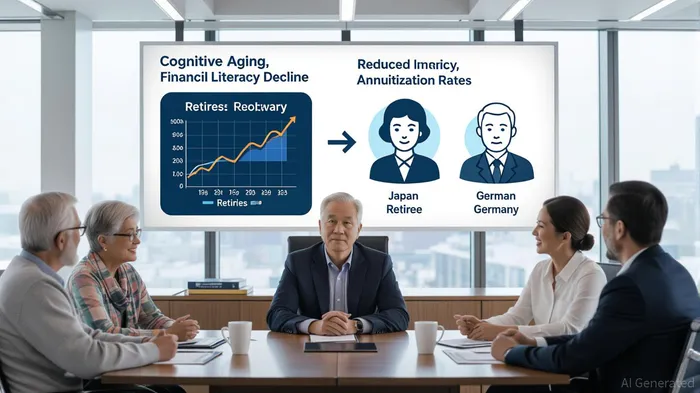
The global retirement crisis is no longer a distant threat—it is here. In mature economies like the United States, Japan, and Germany, aging populations are grappling with a perfect storm of longevity risk, financial literacy decline, and poor decision-making. These forces are eroding retirement portfolios at an alarming rate, creating a demand for structured solutions that few investors are yet prepared to exploit.
The Under-Annuitization Crisis: A $25 Trillion Gap
Despite the growing need for guaranteed income streams, annuitization remains stubbornly low. In the U.S., only 3.4% of households aged 50+ own private annuities, according to the Health and Retirement Study. This under-annuitization is not unique to the U.S.: Japan and Germany, both with rapidly aging demographics, face similar challenges. Japan's population over 65 is projected to hit 38.4% by 2065, yet annuity adoption remains constrained by cultural aversion to risk and regulatory inertia. Germany's robust social safety net has historically reduced demand for private annuities, but its aging workforce is now forcing a reevaluation of retirement strategies.
The consequences are stark. The U.S. alone faces a $25 trillion mortality coverage gap—the difference between the income needed to cover longevity risk and what retirees actually have. Japan's retirement savings gap is equally dire, with declining employer-sponsored pensions pushing more individuals toward annuities. Meanwhile, Germany's demographic time bomb is forcing policymakers to consider reforms that could unlock new demand for longevity products.
Cognitive Aging: The Silent Erosion of Financial Literacy
As populations age, cognitive decline is becoming a critical driver of portfolio erosion. A 2025 study in the Journal of Financial Planning found that vocabulary knowledge and semantic memory are strongly correlated with financial literacy in older adults. By age 80, more than half of individuals develop cognitive impairments that hinder their ability to evaluate complex financial products, including annuities. This decline is not just about forgetfulness—it's about the erosion of the very skills needed to navigate retirement planning.
The implications are profound. Older adults with declining cognitive function are more likely to make costly errors, such as liquidating assets prematurely or falling victim to fraud. They also tend to overestimate their financial acumen, leading to poor annuitization decisions. For example, a retiree with impaired judgment might reject a fixed annuity that guarantees income for life, opting instead for a riskier investment portfolio that could deplete their savings.
The Rise of Structured Solutions: Annuities and Longevity Equities
The growing demand for structured retirement solutions is reshaping financial markets. In the U.S., annuity sales hit $105.4 billion in Q1 2025, driven by fixed indexed annuities (FIAs) and registered index-linked annuities (RILAs). These products are gaining traction as investors seek to hedge against longevity risk while preserving growth potential. Similarly, Japan's government is promoting pan-European personal pension products (PEPP-like models) to encourage annuitization, while Germany is exploring dynamic annuities that adjust payouts based on life expectancy.
For investors, the rise of longevity-focused equities presents a compelling opportunity. Insurance companies like MetLifeMET-- and Unum are expanding their annuity offerings to meet demand, while healthcare providers and technology firms are developing tools to address cognitive aging. For instance, AI-driven financial planning platforms are emerging to help retirees with declining cognitive function make informed decisions.
Investment Advice: Positioning for the Longevity Economy
- Invest in Insurance Giants: Companies like MetLife (MET) and Unum (UNM) are well-positioned to benefit from rising annuity demand. Their ability to manage longevity risk through actuarial science and reinsurance partnerships makes them attractive long-term holdings.
- Target Longevity-Focused ETFs: Exchange-traded funds such as the Global X Longevity Thematic ETF (LNGTH) offer exposure to a diversified basket of companies addressing aging populations, including healthcare, biotech861042--, and financial services.
- Support Cognitive Health Innovators: Firms developing tools for early detection of cognitive decline or AI-driven financial planning (e.g., fintech startups) could see explosive growth as demand for retirement solutions evolves.
- Prioritize ESG Factors: Companies with strong ESG profiles—particularly those addressing social determinants of health and financial inclusion—are likely to outperform in a longevity-driven economy.
Conclusion: A Call for Strategic Adaptation
The rising cost of cognitive decline and under-annuitization is not just a demographic challenge—it's a market opportunity. As mature economies grapple with the dual pressures of aging populations and financial illiteracy, the demand for structured solutions will only grow. Investors who recognize this shift and position themselves accordingly will be well-rewarded. The key lies in balancing long-term growth with risk mitigation, ensuring that portfolios are as resilient as the retirees they serve.
In the coming years, the longevity economy will redefine retirement planning. For those who act now, the rewards could be substantial.





Comentarios
Aún no hay comentarios