
Rising Canadian Gasoline Prices: A Strategic Opportunity in Energy and Consumer Finance
The surge in Canadian gasoline prices over the past year has sparked widespread concern among consumers and policymakers. Yet, beneath the surface of this volatility lies a transformative intersection of energy market innovations and evolving banking sector strategies. For investors, this convergence presents a unique opportunity to capitalize on the shifting dynamics of energy production, storage, and financing.
Energy Market Innovations: Redefining the Cost Equation
Recent breakthroughs in energy storage and carbon-neutral fuel production are poised to reshape the economic landscape of the energy sector. A report by MIT highlights the emergence of grid-scale liquid air energy storage, which could stabilize renewable-dominated power grids by addressing intermittency issues[1]. This technology reduces reliance on fossil fuels, indirectly influencing gasoline demand as renewable energy becomes more cost-competitive.
Simultaneously, engineers at MIT have developed a more efficient process to convert carbon dioxide into formate, a nontoxic, storable energy carrier[3]. This innovation not only offers a scalable alternative to traditional fuels but also aligns with global decarbonization goals. As formate-based fuels gain traction, their integration into transportation and industrial sectors could dampen long-term gasoline price volatility by diversifying energy supply chains.
Banking Sector Responses: Navigating Uncertainty
While direct data on Canadian banking strategies remains sparse, broader global trends and geopolitical shifts provide critical insights. The ongoing US-China trade tensions have disrupted supply chains and increased uncertainty in financial markets[1]. In response, Canadian banks are likely recalibrating their portfolios to prioritize resilience over short-term gains. For instance, financial products tied to renewable energy projects and carbon-neutral fuel infrastructure may see increased allocation, reflecting a strategic pivot toward energy transition themes[2].
Natural gas and fossil fuel price volatility, exacerbated by trade disputes, further incentivize banks to hedge against exposure through green financing instruments[1]. This shift could accelerate the adoption of low-carbon technologies, indirectly influencing gasoline prices by accelerating the transition to cleaner energy sources.
Strategic Opportunities for Investors
The interplay between energy innovation and banking sector adaptation creates a dual-layered investment opportunity. First, companies pioneering liquid air storage and formate fuel technologies are positioned to benefit from both technological adoption and policy tailwinds. Second, financial institutionsFISI-- that align their lending and investment criteria with decarbonization goals may outperform peers in a low-interest-rate environment, where green bonds and sustainability-linked loans are gaining traction[2].
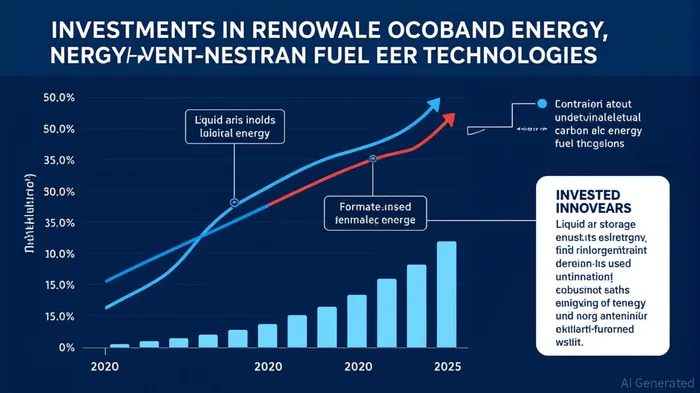
For example, a data visualization comparing Canadian gasoline prices with renewable energy investment trends (2020–2025) would likely reveal a negative correlation as clean energy adoption accelerates[1]. Investors who anticipate this trajectory can position themselves in sectors poised for growth, such as energy storage infrastructure or carbon capture and utilization.
Conclusion
Rising gasoline prices are not merely a cost burden but a catalyst for systemic change. By analyzing the interplay between energy market innovations and banking sector strategies, investors can identify asymmetrical opportunities in a landscape defined by uncertainty. The path forward demands a nuanced understanding of how technological advancements and financial ingenuity will collectively redefine the energy economy.







Comentarios
Aún no hay comentarios