
The Rise of Web3 Esports and TCGs: YGG Play Summit 2025 as a Catalyst for Institutional Investment
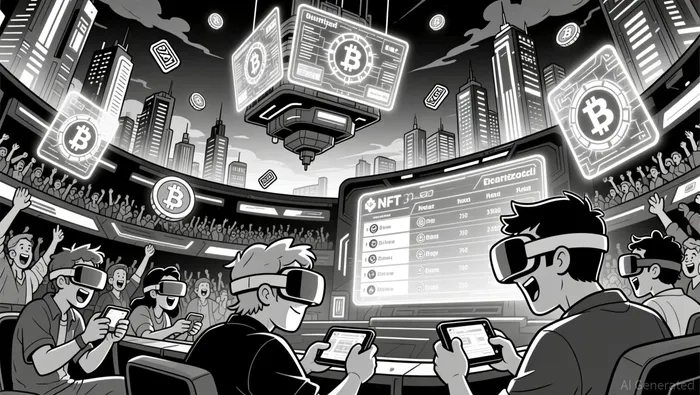
The convergence of gaming and blockchain technology has long been a speculative frontier, but the YGG Play Summit 2025 marked a pivotal inflection point. Held in Manila from November 19 to 22, the summit not only showcased the maturation of Web3 esports and trading card games (TCGs) but also served as a proving ground for institutional capital to align with this rapidly evolving ecosystem. With over 5,600 in-person attendees and a global online audience exceeding 490 million, the event underscored the sector's transition from niche experimentation to scalable execution. For investors, the summit revealed a blueprint for how blockchain's unique value propositions-digital ownership, decentralized governance, and tokenized economies-are reshaping competitive gaming and collectible markets.
A New Paradigm for Competitive Gaming
Web3 esports, once dismissed as a passing trend, gained tangible momentum at the summit through high-stakes tournaments like the Vibes Asian Championships and the Might & Magic Fates Invitational, which collectively offered a prize pool of $125,000. These events highlighted a critical shift: blockchain-based games are no longer just about speculative assets but about creating sustainable competitive ecosystems. For instance, the Parallel TCG tournament, backed by a $100,000 prize pool, demonstrated how TCGs can leverage blockchain to enable verifiable scarcity and tradable digital assets, attracting both players and investors.
Institutional interest in these formats is no longer theoretical. The summit's partnerships with entities like HyperPlay, Mantle, and Ubisoft signaled a growing recognition of Web3's potential to monetize gaming talent and intellectual property. These collaborations are not merely about funding tournaments but about embedding blockchain infrastructure into the core mechanics of competitive play, ensuring that players can own, trade, and profit from their in-game achievements.
Institutional Capital Finds Its On-Ramp
The summit's role as a catalyst for institutional investment became evident through its alignment with execution-focused strategies. Traditional gaming investors, wary of the volatility and hype surrounding Web3, found reassurance in the summit's emphasis on "smoother onboarding processes" and mainstream adoption. For example, the Metaverse Filipino Worker (MFW) City initiative, which directly addresses a key barrier to institutional entry: the lack of skilled labor in the Web3 space, by building a pipeline of talent, created a more predictable environment for capital allocation.
Moreover, the presence of institutional partners such as DWF Labs and the Philippine crypto exchange Coins.ph highlighted the sector's growing legitimacy. These entities are not merely spectators; they are actively funding infrastructure projects, such as the Skill District's AI-powered game development workshops, which aim to democratize access to Web3 tools. For institutional investors, this represents a shift from speculative bets to strategic, long-term value creation.
TCGs as a Gateway to Web3 Mainstreaming
Trading card games, traditionally a physical medium, have found a new lease on life through blockchain. At the summit, Vibes TCG and Parallel TCG emerged as flagship examples of how tokenization can transform TCGs into dynamic, interoperable assets. Unlike conventional cards, blockchain-based TCGs allow players to trade, upgrade, and even earn royalties from their digital collectibles, creating a revenue stream that mirrors the NFT art market.
This innovation has not gone unnoticed by institutional investors. The summit's inclusion of TCGs in its competitive framework-such as the $100,000 Parallel TCG tournament-demonstrated a clear path to monetization. For investors, the appeal lies in the dual potential of TCGs: they serve as both a gateway for mainstream audiences into Web3 and as a revenue-generating asset class. The summit's success in attracting 300+ community and guild partners further validates this model, proving that TCGs can scale beyond niche communities.
The Road Ahead: Execution Over Hype
The YGG Play Summit 2025's most significant contribution may be its role in shifting the narrative from hype to execution. As one industry insider noted during the LOL Lounge podcast, "The future of Web3 gaming isn't about the technology itself but about how it solves real-world problems-like creating new career paths and digital economies." This pragmatic approach is precisely what institutional investors seek: scalable, problem-solving applications rather than speculative experiments.
For the Web3 gaming sector to sustain its growth, it must continue to prioritize user experience and mainstream adoption. The summit's focus on integrating blockchain into familiar platforms-such as chess and TCGs-shows how this can be achieved without alienating traditional gamers as demonstrated by industry analysis. As institutional capital flows into this space, the emphasis will likely shift toward projects that demonstrate clear ROI, whether through tournament sponsorships, digital asset marketplaces, or educational initiatives like the MFW City program.
Conclusion
The YGG Play Summit 2025 was more than a celebration of Web3 gaming-it was a strategic milestone in the sector's journey toward institutional legitimacy. By showcasing scalable models, fostering partnerships, and prioritizing execution, the summit provided a compelling case for why institutional investors should take notice. As blockchain continues to redefine ownership and value in gaming, the convergence of esports, TCGs, and institutional capital will likely accelerate, turning what was once a speculative frontier into a mainstream asset class.







Comentarios
Aún no hay comentarios