
The Rise of Utility-Driven Altcoins: Why XRP, HBAR, and RNS Are Positioning Themselves for Long-Term Growth
XRP: Bridging the Gap in Cross-Border Payments
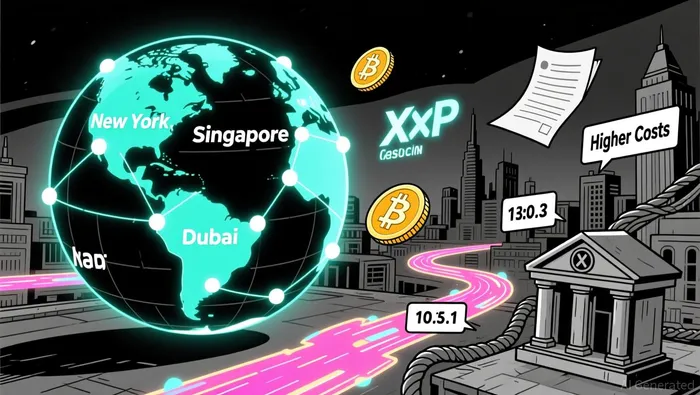
Ripple's XRP has emerged as a cornerstone of institutional adoption in the digital finance sector. A recent $500 million strategic investment led by Fortress Investment Group and Brevan Howard has elevated Ripple's valuation to $40 billion, signaling robust institutional confidence, according to a ZyCrypto report. This funding underscores XRP's role as a bridge asset for fast, low-cost settlements, particularly through Ripple's On-Demand Liquidity (ODL) platform. Since 2020, ODL has processed over $30 billion in cross-border transactions, offering a compelling alternative to traditional SWIFT systems with near-instant settlement times and fees as low as one cent per transaction, as noted in the ZyCrypto report.
The resolution of Ripple's legal dispute with the U.S. Securities and Exchange Commission (SEC) has further solidified XRP's institutional appeal. With major financial issuers like Franklin Templeton and Bitwise preparing XRP ETFs for SEC approval, as reported by Coinotag, the token is poised to attract a new wave of institutional capital. Analysts note that XRP's utility in remittances and micropayments, combined with its regulatory progress, positions it as a critical infrastructure asset in the evolving digital economy, according to a InvestingHaven analysis.
HBAR: Enterprise-Grade Blockchain for the Digital Age
HBAR, the native token of HederaHBAR-- Hashgraph, is gaining traction as a scalable solution for enterprise applications. The launch of the Canary HBAR ETF on Nasdaq in October 2025 drove a 17% price surge and $1.03 billion in 24-hour trading volume, according to a Coinotag report. This ETF, the first regulated spot exchange-traded fund for HBAR, attracted $44 million in net inflows within its first week, signaling strong institutional interest, as reported by CoinEdition. The SEC's impending decision on Grayscale's Hedera Trust ETF by November 12, 2025, could further catalyze adoption, as noted in the CoinEdition report.
HBAR's real-world utility is evident in its high-volume transaction processing, with daily transactions peaking at over 100 million, as reported in a LiveBitcoinNews piece. Hedera's governance by global corporations like Google, IBM, and Boeing ensures robust compliance and sustainability, making it a trusted infrastructure for tokenization projects, supply chain tracking, and digital identity management, according to the InvestingHaven analysis. The network's hashgraph consensus mechanism enables low fees and high throughput, addressing key pain points for enterprises seeking blockchain integration, as noted in the InvestingHaven analysis.
RNS: Tokenizing Real Estate for DeFi Liquidity
RentStac (RNS) is redefining decentralized finance by tokenizing real estate income through Special Purpose Vehicles (SPVs). Each RNS token represents a fractional stake in income-producing properties, with monthly USDC payouts tied to rental revenue, according to a Cryptopolitan analysis. This model offers investors stable, inflation-resistant yields while leveraging blockchain's transparency and liquidity. As of October 2025, RNS's presale had raised over $412,000, with a 100% token bonus for early investors, as reported by Bitget. The platform's buyback-and-burn strategy and DAO governance further align token value with real-world usage, according to a Cryptopolitan analysis.
RNS's institutional potential lies in its structured approach to tokenized assets. By employing multi-jurisdictional SPVs and CertiK audits, RentStac addresses regulatory and operational risks, making it attractive to institutional investors seeking diversified exposure to real-world assets, as noted in a SuperEx article. While specific metrics like active user base remain undisclosed, the project's focus on security and compliance mirrors broader trends in tokenized gold and RWA adoption, as reported in a Coinotag piece.
Comparative Outlook: Utility as the New Benchmark
XRP, HBAR, and RNS each exemplify how blockchain projects are evolving beyond speculative hype to deliver tangible value. XRP's dominance in cross-border payments, HBAR's enterprise-grade infrastructure, and RNS's real estate tokenization highlight complementary pathways for institutional adoption. As 78% of global institutional investors formalize crypto risk management frameworks in 2025, according to a SQ Magazine analysis, these projects are well-positioned to capitalize on the growing demand for utility-driven assets.
Conclusion
The convergence of regulatory clarity, institutional infrastructure, and real-world use cases is reshaping the crypto landscape. XRP's liquidity solutions, HBAR's enterprise applications, and RNS's real estate innovation collectively underscore a broader shift toward utility-driven value creation. For investors, these tokens represent notNOT-- just speculative opportunities but foundational assets in the next phase of blockchain adoption.






Comentarios
Aún no hay comentarios