
The Rise of USDT0 and Its Strategic Implications for Cross-Chain Liquidity Infrastructure
USDT0: A Unified Liquidity Layer for Global Capital
USDT0 has rapidly become the largest cross-chain liquidity network, facilitating over $50 billion in total value moved since its January 2025 launch. Unlike traditional stablecoins, USDT0 operates natively across 15 blockchain networks-including EthereumETH--, ArbitrumARB--, and Solana-without relying on wrapped tokens or custodial bridges. This design eliminates intermediaries and reduces settlement times to 30–40 seconds, while enabling $12.5 billion in 30-day transactions. For institutional players, this represents a critical reduction in friction, allowing capital to move instantaneously between chains while maintaining the stability and regulatory familiarity of USDTUSDT--.
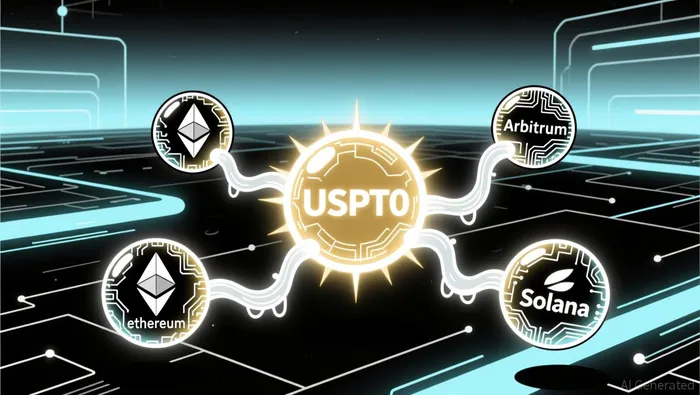
The strategic value of USDT0 lies in its role as a unified liquidity layer. By connecting Layer 1 and Layer 2 networks, it mitigates the inefficiencies of siloed ecosystems, creating a single, interoperable stablecoin standard. This is particularly significant for DeFi scalability, as it allows protocols to access a shared pool of liquidity without sacrificing chain-specific performance. As stated by industry analysts, "USDT0's omnichain deployment is the first step toward a global, permissionless monetary network."
Mantle and Bybit: Bridging TradFi and DeFi
The partnership between Mantle and Bybit has amplified USDT0's strategic impact, particularly in institutional adoption and transaction efficiency. Mantle, an exchange-linked Layer 2 network, and Bybit, a global exchange, have collaborated to embed USDT0 into their infrastructure, creating a seamless bridge between centralized and decentralized markets. This integration has led to a 457% surge in MNT's daily trading volume on Bybit, from $111 million in July to $619 million in October 2025 according to Eastern Progress. Simultaneously, MNT's Assets Under Management (AUM) grew nearly 300% in the same period, reflecting strong institutional conviction.
Key to this success is the Mantle × Bybit Roadmap, which expands MNT's utility through regulated staking pools, enhanced trading options, and institutional-grade features like higher leverage and extended loan terms. These innovations align with the broader industry shift toward cross-chain standards and next-gen Layer 2 infrastructure, as noted in a report by The Globe and Mail. Bybit's integration of zero-fee USDT0 withdrawals further reduces transaction costs, enabling capital to flow freely between onchain and offchain destinations according to Newswire.
Strategic Alignment and the Future of Stablecoin Infrastructure
The Mantle-Bybit-USDT0 triad exemplifies how centralized and decentralized markets can coexist. By leveraging LayerZero's Omnichain Fungible Token (OFT) standard, USDT0 ensures interoperability while maintaining security and compliance according to Newswire. This alignment is critical for institutional investors, who require both scalability and regulatory clarity. For instance, Bybit's professional trading suite now includes USDT0 as a native asset, while Mantle's collaboration with Backed has brought tokenized U.S. equities onchain via xStocks according to Asset Servicing Times. These developments signal a convergence of TradFi and DeFi, enabling 24/7 access to global assets and reducing reliance on traditional intermediaries.
Moreover, the partnership has increased MNT's market relevance. Bybit's trading volume share for MNT rose from 0.62% in July to 2.86% in October 2025 according to The Chief Officer, underscoring its growing role in institutional portfolios. This trend is further supported by product launches such as high-yield staking pools, which provide investors with diversified income streams while deepening liquidity across chains.
A Compelling Case for Institutional Investors
For investors seeking exposure to the next wave of DeFi infrastructure, USDT0's ecosystem offers a unique value proposition. The combination of cross-chain liquidity, institutional-grade tools, and strategic partnerships with Mantle and Bybit creates a flywheel effect: increased adoption drives network effects, which in turn attract more capital and innovation.
The metrics speak for themselves. With $50 billion in transfers and 415,000+ cross-chain transactions according to The Globe and Mail, USDT0 has demonstrated its ability to scale. Meanwhile, Mantle and Bybit's 457% volume surge according to Eastern Progress and zero-fee withdrawals according to Newswire highlight the tangible cost reductions and efficiency gains achievable through this infrastructure. As the industry moves toward a unified stablecoin standard, early adopters stand to benefit from both capital appreciation and operational advantages.
Conclusion
The rise of USDT0 is not merely a technical advancement but a strategic redefinition of liquidity infrastructure. By bridging the gap between centralized and decentralized markets, it enables institutional investors to optimize capital flows, reduce friction, and access a broader array of assets. The Mantle-Bybit partnership further solidifies this vision, offering a blueprint for the future of cross-chain finance. For investors, the message is clear: positioning in this ecosystem is no longer optional—it's imperative.






Comentarios
Aún no hay comentarios