
The Rise of Tokenless Governance and User-Centric Value Capture in Web3 Social Infrastructure
Tokenless Governance: A New Paradigm for Decentralized Social Platforms
Tokenless governance has emerged as a defining trend in Web3 social infrastructure, with platforms like Farcaster, Bluesky, and Lens Protocol leading the charge. Farcaster's 2024 introduction of Frames-interactive mini-apps embedded within social posts-enabled users to transact or engage without holding tokens, embedding wallet functionality directly into the platform, a critical step toward mainstream adoption, as detailed in The Future of Web3 Social Platforms. This innovation reduced friction for non-crypto-native users, a critical step toward mainstream adoption.
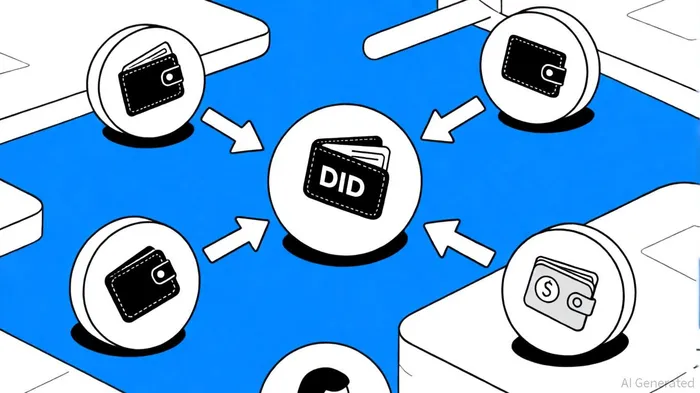
Bluesky's AT Protocol, which opened federation in early 2024, further advanced tokenless governance by allowing users to run their own servers while maintaining protocol-level social interactions. By leveraging Decentralized Identifiers (DIDs) and Sign-in with Ethereum (SIWE), Bluesky emphasized identity portability, enabling users to move across platforms without being locked into a single network, according to an Edge of NFT podcast. Meanwhile, Lens Protocol introduced Open Actions in 2024, allowing smart contract interactions directly from posts without requiring users to hold tokens, a capability discussed on the same Edge of NFT podcast. These platforms collectively demonstrate how tokenless governance prioritizes user experience and interoperability over token-centric models.
User-Centric Value Capture: Ownership and Monetization Without Tokens
Tokenless governance is complemented by user-centric value capture mechanisms that empower creators to own and monetize their content. Platforms like Lens Protocol and Farcaster have pioneered this approach. Lens Protocol, built on Polygon, enables creators to tokenize content and maintain control over their data and audience through a modular monetization model, as described in Top 10 Web3 Social Media Platforms. Similarly, Farcaster's wallet-based identity and cross-client compatibility foster open, interconnected social experiences while supporting monetization through paid usernames and client-based revenue streams, a point also highlighted in the Coinbound roundup.
These platforms eliminate reliance on centralized entities, allowing creators to earn through tips, pay-per-view posts, or revenue-sharing pools, according to a Life Conceptual overview. For instance, Audius, a decentralized music streaming platform, leverages $AUDIO tokens and NFT drops to give artists direct control over their earnings and creative output, which the Coinbound piece also highlights. Such models align with the broader Web3 ethos of ownership and decentralized control, offering a stark contrast to traditional social media's extractive monetization strategies.
Emerging Governance Frameworks: Balancing Innovation and Community
Beyond tokenless models, Web3 social platforms are experimenting with multi-stakeholder AI governance frameworks and hybrid governance models. These systems integrate reputation-weighted voting, zero-knowledge proofs, and zero-trust architecture to ensure transparency and fairness while balancing free speech and safety, as outlined in a Johal post. For example, T-REX has launched an intelligence layer to address Web3's value distribution challenges, aligning rewards with user and contributor impact, as reported in T-REX Launches Intelligence Layer. Such innovations suggest a future where governance is both technologically sophisticated and community-driven.
Investment Implications: Scalability and Inclusivity
For investors, the rise of tokenless governance and user-centric value capture presents a compelling opportunity. These models address key pain points in Web3 adoption-onboarding complexity and scalability-while fostering inclusive, on-chain ecosystems. Platforms that combine gas sponsorship, account abstraction, and privacy layers (e.g., ERC-4337) are particularly well-positioned to attract mainstream users, according to Governance in Web3. Additionally, hybrid models that blend tokenless interactions with on-chain economic primitives (e.g., DSCVR, Cyber) offer scalable solutions for high-volume actions like content posting or user interactions, as noted in the CryptoCity report.
Conclusion: A Future of Inclusive, On-Chain Social Ecosystems
The evolution of Web3 social infrastructure underscores a shift toward user-centric design, interoperability, and inclusive governance. Tokenless models are not a rejection of decentralization but an evolution toward systems that prioritize accessibility without compromising the core principles of blockchain. As platforms like Farcaster, Bluesky, and Lens Protocol continue to innovate, they are redefining how value is created and distributed in digital communities. For investors, the key lies in identifying platforms that balance technological innovation with user experience, ensuring long-term sustainability in a rapidly evolving landscape.






Comentarios
Aún no hay comentarios