
The Rise of Stablecoin Infrastructure: Why Rain's $1.95B Valuation Signals a Strategic Buy-In Opportunity
The global financial landscape is undergoing a seismic shift as stablecoins emerge as a cornerstone of modern payments infrastructure. By September 2025, the stablecoin market had already surged to a $300 billion market capitalization-a 75% year-over-year increase-and is projected to surpass $2 trillion by 2028, driven by demand for faster, cheaper, and programmable value transfer. At the forefront of this transformation is Rain, a fintech startup that has captured investor attention with a $1.95 billion valuation following a $250 million Series C funding round led by ICONIQ Capital and top-tier venture firms. This valuation, a 17x increase since March 2025, reflects not just Rain's technical prowess but also the broader market's recognition of stablecoin infrastructure as a critical enabler of the tokenized money revolution.
The Infrastructure Revolution: Why Stablecoins Matter
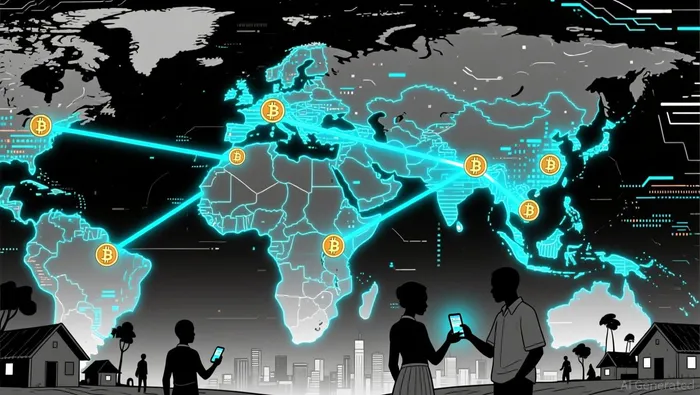
Stablecoins are no longer a niche experiment; they are a bridge between traditional finance and the decentralized future. According to a report by McKinsey, stablecoins are redefining global payments by offering a solution to inefficiencies in legacy systems, particularly in markets with weak banking infrastructure or high inflation. For instance, in regions with low credit card penetration, stablecoins enable instant, low-cost cross-border transactions-a use case that has already attracted major players like Stripe, VisaV--, and MastercardMA--, all of whom are investing in or acquiring stablecoin infrastructure.
Rain's value proposition lies in its ability to provide the backend systems that make this transition seamless. The company's platform supports transaction routing, regulatory compliance, fiat on/off ramps, and developer tools, enabling enterprises and neobanks to integrate stablecoin payments without navigating the complexities of blockchain technology. This infrastructure-led approach positions Rain as a critical node in the ecosystem, much like payment processors of the early 2000s but tailored for the tokenized economy.
Regulatory Tailwinds and Market Legitimacy
The rapid growth of stablecoin infrastructure is also being fueled by regulatory clarity. The passage of the GENIUS Act in July 2025-a U.S. law mandating 100% reserve backing and robust AML compliance for stablecoins- has legitimized the asset class and spurred institutional adoption. This legislative shift has reduced risks for enterprises and financial institutions, encouraging them to explore stablecoins for B2B settlements, remittances, and e-commerce. Rain's compliance-focused architecture aligns perfectly with these requirements, making it an attractive partner for companies seeking to navigate the new regulatory landscape.
Moreover, the broader fintech sector is experiencing a surge in innovation and funding. North American startup funding in 2025 rose 46% year-over-year, with AI and blockchain-driven solutions dominating the headlines. Rain's ability to scale its infrastructure globally-supported by its $250 million Series C-positions it to capitalize on this momentum, particularly as enterprises seek alternatives to high-fee banking networks.
Strategic Buy-In: Why Rain's Valuation Is a Signal, Not a Bubble
Critics may argue that a $1.95 billion valuation for a company yet to achieve profitability is speculative. However, this perspective overlooks the broader market dynamics. As noted by BDO in its 2026 fintech predictions, companies building foundational systems for digital payments are poised to capture disproportionate value in the next decade. Rain's first-mover advantage in stablecoin infrastructure, combined with its strategic partnerships and regulatory alignment, suggests that its valuation is a floor rather than a ceiling.
For investors, the key insight is clear: stablecoin infrastructure is not a passing trend but a structural shift in how value is transferred globally. Rain's ability to abstract the complexities of blockchain while delivering enterprise-grade solutions makes it a prime candidate for sustained growth. With the stablecoin market projected to expand tenfold by 2028, the company's infrastructure is likely to become a de facto standard for global enterprises, creating a flywheel effect of adoption and network value.
Conclusion
Rain's $1.95 billion valuation is more than a milestone-it is a harbinger of the tokenized money era. By addressing the pain points of cross-border payments, regulatory compliance, and developer accessibility, Rain has positioned itself at the intersection of innovation and demand. As stablecoins mature from speculative assets to foundational infrastructure, the companies that build the rails for this transition-like Rain-stand to reap outsized rewards. For investors seeking to capitalize on the next phase of fintech disruption, the message is clear: the time to act is now.





Comentarios
Aún no hay comentarios